
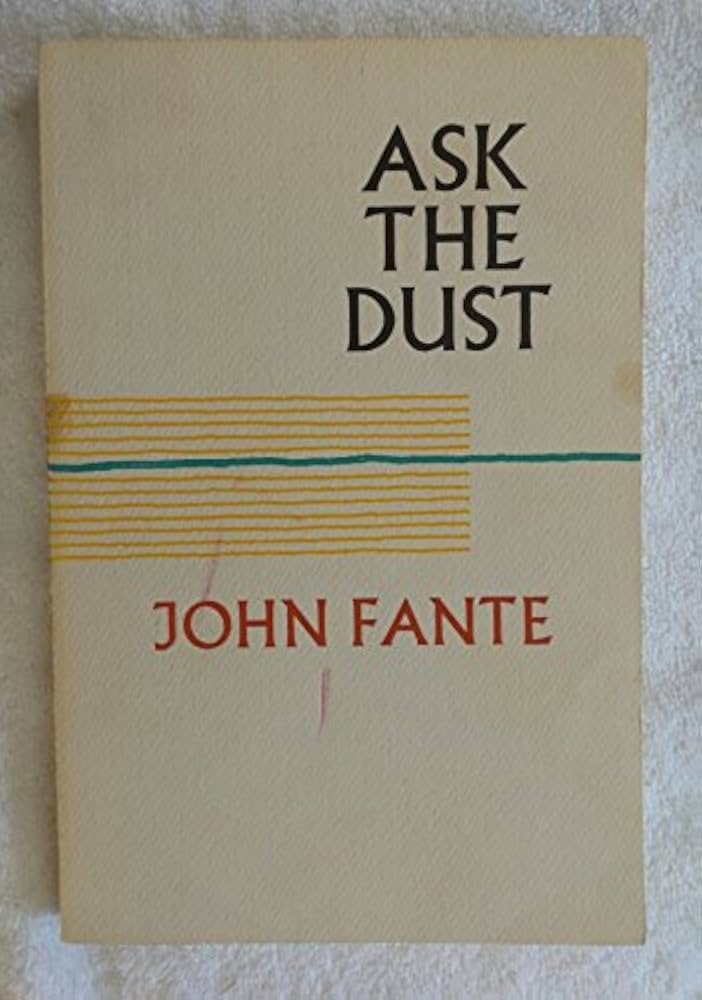
A musician named Sam introduce me to Ask the Dust when I was in my early twenties. It was exactly the book I needed at the time. Sam had heard me read at The Vault, this house-based performance space in Queens, and afterwards asked me if I had heard of John Fante. I hadn’t. Sam invited me to his house to do some spoken word and music recording, and when I was there, he gave me a copy of Ask the Dust and told me it would change my life. I read it and was blown away. The romantic solipsist in me fell into the echoes and correspondences of mine and Arturo Bandini’s life (Bandini being Fante’s alter-ego): the Italian-American background, growing up in a household of addiction and chaos, the need to escape from home, the outsized literary ambitions. It was the classic sense of lesser-than desperately seeking more-than in order to feel important, validated, affirmed, seen, heard. Ask the Dust, in its hardboiled innate lyricism (thinly concealing wounded and inflammable sensitivities), its phlegmatic timbre, and seismically charted mood swings, lodged itself in my heart and became one of my mini-bibles and valentines. Today it randomly popped into my mind: how much this book had meant to me as a young writer and lover of self-styled mythologies, in what Fante had called, “lean days of determination and hunger.”

 John Biscello