
Enlightened, perhaps. God-engorged hormones, maybe. Regardless of why, Joan, you were the rebel prototype long before James Dean zipped up a red jacket, or Marlon Brando mumbled and curled his upperlip into a stylized totem. Before Louise Brooks and Josephine Baker and Mae West scorched bits of screen and earth and tore hearts to shreds with flickering edges. You, Joan, were the world’s most famous cross-dressing heretic, the It-girl of alleged sorcery, a rebel very much aligned with a cause, coursing a waxwork future and belated sainthood. It began in your father’s garden, age thirteen, when you first heard the voices and saw the visions. St. Michael, St. Katherine, and St. Margaret, a stunning trinity that brought tears to your eyes. But they hadn’t come to serve as spiritual eye-candy, or to bring you otherworldly comfort. They were delegates, delivering a message direct from the Man Upstairs, a command, which, to any less mystic, might have fallen on deaf ears, a task that would have registered as preposterous or impossible, but not for you, Joan: faith was your stock-in-trade. You listened, you absorbed, an illiterate peasant girl being told that it was her duty and obligation to help lead France to victory over the English, to fulfill a destiny that had been part of France’s prophetic pipeline for generations: A virgin will come, a miracle-worker, and she will restore France to its former glory. You would have been happy to stay at home spinning wool with your mother, tending to the animals, gazing dreamily at clouds, passing your time as a humble girl quietly in love with God, but you knew it would be bad form, downright impious, to argue against a trinity of saints that had taken the time to visit you and you alone. Not to mention, when God gets in your head, like a luminous migraine or a marvelous tumor, what can you do except abide? The rest is history. Or myth. Legend. Pages from a tattered scripture in a gilded dustbin. There were the victories over England, the coronation of Charles VII (at which you waved your iconic banner), the capture and imprisonment. If there had been tabloids, you, Joan, would have been splashed daily across the headlines:
France’s Favorite Maid to be Tried for Heresy
Joan, the Teenage Witch, Refuses to Admit Allegiance to the Devil
Of course, as God’s cheeky, chosen daughter, you had no intention of going gently into that good night. Several times, you tried to bust out of the big-house, often falling from great heights. When the Inquisitors grilled and viciously quizzed you, with the hopes of railroading you into an incriminating confession, you shrewdly sidestepped and evaded all their tactics, case in point:
Inquisitor: Are you in God’s grace?
Joan: If I am not, may God put me there, and if I am, may God keep me there.
You had the bastards squirming, Joan, eating their own blasphemous piles of steaming shit. But, as it went, they rode a gross miscarriage of justice all the way to the stake, to that fateful day, May 30th, 1431, when they burned you, not once, not twice, but three times, before scattering your ashes into the Seine. You were nineteen. Twenty-four years away from being acquitted at your retrial, four-hundred and seventy-eight years away from beatification, and four-hundred and eighty-nine years away from official sainthood. Which just goes to show that history may be written by the winners, but the rewrites belong to a much higher and more mysterious order.
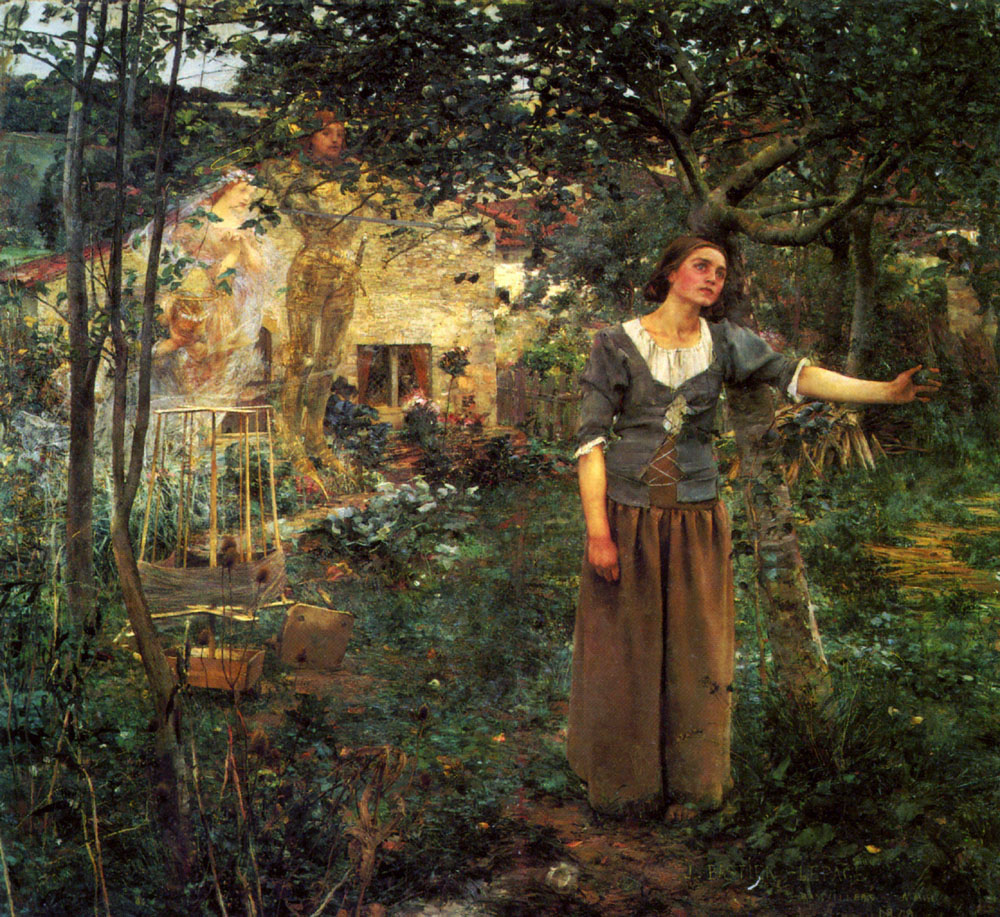
(Artwork: “Joan of Arc, by Jules Bastien-Lepage)

 John Biscello