Moratorium

I.

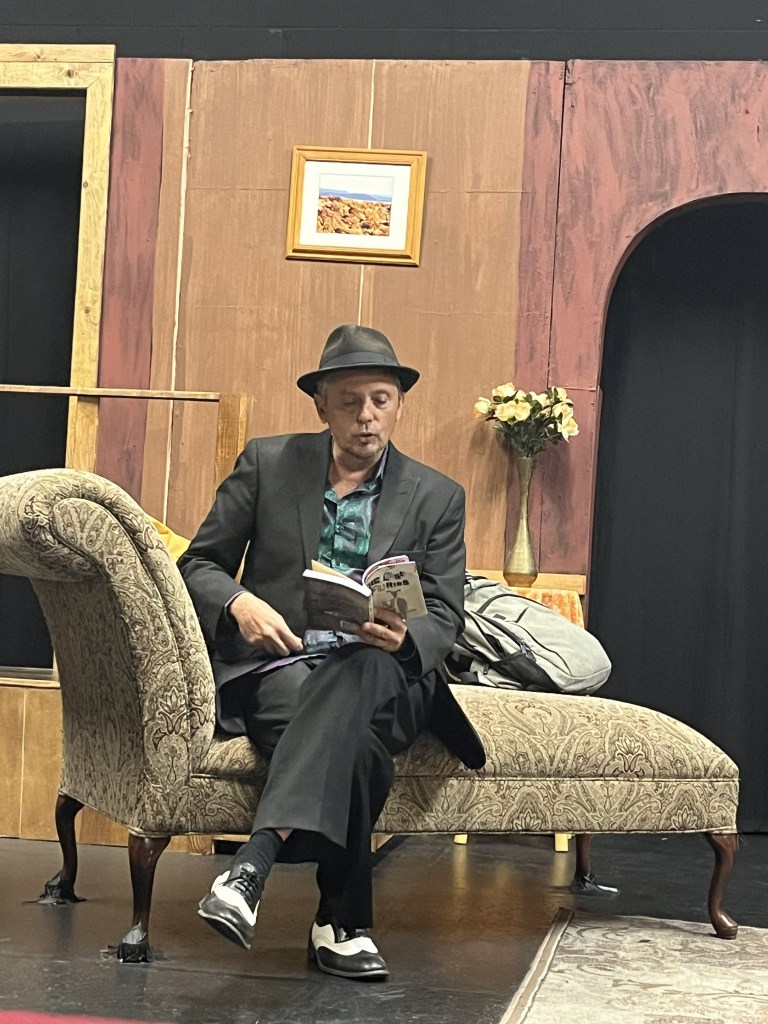
Beckett spoke about it: the inability to keep quiet. The incapacity to not say stories, not write stories, not place oneself inside stories in which you make and unmake and remake yourself endlessly, an orgy of particles constellating jittery shifts. Beckett, with death’s head irony and gallows brogue, talked often and plenty about silences. He attempted, through literary and theatrical practices, to reach silence, to braid and outline silence. He amassed spools of verbiage in his attempt to penetrate silence, to not say anything, to negate through words taking leave of themselves before settling as shadows. I will say a lot in not saying anything, or, I will say nothing in many words saying nothing. It was a calculated gambit rigged to fail.

II.

Everyone dreams according to their own schedule of being, their own silences and motives, their own sphinxes and disciples. Whether or not you want them to, the stories go on, they go on and on, a vast and inescapable network. Inside me they never stop. The narrative splinters into multiple narratives which splinter into further narratives, a hyper-exponential proliferation of narratives swaddled in recursion. In in, in there, I see myself and lose myself and find myself and wonder about wonder while wondering about myself: solipsism to the nth degree. There is no such thing as a writer who isn’t self-absorbed. Absorption-in-self is their stock and trade, their jurisdiction and wild frontier.

III.

We try and give voice to our silences because so much of us lives there unspoken. We barter fretfully with the unspoken.

IV.

Beckett attempted to reach the end of language through language. He found that dead ends were turnstiles, that vultures were morning doves in top hats. Beckett’s long sonata of the dead was the revival and impossible task he set for himself. He attempts to go beyond words by using words, like trying to starve oneself by gorging on excess amounts of food. You could say Beckett was a literary bulimic.

V.

Beckett tried to corral silence by making silence the domain of language. To not say anything, to ultimately embrace silence, would have meant an even more impossible task—setting down the pen, laying to rest the voice—and placing a moratorium on words. The only way Beckett imagined that could happen would have been through death. Death, flexing dominion, would have to pry the pen from Beckett’s cold stiff hand. Death would have to impose the silence and gag order that Beckett could not attain by choice. From out of smoldering and sepulchral silences words arise, only to immediately plunge back into the abyss. Gravity’s mouth, magnetic and godlike, is essentially a devourer of seasons. And words, trained through voice and causal urges, are always resisting gravity’s vortex just long enough to spell out hints, needs, cries for help and homesickness disguised as small dark birds. We come out of silence only to return there. Lots of words and stories and jig-dancing at night’s edge in between.

VI.

I have no desire to sing tonight.

This is the only line Samuel Beckett managed to write for a libretto which he abandoned.

Posted in Artwork, Books, Cinema, photography, Poetry, Press, Prose, Theater | Tagged , , , , , , , , , , , , , , , , | Leave a comment

The Dance

Her hips began the snakedance, the spasmodic erotic wiggle. She told me to listen closely, and her hips began hissing a slow cadence, the world losing its air, the world a depleted lunar asthmatic in need of oxygen blasts. My breath, as counterpoint, sped up and tried to mimic the accelerated tocking of her hips, their telltale sketches. I am bewitched and find myself lost in that story I once read about a young boy who pit-stops at a cottage in the woods during a long journey, and he is greeted at the door by a wide-hipped woman wearing a kerchief on her head, urging—Come in, come in. The smell plus sound bubbling soup drew him into the warm cozy quarters, and after a good deep inhale, he turned and saw a tit in his face, a puttied slab of matronly breast with a greenish tint. Feed, the woman insisted, feed on this, and with a powerful grip she forced the boy’s head forward and his mouth suctioned the ice-cold nipple, which set off a red flag reminder—a witch’s frozen tit. It has been in other stories, that legend of the witch’s frozen tit, and it wasn’t long before the dark baroque vines growing out of the nipple mummified the boy, and into the soup he went, another in a long line of hungry nipple-suckers.

in the tick-tock rapture of hipcasting

the dirty little seeds

of this haunted story

came into my brain.

these hips were motherblades

and neuron-scramblers

giving me the business.

listen to the low and slow hissing

she insisted

now it wasn’t the world

in my ears losing air

it was me

and i fell into a dark swoon

her hips turned into kinetic empire

over my prostrate ruins

her hips which seemed a million miles away

right in my face.

Posted in Poetry, Prose | Tagged , , , , , , , , , , | Leave a comment

Feathers

As she moved her bladed hips beneath him, small dark starshaped birds tore out of her hips, nipping at the air, and were then immediately sucked back into her hips, as if by an invisible vacuum.

He stopped, and asked—What was that?

What was what?

I don’t know. Something … something shifted. Something in the air.

In the air? You sound like a spooked out kid in a horror movie.

She smiled when saying this. He did too, slightly embarrassed.

Are you enjoying what we’re doing, he checked.

Yes, she lied.

Good, he said, and reinserted himself, just as she vacated her body and searched the room for stray feathers.

Posted in Poetry, Prose | Tagged , , , , , , , , , | Leave a comment

Hips Don’t Lie

The hips don’t lie. They are the truth-telling giants, and the whistle-blowers transmitting through pirate radio. They are also the catacombs and weather satellites of one’s cumulative genealogy. When an old person falls and breaks their hip, it is not just their hip that needs mending, it is also a calcified psychic geography in need of healing. Accumulated history only needs one break, one fracture, a small opening, to find its own level in real-time. The torrent comes—the filed rejections, your daughter’s grief when she lost her first child, your husband’s infidelity, your glasses being swiped at and stomped on when the fight broke out (their three against your one), the colors of your grief and repentance and serial ineptitude running and running and running. Hips, when projected boldly into sex, or dance, carry out eulogy and fiesta all at once, a woozy New Orleans funeral march parceling out grief and joy in a single continuous movement, and you can’t help but feel lighter, a small bird announcing its delicate wings to the drizzles of flight.  

Posted in Poetry, Prose | Tagged , , , , , , , , , | Leave a comment

Hips

I can no longer remember where I was when it happened, only that it happened, it must have happened. Sometimes we cry silent recordings in our bones, or guts, or maybe it is our hips that are the primary storehouses for extracts and tanking. Our bodies harden with history, we become wax figures to our own sclerotic effigies: the hips know. The hips don’t lie. They are, as the doctor suggested—our filing cabinet drawers. Old people who fall and break their hips open the floodgates to regret and despair, to the molasses of grief. It is not just the busted hip that needs mending, it is an entire psychic geography as outlined by the hip, a pivotal ambassador. The breaking of a hip places us squarely where we are with ourselves. The pain that comes is the pain of your daughter’s first heartbreak and how she mourned into the softness of your spongy core, your fortress. The pain is the mother who once forgot you at the gas station during a road trip, you timeless in the bathroom, and she, swept along by a bullying line of time—jostling, impatient—speeding her up no matter what the context or rate of motion, and it is your hips that held the gremlins of being forgotten, your hips as judge and jury to your mother’s thoughtless negligence—your hips declared her guilty, on that and other counts, but no one ever heard your hips issue that declaration, you never heard the verdict charged by your hips … if only your hips had large lips, if only your hips belonged to a choir … yet all remained unspoken, a cold case quivering in a strongbox slotted in a furnace.    

Posted in Poetry, Prose | Tagged , , , , , , , , , , | Leave a comment

Mirror

She opened her stomach. I took out my lighter, produced a flame, and cast light into the darkness. I saw a single object, a mirror. A square mirror with a baroque metal exterior: cursive, elegant. I saw part of my face reflected in the mirror. I was displeased. A mirror wasn’t doing it for me. There was too much me in the equation. I wanted to lose myself in the stomach’s dark curious inventory, not find myself there. She told me to touch the mirror. Really, I said. Really, she insisted. I thought of that game I used to play when I was a kid, Operation, in which you used tweezers to remove different objects from labeled body parts, and if the tweezer touched the interior of a body part, a buzzer sounded. That’s how I felt when I reached into her stomach to grab the mirror. I worried that my clumsy hand would touch something it wasn’t supposed to, and … buzz. This didn’t happen, but something else, perhaps even more alarming, did. As soon as my fingers touched the mirror, it turned into water. Cold water. I withdrew my soaked hand. I heard her laughing. I could see mirror-droplets jumping up and down in her stomach as she laughed. It was like an earthquake for tiny bugs. My hand started to itch, and then burn. The burning quickly grew severe. When I told her this, she said—When mirrors dissolve in your hands, burning follows. That’s just a law. She laughed again. I didn’t like her at that moment. You could even say I hated her. I went to the sink and ran threads of water over the part of the my hand where the mirror’s cold water had burned me.

Posted in Poetry, Prose | Tagged , , , , , , , , , , | Leave a comment

Sideshow

Let me show you, she said.

She proceeded to open her stomach, almost as if she were made from wood or metal, something not flesh, and it cleanly opened to reveal a dark chamber.

I stood there, not sure what to do. It was the first time a woman had ever exposed her stomach in front of me.

Look inside, she gently urged.

I stopped down and peered into the aperture. It was too dark to see anything. I asked her if I could shed some light.

Sure, she said.

I took my lighter out of my pocket and produced a small flame. The stomach’s interior illuminated, revealing, not organs, but what looked like miniature shelving units, with square compartments, each one containing a framed photograph. The light not only illuminated the photos, but also seemed to be enlarging them, as if the light were generating an optical illusion of magnification.

I saw a photo of her underwater, gagged and bound, the seltzery grammer of bubbles surrounding her, as if produced by another unseen mouth.

This photo of you underwater…

That’s me drowning. That’s happened a lot. My stomach has curated a ton of drowning photos.

She stated this neutrally, no inflection whatsoever.

Other photos showed various isolated body parts, portraits of dismemberment if you will. A wrist braceleted in purple bruise. Reddened ankles. A swollen eye caked in doughy moss. A nipple. Broken fingernails. Winter-chapped pair of lips. A gummy earlobe.

These body parts…

They’re all me. All mine, that is. In different phases. Hurt, not hurt, in need of care, signifying, keeping time. The stomach has an affinity for devouring images of body parts.

Ow, I winced, feeling the lighter-flame singe my thumb. I stuck my thumb into my mouth, and cooled the stinging with saliva and sucking. I was about to reignite the flame and return to gazing, but she closed her stomach and said—That’s all for now. I don’t want this to become a perverse sideshow attraction.

Was she kidding? How could a woman inexplicably opening her stomach not be a perverse sideshow attraction? I imagined touring the country with her, going to festivals and fairgrounds, with her charging money for people to look inside her stomach.

   I will let you see more later, she said. Not now. Later. when I decide to open up again. You’ve got to understand—you get to stand there and look at all the things inside my stomach, for you it’s a show, but for me … I have to live with the contents of my stomach. You’re a witness, but I am a bearer.

With that statement, she left the room. I couldn’t tell if I was in trouble or not.

Posted in Poetry, Prose | Tagged , , , , , , , , , , , , , , | Leave a comment

Last Furies: Now Available!

I am excited to share the news that my novel, The Last Furies, has officially been released, and is available in paperback, e-book and audio-book editions. 

Screenshot 2025-08-27 191239.png

The book has been published by Lost Telegram Press, an indie publisher based out of Ontario, Canada, whose creed, “publishing as a means to a means and not as a means to an end,” really resonated with me. Each book is hand-made, and I am grateful for the care, labor, and integrity that went into the multi-layered design of the Last Furies, corresponding to the novel’s experimental and multi-form structure. Patterned end-papers, vellum pages, a tear-out postcard, and colored pages differentiating an inner screenplay are aspects of the book’s hybrid design, and each book is numbered to create a stamp of uniqueness and singularity. I feel fortunate to work with a publisher who advocates for the preservation of literature as a time-honored and conceptually rich art form, and supports the vision of its authors. I am also grateful to Heather Ross, whose cryptically magnificent artwork, “Familio Portrero” graces the cover of The Last Furies. 

All editions of the book are available through Lost Telegram Press (https://losttelegrampress.ca/), while the e-book and audio-book editions are also available through Rakuten Kobo (kobo.com).

Posted in Artwork, Audio, Books, Cinema, photography, Poetry, Press, Prose, Publications, Theater, Uncategorized, Video | Tagged , , , , , , , , , , , , , , , , , | Leave a comment

Old and Young

In the fairy tale the young girl slept for a long time and when she woke up she was old. She saw her old self in the mirror and was horrified, but also accepting. And a little in love. I am a little in love with this hag, may I call you that, I love myself (a little) because I am an old woman wrapped in old woman skin with old woman body parts and old woman smell and old woman voice—I am a young woman mummified in old woman—and I can hear it now, in my head, that old woman voice which sounds creaky, maybe a little rubber, an old rubber ball bouncing softly on a wooden floor. This is what becomes of your voice, body and being when you sleep for a long time (only yesterday I was a young girl, my voice a bright whip made out of licorice) … now I am ready for that rocking chair, the one over there, the one that’s been waiting for me, for us, let’s rock, the old woman chirps hotly to the stoic rocking chair … I sit down, settle my bones, settle my body, mostly settle my breasts which are now like beanbags covered in bruised purple vines (I sneaked a peek), and yesterday, just before I went to sleep, I had barely-developed-bumps for breasts, go figure. I rock slowly and look out the window and I am glad to see that there’s a world outside, simply that there is world out there is enough for me … I don’t need to prove anything, do anything, go anywhere, I am content, but only until I remember the babies, there were babies, my two babies, my two sisters, I was their caretaker, what happened to the babies, did they grow up during my long sleep, were they taken away, could they still be here, and the thought that they might be in one of the other rooms motivates me to rise from my rocker and start searching. Am I moving faster or slower than I think I am, this inability to gauge speed is something new—I go from room to room, seeing if there are either the babies or signs of their having been babies … nothing, not a trace … and what is even stranger, I do not recognize the apartment. Because I woke up here I assumed this is where I belong, that it is my apartment, our apartment, the one where me and the babies grew up, or didn’t grow up, waiting for a mother who was never returned to us. I do not recognize anything. It’s not that it’s different, what I’m saying is I have no memory of what it looked like, what it’s supposed to look like: everything is there—kitchen sink, dresser, closets, beds, sofa—all the things that make up an apartment, but is it my apartment, our apartment, I have no idea. This old woman looking back at me is not me yet somehow I am her (I am now inspecting the caved-in face with tanned tissue paper skin for covering), I was very young only yesterday, except yesterday’s yesterday was different from previous yesterday’s, it lasted so much longer, a deep sleep that spit me out old, confused, in search of lost babies’, and I know that I am not dreaming, but rather that I dreamed, and because I dreamed … ah, yes, that’s the key, that’s the phrase that started all this … because I dreamed … in that phrase my life became something else, a story falling from someone else’s lips, a fairy tale told to kill time—to kill time telling tales is to grow old—I am the one telling these tales to keep myself from myself, to murder something unkillable in me, to keep the babies entertained (what babies? where babies?). I woke up after a long sleep, an old woman telling herself a story about a young woman who wakes up after a long sleep an old woman dreaming in a house I don’t recognize, a house that has become my body and my absence.  

Posted in Poetry, Prose | Tagged , , , , , , , , , , , , , | Leave a comment

Others

I couldn’t understand why I couldn’t hear myself in my head anymore. I was hearing someone else. This someone else was older, much older than me, and tired. Her words dragged, as if part of a funeral procession. Her voice didn’t seem that interested in putting words together, forming sentences. It was a voice that seemed much closer to silence than the previous voice, the one I knew, the one which had been me, or mine. Where had that voice gone? I felt, in listening to whatever was going on in my head, in what was being said, that I was eavesdropping. To become intimately familiar with a voice in the dark, only to have it suddenly displaced by other voices in the dark, was extremely unnerving. It’s hard enough to be in the dark inside oneself, but to be in the dark inside oneself with a stranger … unsettling. I can tell you about this, in my own words, trusting that what I’m saying is what I am saying, only when writing the words down or speaking them aloud. When I am quiet, and listening inside myself, it is the other voice’s thoughts and ideas and narrative—not me, not I, it is they, her, the other, old and tired, who seems to be in perpetual mourning for person or persons unknown.

Posted in Poetry, Prose | Tagged , , , , , , , , , , , | Leave a comment