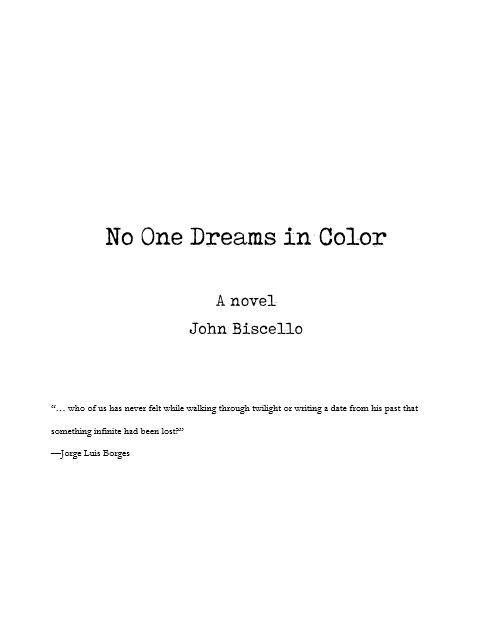
My sixth novel, No One Dreams in Color, started as a story, titled Wendigo. Which then became a film script. Which eventually turned into a novel revolving around a man, Paul Kirby, who had written a story which he had turned into a script that was then made into a nine-minute film, Wendigo, whose blue mood conjured the spirit of lonely places. Paul Kirby mysteriously disppears in the high desert town of Nine Peaks. And from there, a tale of metaphysical noir begins its rabbit hole plunge and boogie. Here is a small dose of No One Dreams in Color:
We were sitting at a café in the Mission called Havana, which had a Cuban theme. Framed photos of Cuban street life and culture adorned the café’s pale orange walls. A Cuban flag was pinned horizontally to the wall behind the counter. A stack of cigar magazines were laid out on a metal coffee table in the center of the café. One of the magazines had a cover photo of a snow-bearded Hemingway, with a thick cigar plugged into his mouth. Lucy said that Havana was one of her favorite haunts. I found it oddly touching that she had used the word haunt. Outside, a cold rain was falling, which made me feel like a real detective. Or rather, like a real detective from the movies. Here I was, in a café, on a rainy day, sitting across from a woman who didn’t match her name, and was the old flame of a man who had disappeared, a man whose ghost I was stalking. It was a movie I had seen before, wrapped within dozens of other movies. Except I was in it, though there was no one watching me from the cushy perspective of passive audience. Or was there? I couldn’t shake the feeling that someone was watching. Always watching. No wonder Santa Claus was such a polarizing figure.
My novel, The Last Furies, was partly inspired by the life, legend and poetic reckoning of the Symbolist brat-prince, Arthur Rimbaud. As a hybrid work, that is both an endless remix of a novel and a sorcerer’s cryptic handbook, the Furies at its molten core is a call to radical alchemy, to the transformative power of language, myth and story. It is about deep dreaming and even deeper rememberance. And it wears the mantra of John Coltrane on the torn sleeve of its heart: “You’ve got to look back at the old things and see them in a new way.” Here’s a small dose from Furies:
The play opens with a bang, followed by a whimper. The bang, that of a pot crashing to the floor. It was his mother, rheumatic, bleary eyes, an aproned trapezoid, who had burned her hand on the pot handle and cursed filthily in peasant-French, as the pot hit the kitchen floor, BANG, and the sauce splatted like fairytale blood. Then came the whimper, escaping through the boy’s nostrils like a small wound announcing itself musically. The boy, fair-haired, blade-boned, waifish, attempting to absorb and comprehend the architecture that is his mother, wagging her singed beefy hand ridged with sawtooth knuckles, his mother continuing to run coarse French profanities up a flagpole, his mother. The boy, turning to the audience: I see her standing there and everything about her seems inappropriate, foreign, undesirable. What am I doing there in the kitchen? How did I fit in? My mother struck me as an ugly ominous preview of a culture that I rejected and despised on intuitive forecast alone. I knew before I knew. I had been born into a culture of organ-harvesters and eunuch-makers. I had sniffed out the war-mongering and indoctrination from the tender side of the womb. The chairs, the rolling pin, the forks and knives, the dropped pot, all of these belonged there, but me . . . It was like waking up in someone else’s dream, not just once, but always, a dream with scene changes so as to give the impression that things were moving, cycling, different, but really…
I was nineteen and lost when I first saw Wendigo. That was the year everything broke apart. In the center, and in other places too.
My mother died, by her own hand. My girlfriend and I split up. Looking back, it’s hard to remember what came first, my mother’s death or the break-up.
Everything in my nineteenth year melded into a continuous blur. Where I felt both tormented by time and seeming to exist outside of it.
2.
The comforting darkness of movie theaters. Movie theaters had been my haven and sanctuary, my church, since childhood, and never more so than in my nineteenth year.
How to Exist Inside Cinema Outside Your Own Life.
That was the title of something I had written when I was seventeen. Or if I hadn’t written it, I had written the title that was still waiting for the story to which it could attach itself.
3.
One night I had gone to a shorts film festival at the Film Forum, a theater on Houston Street, and that was where I first encountered Wendigo.
It was a nine-minute film, with no dialogue, set in a snowy tundra. It was shot in 16 mm, with a spectral bluish tint. What I witnessed on screen directly corresponded to my wounds. It felt as if I had mainlined Wendigo, and I left the theater that night in a daze. But a different kind of daze from the one that had rendered me a full-time sleepwalker. This daze brought on a wooziness that became a gateway to feeling. To a resonance that wouldn’t stop echoing.
4.
Tan-colored pill bottles, and the pills—small, white, chalky. Razors that could be concealed like wafers under the tongue. The moldy, corroded edge of a porcelain bathtub. Brown shag carpet. A vacuum cleaner with a balloon for guts. Lipstick-smudged menthol cigarettes cluttered in a glass ashtray. Tuesday, Wednesday, Thursday. Days registering a metronome. A cobra-backed wicker chair set near the window in the living room. Where she’d sit. A discolored wedding ring stashed in a small red box. Friday, Saturday, Sunday.
My mother’s name was Angela.
5.
The following day, at a matinee, I saw Wendigo again. There were other films in the program, but I was deaf and blind to them.
When Wendigo finished, and the closing cello music was playing, I realized that I was crying. It felt as if they were someone else’s tears. Or that I was crying them for someone else. Someone who had gone away, someone whose name I couldn’t remember.
6.
Paul Kirby. That was the man who had written, directed and acted in Wendigo. I had eagerly awaited Kirby’s next film, never imagining it wouldn’t come. Wendigo won awards, and had become a cult darling among cinephiles. Yet Kirby never made another film. To my knowledge, his entire cinematic legacy comprised a single, nine-minute film.
7.
My first girlfriend’s name was Jenny. We used to go to the movies together a lot. We also liked to fool around in the movie theater, especially when the audience was sparse. The first blowjob I had ever received was from Jenny, in the movie theater, while we were watching Police Academy.
I heard that she married a fireman and now lived on Long Island.
8.
Wendigo had tattooed itself on my heart. It belonged to a part of my life when I had been submerged, and it, like a small dependable light, had kept me company.
These are the things I’m thinking, the things I’m feeling, after having chanced upon the article about Paul Kirby’s disappearance.
The article reports how Kirby had gone missing in Nine Peaks, the town in New Mexico where he lived, and investigations were ongoing.
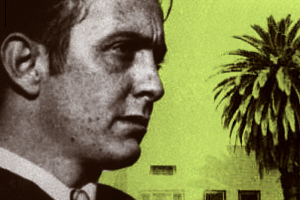
There was a smattering of details. Kirby’s age, thirty-five, the fact that he was originally from Brooklyn, and how his short film, Wendigo, had been filmed in the mountains of Nine Peaks. There was also a black and white photo of Kirby standing in front of a fence.
9.
I allowed everything to seep in, and settle. Not just the news of Kirby’s disappearance, but the timing of it in relation to my own life and present circumstances.
While my recently turned-ex-girlfriend was at work, I was picking up some of my stuff at her apartment. Realizing that this was probably the last time I would be in her apartment, I decided to linger and savor the details that had given tone, depth and texture to the past three years of my life.
I poured myself a glass of pulp-free orange juice. I made a turkey and cheese sandwich on wheat bread, and then added spicy brown mustard. I sat down at the table, where the newspaper was laid out, as if waiting for me.
While eating, I casually flipped through the pages, and there it was, in bold letters: Man Vanishes Without a Trace.
I stared at the photo. Kirby had dark wavy hair, and his hands were thrust into his pockets. He looked both casual and serious. I couldn’t tell if his face were covered in five o’ clock shadow, or if it were the poor quality of the photograph creating the effect.
10.
After finishing my sandwich and glass of orange juice, I poured myself a second glass of orange juice, and considered what Marianne had said about us having drifted apart.
There’s no center to any of this, she had spoken with a calm clarity that had frightened me. It was like the words, and the voice behind those words had come from somewhere else.
11.
I am standing on a huge glacier, adrift in the sea, and I am pitching an idea for a show to a network executive, who is not there on the glacier with me, but is rather a projection, or some sort of hologram who can hear me.
I tell him the show will be called Jukebox, An American Pop Odyssey, but can’t remember what I say when explaining the details of the show. I do remember that the network executive seemed intrigued by my pitch.
When I told Marianne about this dream, she looked at me funny and said nothing.
What, I pressed.
I dreamed about glaciers last night too, she said.
Are you serious?
Yes.
What happened in your dream?
All I remember is that there were a lot of huge glaciers, and they were making a low rumbling sound, like thunder. And I was spellbound.
12.
I wanted to feel worse about mine and Marianne’s break-up, but I mostly felt relieved. As if I had been pardoned from something. Perhaps Marianne felt the same?
13.
With Wendigo having returned to my life via the disappearance of Paul Kirby, I got hit with waves that were part of a sea change. Its influence would move me in a different and unexpected direction, but not for several months. Not until autumn.
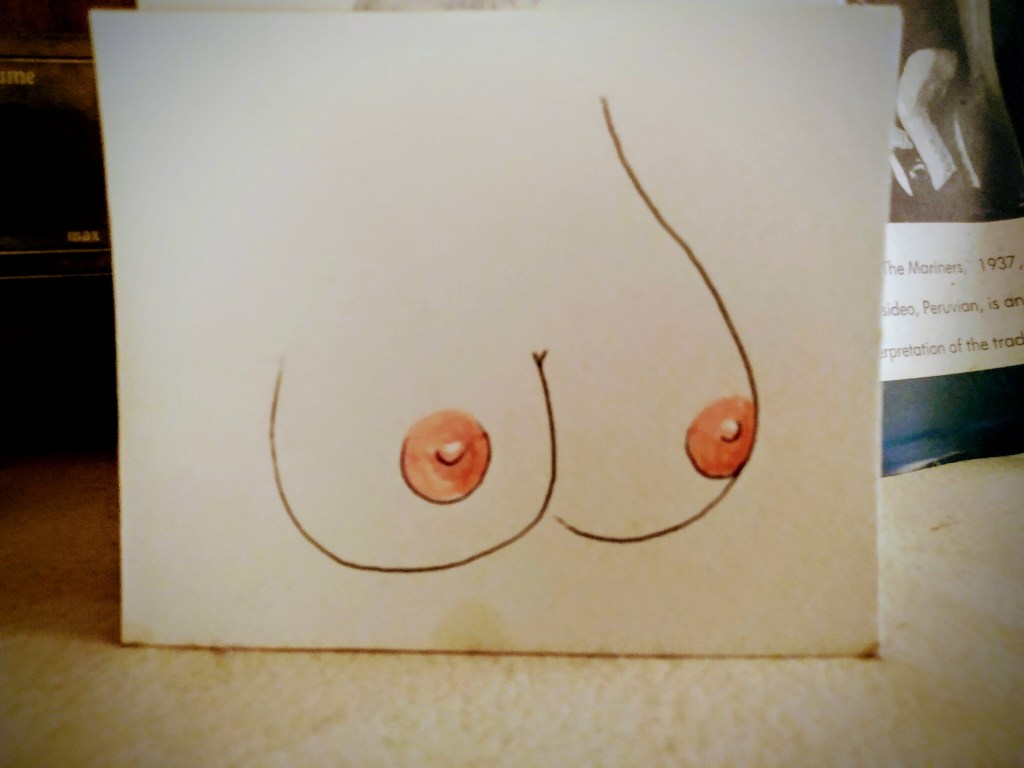
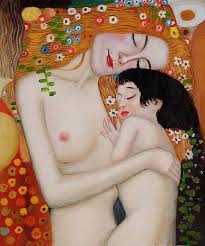
In the feral country of nipples, where she-wolves raise their pups to howl unashamedly at the moon, many many men, unconsciously ensnared in puritanical roots, fear, scorn and revile the mystery of the female nipple, its organic promise of milk and eternity too vagrantly radiant for many many men’s eyes to bear, hence the blotting, fuzzing and other control-tested methods used to impair the nipple and render it a pariah and taboo, yet through it all, nature runs its inviolable course, with the rose assuring the areola: A nipple is a nipple is a nipple— and that’s the gospel truth from the limitless mouth of God herself.
This pair of breasts inked by Anais Rumsfelt, which I received as part of her delightful V-Day tradition, when she graciously dispenses breasts of all styles and sizes via the World Cup (Taos, NM) in celebrating the sacredness of the female human body.
Their hearts, registered as infinite beacons, have gone gently and luminously into nights not so good and pitch-black, braving flytrap folds and god-awful rows to soothe, mend and restore the bruised vitals of daughters and sons; they go, infused with bright rage, green force driving home nocturnes and hymns–I will sing for you, child, in your gravest moments of fear, when mirrors forcecast darkly, follow my notes, gonged and trilled, lisped and cracking, a gospel rush of crumbs guiding you, measure by measure, into the milkdeep arms of safe harbor. When lost, we set our compass to Mother, the truest needle forever pointing North, a fixed constellation wedding orphans to an infinite charge, how light travels at the incalculable speed of love.
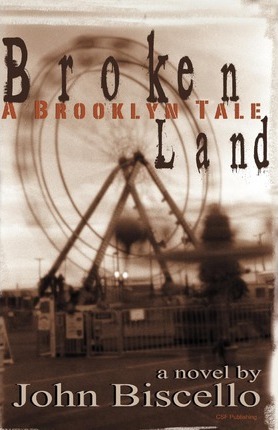
This month marks the ten-year anniversary of my novel: Broken Land, a Brooklyn Tale. I am feeling a bit sentimental about this ghostly noir tale, not only because it was the first time I experienced having a novel published (I went from being a writer to being an author, a confirmation which hit home in a most beautiful way), but also because of this book’s twisty-turney journey over the past decade.
It was originally published by CSF Publishing, with this being the original cover, and then was briefly orphaned before I resurrected it on my own through Amazon with a new cover, created by the artist, Cris Qualiana. From there, the book was picked up by Zharmae Publishing, only to find itself orphaned once more when Zharmae folded.
At that point, I thought Broken Land might become a spectral resident of a literary bardo, but it found a new home with Unsolicited Press where it continues to live today.
I recently completed a screenplay of Broken Land, which I have been submitting to festivals and competitions, with a hope of one day seeing Salvo and the rest of Broken Land’s motley crew of characters on the big screen.
April 8th will mark the 113th birthday of Mr. John Fante. His delightful landmine of a novel, Ask the Dust (published in 1939) along with the other three novels which chronicled the exploits of his feisty alter-ego, Arturo Bandini, remain gritty testaments to Fante’s hardscrabble genius. My poem “John Fante” from my collection, Arclight, celebrating the man behind the dust and dreams.
Inferiority might have been your first memory.
Though you were born on American soil,
Denver, CO, April 8th, 1909,
the chinked chains of immigration
had you by the throat and bowels, pinched your nerves
as you butted your head against the scabby base of a totem pole.
You, the little wop, the fenced-in dago, trying to dig his way
to China, or the moon, or to any form of greatness
that would eclipse your undermining complexes.
And so, out of shame and need, out of fevered desire,
you created Bandini, or he you.
Arturo Bandini, rising star and literary godsend
of John Fante’s complicated inner world,
soon to be exported and appraised and adored
by thousands, maybe more.
Arturo Bandini would draw from your history
and chagrin—your philandering, boozing, gambling father,
your mother, having to beg credit to keep the family fed,
your fear and loathing of Jesus,
and love-hate relations with the saints,
all of it would fuel Bandini’s quest
to transcend your blues,
your gnawing sense of lesser-than.
You would become the Joe Dimaggio of the literary world,
the gold-plated pride and joy of your people,
or at least go down swinging.
Bandini, fire in his belly, lean days of determination,
a starved mongrel digesting the pit and seeds
and citrus rinds and sun-tendered leaves
of palm trees in 1930s L.A., an angry, confused, passionate
young man, stalking fury and sound, full of himself
and words that he prayed to God would not let him down.
He, John Fante, the great Arturo Bandini, gave us pages,
a score of scorched pages, not enough according to him
(he would go on to become a Hollywood screenwriter
and malign himself as the worst kind of traitor to his soul and calling)
but he left behind the Bandini Quartet, four novels
with his grit-infused masterpiece, Ask the Dust, forming its apex.
Some angry young men mellow with age,
Fante, it seems, raged until the end.
His legs, and sight, were claimed by diabetes,
and Fante, as a blind amputee, bed-ridden, took one last dive
and salutary fling into the inspired world of Bandini,
dictating his final novel, Dreams from Bunker Hill, to his wife, Joyce.
Bukowski, who had accidentally stumbled upon Fante’s work,
considered him a god.
The two would become friends, and Bukowki would do his part
NO ONE DREAMS IN COLOR Man Vanishes Without a Trace. This, the dramatic headline which stirs Andrew DiBenedetto’s curiosity, and initiates a life-changing course. The vanished man is Paul Kirby, whose nine-minute film, Wendigo—the only film Kirby ever made—was one of Andrew’s sacred cinematic totems. Compelled to visit Nine Peaks, the remote New Mexico town which had become Kirby’s adopted home, Andrew will discover that Kirby was one, among many, who have mysteriously vanished, and that Nine Peaks is, as claimed by one of its locals: an anomaly wrapped inside an anachronism and swallowed by a riddle. Andrew’s story quickly and irrevocably becomes entwined with the stories of others: Ali, a thirteen-year-old loner, comic book buff, and Beastie Boys fanatic, who is once again being tormented by werewolves; her mother, Callie, Paul’s lover, who has started working at the enigmatic Dream Bank; and Mack, the cameraman, who shot Wendigo with Paul up in the mountains. When the borders and barriers between dreams, memory, fiction and reality begin to dissolve, Andrew and company must navigate the shifting and unstable narratives of a weblike paradigm. Equal parts psychic noir and existential montage, No One Dreams in Color explores the nature of time, identity and loss, while featuring a roll-call of cameos by such noted icons as Moon Knight, Bob Dylan, Carl Jung, Leonard Cohen, God, Mister Ed, Abraham Lincoln, and Santa Claus.






 John Biscello