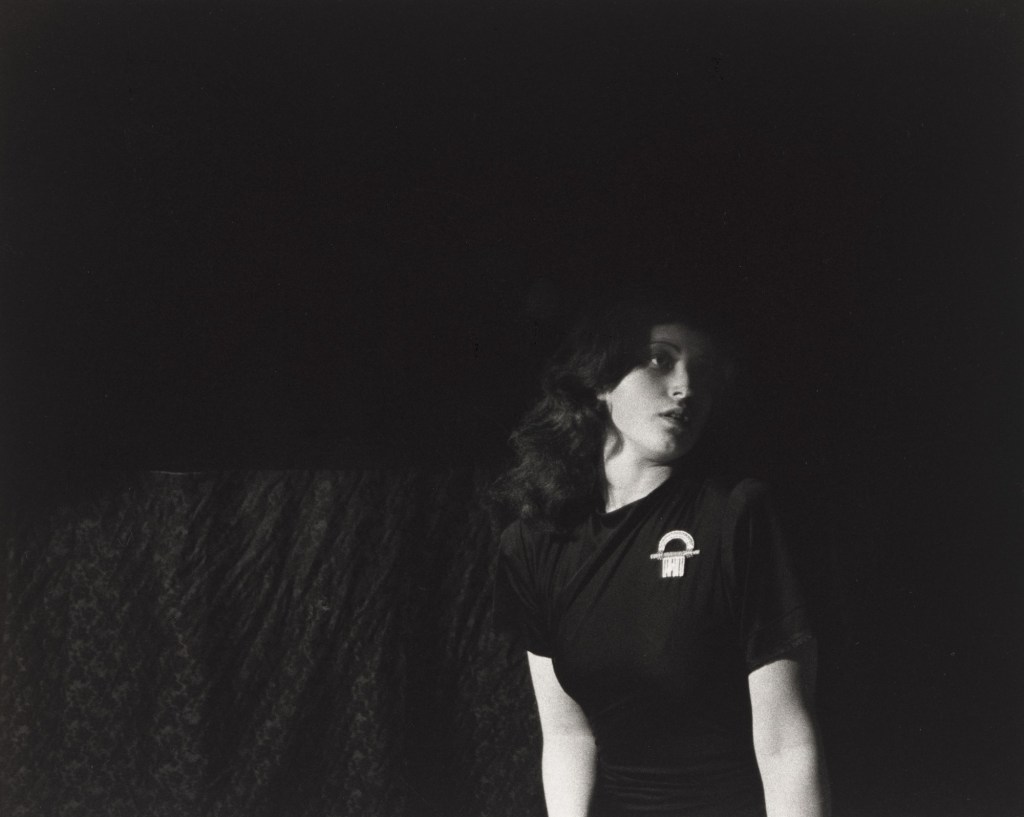
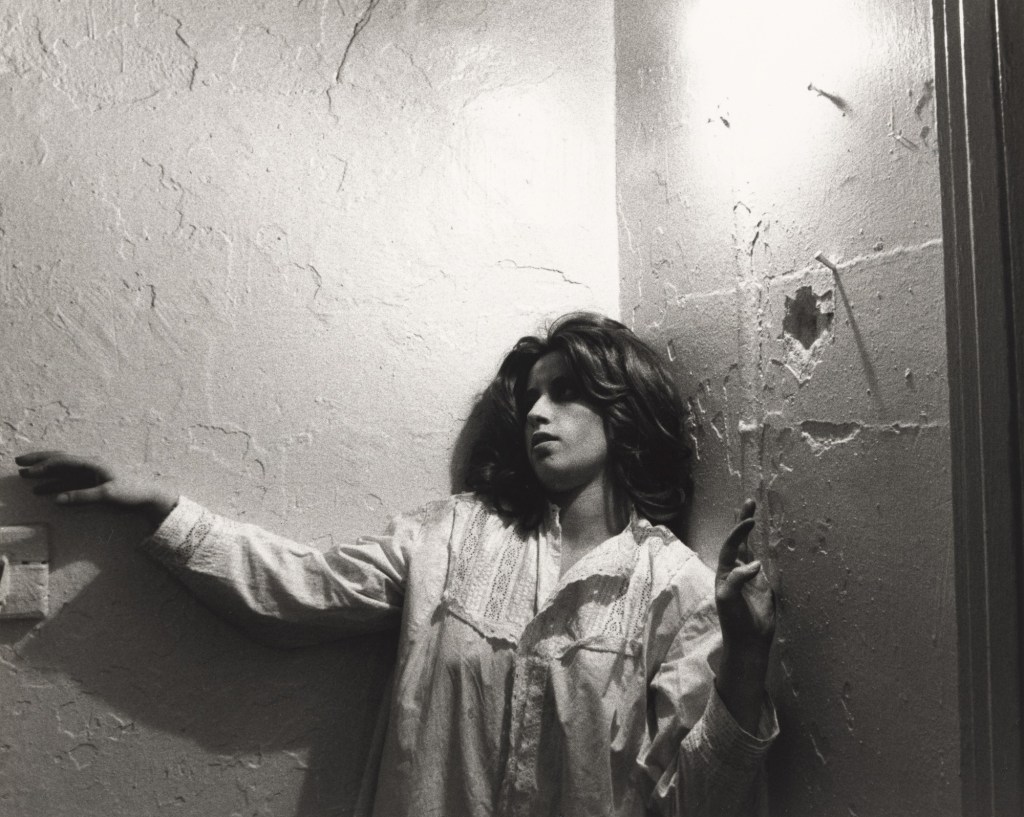
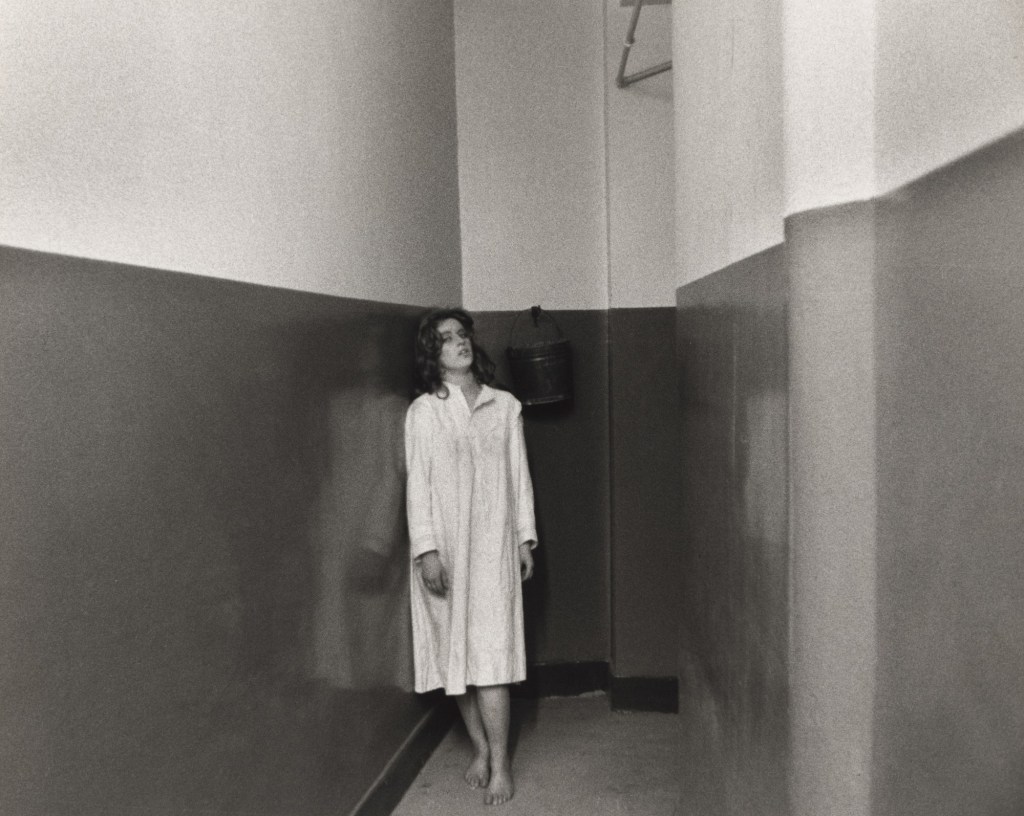
The Soldier

Excerpt from All the Last Furies.
He swept me into the storage room of the inn. Baited me with the promise of candy. Something so simple, and yet candy might be the ultimate siren for children, its lure a golden hook.
The storage room smelled of musty cedar, and was crowded with wooden crates.
He, the soldier, dressed in his gray-green uniform went to the door and bolted it by sliding a wooden cross-bar into place. This he did casually, almost gently, as if it were naturally ordered logic to lock us in. It’s something, quite something, how the closing of a door can change everything. The noisy patrons of the inn, their bawdy revelry, immediately became muted and distant.  A closed door, and darkness, really does slide you from one reality to another.
 The soldier reasoned aloud—I don’t want any of the other children to wander in expecting candy. I only have enough for you.
His voice matched the creaking of old friendly wood, the worn smooth gliders of a rocking chair. It lulled me into a stupor, yet I managed to remember why I was alone with him in the cramped darkness—Where’s the candy?
It’s funny, I hadn’t even wondered what kind of candy it was, just the fact that I was being offered candy was enough. Though I did wonder about its color. Color always meant the world to me.
The soldier didn’t seem to hear what I asked, or ignored it, as he drew nearer to me and began stroking my hair.
You are such a fine and lovely creature, do you know that?
I had never been called a creature before and my stomach felt uneasy. Candy seemed like a fast-fading-illusion, part of another reality that I had conjured. I had wandered into the wrong dream.
The soldier continued stroking my hair, gently ever so gently, and said—You really are a perfect little angel. Can I kiss your perfect little angel mouth?
The soldier lowered to one knee and leaned in. His coarsely-whiskered face was now blotted and out of focus, a moon that had transgressed its orbit. His breath smelled of onions and anise.
Just a little kiss okay, and I felt his piscine lips forced onto mine. My small mouth felt in danger of being swallowed whole.
After he removed his lips from mine, I dumbly asked—Where’s the candy?
It’s okay, he says, leveling his gaze with mine, trying to project reassurance from his eyes into mine, just be quiet and let’s have this time together. It seems as if he hasn’t moved at all, yet I can now feel his fingers like tweezers pinching me down there, and he begins unbuttoning my trousers. I lose track of time, myself, where I am.
I’d say the soldier was tall, but compared to what? I was seven and he was a lot older than seven and so it would be more accurate to say he was a giant.
Beyond the slope of his massive shoulder, I see a spider crawling along the edge of a crate. It stops, keeps perfectly still. Was it watching us? Watching the scene unfold through its spider-eyes?
The soldier forces me down.
To become a master of silence will take time, but I know that I have begun.
……………………………..
That was an adaptation excerpted from the play, Polestar, written by Viola Manzetti, about the life, myth and legend of the 19th century poet, Arturo Arcturus. The text was read by Evie Chase, the actress who plays the role of Arturo. Viola and Evie will join us live, in the studio, tomorrow to talk about the play, which will be launching on a national tour at the end of the month.
………………………………..
Arturo turns off the radio. They, people out there, god knows when, are talking about him, he is being performed on a stage for an audience by a woman named Evie Chase. The world is creating him while he lies here in a hospital bed, decaying, besieged by things he didn’t understand, voices floating in from this inexplicable marvel of a thing called radio, and somewhere out there, far far away from this remote island of a hospital room, there were people talking about him, writing about him, staging him, there was a play titled Polestar inspired by the life, myth and legend of 19th century poet, Arturo Arcturus. He was the 19th century poet Arturo Arcturus, that was him.
Why couldn’t he remember having been raped by a soldier in the storage room of an inn? Was that an invention rooted in artistic license, a fabrication that had snaked its way into the narrative of this Viola Manzetti’s play? Or, perhaps, he was blocking out this trauma which had occurred when he was seven? Perhaps it was a memory entombed in a cinder vault, one of those catatonic untouchables?
Even though the program had said that Viola and Evie would be in the studio tomorrow, that didn’t mean that his tomorrow would match theirs. There was no consistency upon which he could depend, or set his dial, when it came the radio and its offerings. Maybe he’d stumble upon the interview with Evie and Viola, maybe not. In this respect, Arturo’s relationship with the radio was one of fragmentation and cliffhangers. He longed to hear what Viola Manzetti had to say about him, why she wrote him, the play, same as he wanted to hear from Evie Chase, and what it had been like playing him. Why had they chosen a woman? What did this Evie Chase look like? That being said, what did he, Arturo, look like? He could almost see himself reflected within his memory-reels, but the images were vague, insubstantial, irresolute.What did he look like now? There were no mirrors in the room, no reflective surfaces. When his stump throbbed, or he felt pain elsewhere, he became aware of his body, this derelict residence in which he was a rooted clawing tenant, but what about his face? He hadn’t given thought to that in a long time. He felt that it was reasonable, or within the realm of possibility, that he might look in the mirror and see no face at all reflected back to him. Or perhaps it would show a featureless face, an embryonic mold. Yet the deliberate inquiry conducted by his fingers, registered a nose, mouth, eyes, so why not trust these tactile findings?
Was there really a coarse-whiskered soldier, smelling of onions and anise, that had trampled his innocence? A cedar-scented storage room, wooden crates, a spider crawling along the edge of a crate. Did memories make fiction, or was it the other way around?

rothko

(Artwork by Mark Rothko)
Posted in Books, Prose, Uncategorized | Tagged , , , , , , , , , | Leave a comment

Desert Spleen

Excerpt from All the Last Furies, novel-in-progress.
Bert and George. A Couple of Real Coons. That was the title of the program. Arturo didn’t know what the term meant, why coons, but he could feel the seeds of malignancy implicit within it. He could smell and taste the wrong of the enigmatic title.
Yet Bert and George did make him laugh. Cry too. Laughter and tears. What else was there?
All Bert and George ever did was wander in the desert. An endless wandering, sandblasted peregrinations to nowhere, a tubercular odyssey with no point. They wandered, kept each other company, drove each other nuts, got into and out of scrapes and follies. The desert, in all its starkness and death-resin, might not seem like an ideal breeding ground for vaudeville, but these two men showed otherwise. They showed that comedy’s scoliotic backbone originated in a sturdier more epic spine.
There was the episode when Bert and George found an oasis, except it turned out to be a tainted oasis, at least for Bert.
The oasis was flanked by several hunched ashen trees with fringed fronds, and scant patches of grayish green grass grew miraculously in a semi-circle around a modest stream. Both men gulped down the cool water from the stream, both men bathed their faces. Except, and here’s where the oasis affected Bert and George differently, Bert started screaming.
What Bert what, George checked in.
The water is burning my tongue and my face.
Bert was covering his face with his hands.
George ordered him to put down his hands.
Let me take a look-see.
George went quiet real quiet.
Bert flutteringly opened his eyes, which had been shut, tears streaming down due to the acidic burning.
Bert gauged the mystified look on George’s face.
Bert went over to the stream and sought the clarity of its mirror. No reflection. No face. Just the porkpie hat and bowtie and empty space where his face should have been.
Bert walked back to George, his fingers searching for his face, finding it.
George do I still have a face? Do I?
George nodded.
You still have a face Bert but something’s happened to the pigmentation, you’re, it’s lightened.
Lightened?
Yea it’s lightened. It’s whitened. Now you’ve got the face of, by god I’m sorry to say this Bert, but you’ve got the face of the white devil.
The white devil?
Yea.
THE White Devil?
Well maybe not THE White Devil, but A white devil. You’ve got the face of a white devil Bert. I’m awfully sorry.
Bert begins weeping. Dark inky tears cut along the length of Bert’s face, like tire marks on ghostly plains. After a short violent spell of weeping, Bert and George left the contaminated oasis and resumed their wandering.
Bert wondered why George’s face hadn’t been whitened by the water, and when Bert asked George, Why did I become a white devil George and not you, George’s shoulders peaked in a shrug, Dunno. This desert has got me all kinds of mixed up.
For the rest of that episode, Bert and George wandered on, exchanging quips and observations, except their relationship was different, a bit strained, carrying the agitated seeds of a wariness that had not been there before, with George remaining a Real Coon and Bert having become a White Devil, or at least appearing as one, and the two men interacted from an unfamiliar distance as their trekking continued.
The laugh track, which punctuated much of the action with orchestrated roars of canned laughter, disturbed Arturo. It reminded him of the plastic roses. The laughter, like the roses, was an unpardonable disfigurement, a blatant travesty.
Arturo wondered if Bert and George could hear the laughter. Perhaps it rained down on them like some enigmatic phenomena of Delphic origins, strange weather balloons born of vanity and sin.
Where exactly did the laughter come from? It came on as a torrential and anonymous chorus, but if broken down into isolated segments, who were the people behind each laugh? There had to be a true source, an original one, Arturo thought. Same as the roses, which had to have been manufactured somewhere. Even betrayals, or perhaps especially betrayals, had their sincerest origins.
In today’s episode Bert and George see an emaciated woman in a bird-mask, bound to a cross. The woman’s sun-branded body is darkened by ash and soot, and bears a geometric riot of lash-marks. The woman is covered only in a tattered loin-cloth, splattered with dirt and dried blood. The loin cloth covers her from shoulders to hips.
Bert and George stop and stand before the woman.
Are you real, George asks.
No response. Windless, dry, harshly blank, the climate seems to have become the woman, or viceversa.
Maam, can you hear us? I’m Bert. He’s George. We’re wondering…are you real? I mean real-real. We’ve been wandering in this here desert for a long time and…well we’ve run into our fair share of the not-real masquerading as real.
The woman, whose bird-masked head has been lowered, lifts slightly, then lowers again.
Guess that means yes, huh?
Can I touch you, George asks. Maybe on your ankle or something, just to make sure…
George breezes his fingers against the woman’s shin. The woman violently jerks her head up and back and emits a raptorlike screech.
George jumps back—I’m sorry miss, I didn’t mean…I was just seeing if…
Bert huddles with George
What should we do?
We can’t leave her like that. Let’s get her down.
(Here is where you, the audience, should play the song “Protection” by Massive Attack, ideally on vinyl or cassette, and allow the song to seep into you like the essence of tea leaves steeped in boiling water, and when the song is over—or rather when quality seeping has occurred, which may require listening to the song several times, rejoin Bert and George and their dilemma with the Girl on the Cross)
Maybe she doesn’t wanna get down?
Well who the hell would want to stay tied to a cross baking in the desert sun?
I don’t know George, you may be right, but let’s not forget the desert’s got a logic all its own.
Maybe the desert does, Bert, but look at what’s right in front of us. Right there. A woman strapped to a cross.
When you touched her George, when you laid a finger on her, did you hear that scream? you ever heard a scream like that come from a human? And that bird-mask she’s wearing, what’s that all about? She may not be what she seems. This may not be what it seems.
Leave me, comes the low whittled voice of the woman.
What, Bert and George respond in unison.
Leave me, the woman repeats, a bit more firmly. You are right. I am not real. Not in the way you think.
Bert gets lost in the woman’s mask. Tufted with golden-brown feathers, its beak sharply narrowing into the incise symmetry of a talon. Bert thought he could see spots of dried blood at the very edge. That, or sunspots.
We can’t leave you hanging there miss, George says.
You have left me before. Leave me now. This has nothing to do with you. Keep walking. Forget me. I am exactly where I need to be. What I need to be.
Excuse me if I sound, I don’t’ know, perhaps a little naïve, but won’t you die if we leave you out here?
You two have been out here wandering a long time, right? Have you died?
No we haven’t—
Yes, gentleman, you have. And you haven’t. Have. And haven’t. Until you can understand that, you won’t understand a goddamn thing.
Bert and George were startled by the sudden surge of venom in the woman’s voice. Bert thought she was a mirage, or a curse. George thought she was more and less real than both of those things.
I guess we’ll go then, George says sheepishly. Before we do, are you sure that—
Yes I am. May ______ have mercy on our souls.
Bert and George both heard something different.
George’s blank was filled with a guttural melody, some sort of aural rune. Bert’s blank was filled with the sound of water running.
The two men departed.
Slowly, slowly, and they never looked back. Not even when they heard the unearthly screeching, and smelled the smoke.


Bert Williams and George Walker - c. 1903


Posted in Prose, Uncategorized | Tagged , , , , , , , , | Leave a comment

Moodscape

J&D5 II

Down a lighted alley.
From The Jackdaw and the Doll.
Illustration by Izumi Yokoyama.
Posted in Artwork, Books, Press, Prose, Publications, Uncategorized | Tagged , , , , , , , | Leave a comment

Come Rain or Come Shine


89716182_2889610437759195_87923323488436224_nIllustration from The Jackdaw and the Doll.
A fable about love, compassion and the magic of storytelling, presently being illustrated by Izumi Yokoyama.


Posted in Artwork, Books, Press, Prose, Publications, Uncategorized | Tagged , , , , , , , | Leave a comment

The Shrining

Grace-note to self:
Make a malleable shrine
out of everything,
everything,
and trust that reverence
is astoundingly radical
in what it will include
as sacred and profound–
there are no limits to this,
build malleable shrines,
like a child mating ceremony
to favored innocence.
Posted in Poetry, Uncategorized | Tagged , , , , , , | Leave a comment

Still Life w/ Wonder

Wherever I am,
adrift and wonderwheeling,
the lay of dreams, still.
Posted in Poetry, Uncategorized | Tagged , , , , , , , , | Leave a comment

Know What I Mean?

“I don’t know”
might be the three most powerful
and talismanic words after:
“I love you.”
They are some of the truest finest words,
though they often get a bad rap,
or are maligned as weak, ineffectual,
lacking in the proper gusto and mettle.
“I don’t know”
is closest to the bones
and universal lore
of truth,
it is wedded to speculation, adrift in the teeming limbo
of deeper mystery—it takes the “I” from its very own statement,
and turns it on its head, giving the egoic self a well-deserved shake-up.
“I don’t know,” despite its discredited reputation,
is the aural equivalent to breathing room,
and the clandestine lover of humility.
“I don’t know,” is also one of those umbrella paradoxes,
in that it opens up to reveal a hidden, deeper knowing,
which is why rain and “I don’t know” get along so famously.
Try saying “I don’t know,” even if you feel absolutely certain
that you do know something, try it as a humble practice,
and give “I don’t know” a chance to grow like the greenest of prayers,
at first along the roof of your mouth, then into the black of your throat,
and before you know it your soul and “I don’t know” might find themselves buddied up,
a real vaudeville song-and-dance team,
and feelizations, which had been blocked off by solid stacks
and walls of knowing, will start to claim resonance
within your natural state
of fathomless being.
Posted in Poetry, Uncategorized | Tagged , , , , , , | Leave a comment

Pascal’s Dog

In this room, alone,
a calling to intimate
true worlds beyond veils.


blaise pascal

Posted in Artwork, photography, Poetry, Prose, Uncategorized | Tagged , , , , , , , | Leave a comment

Hand Me a Tissue

It became known
as the time of the Great Wipe-Out,
when, within days, toilet paper
grew endangered, and then became extinct,
the dodo or passenger pigeon
of spool-rolled tissue,
and people, with unwiped bums
and infant-style rashes,
seized up and went blank,
suddenly forgetting that they could
place their asses in showers,
the tall kissing cousin to bidets,
and get those anal inner-cheek-stains
aquatically erased.
Toilet paper morphed from a privilege
and luxury item into a totemic irreplaceable
in no time flat.
Then it was gone.
Before it had a chance
to enjoy its newfound status
as the softly reigning icon and saint of the cabinet.
Somewhere, an unwiped ass is weeping,
while its host-body turns the other cheek,
afraid to face the fact that that
which is rotten in Denmark,
is intimately closer than you think.
Posted in Poetry, Uncategorized | Tagged , , , , , , , | Leave a comment

Touch

On the day
that grace
re-entered the atmosphere,
there was a hush,
a sentient quilt of true silence,
that covered the pooling plague of static
which had made for ill communication,
and everyone feelized deeply
the limitless scope and range
of love’s liminal relation
to touch.
Posted in Poetry, Uncategorized | Tagged , , , , , , , | Leave a comment