


-
Archives
- October 2026
- September 2026
- August 2026
- May 2026
- April 2026
- March 2026
- February 2026
- January 2026
- December 2025
- November 2025
- October 2025
- September 2025
- August 2025
- July 2025
- June 2025
- May 2025
- April 2025
- March 2025
- February 2025
- January 2025
- November 2024
- October 2024
- September 2024
- August 2024
- July 2024
- June 2024
- May 2024
- April 2024
- February 2024
- January 2024
- December 2023
- November 2023
- October 2023
- September 2023
- August 2023
- May 2023
- March 2023
- February 2023
- January 2023
- December 2022
- November 2022
- October 2022
- September 2022
- August 2022
- July 2022
- June 2022
- May 2022
- April 2022
- March 2022
- January 2022
- December 2021
- November 2021
- October 2021
- September 2021
- August 2021
- July 2021
- June 2021
- May 2021
- April 2021
- March 2021
- February 2021
- January 2021
- December 2020
- November 2020
- October 2020
- September 2020
- August 2020
- July 2020
- June 2020
- May 2020
- April 2020
- March 2020
- February 2020
- January 2020
- December 2019
- November 2019
- October 2019
- September 2019
- August 2019
- July 2019
- June 2019
- May 2019
- April 2019
- March 2019
- February 2019
- January 2019
- December 2018
- November 2018
- October 2018
- September 2018
- August 2018
- July 2018
- June 2018
- May 2018
- April 2018
- March 2018
- February 2018
- January 2018
- December 2017
- November 2017
- October 2017
- September 2017
- August 2017
- July 2017
- June 2017
- May 2017
- April 2017
- March 2017
- February 2017
- January 2017
- December 2016
- November 2016
- October 2016
- September 2016
- August 2016
- July 2016
- June 2016
- May 2016
- April 2016
- March 2016
-
Meta
Morning
Posted in Poetry, Uncategorized
Tagged Beauty, dreams, fade, grief, haiku, haunt, John Biscello, morning, music, poem, records, scars
2 Comments
Bath
Sun, drizzling pink
onto the rim of the tub–
Lady, soaked, warms up.
Posted in Poetry, Uncategorized
Tagged bathing, Beauty, drizzle, haiku, John Biscello, lady, poem, soaked, sun, tub
Leave a comment
Knead
From hips to belly,
the distance between longing
and bare knead, swelling.
Prelude
Small, slow kiss, followed
by lips mowing soft petals–
How to eat a rose.
Posted in Poetry, Uncategorized
Tagged haiku, John Biscello, kiss, love, mowing, passion, petals, poem, prelude, red, rose, tender
Leave a comment
Next
The lushest red rose,
a fragile torch passed, to grace
whatever comes next.
Posted in Poetry, Uncategorized
Tagged Beauty, flower, grace, haiku, John Biscello, lush, Poetry, red rose, rose, spirit, torch
Leave a comment
Sacrament
The tenderest shoots,
she offered as nuptials–
Blood, green to the touch.
Posted in Poetry, Uncategorized
Tagged blood, haiku, John Biscello, poem, Poetry, ritual, sacrament, shoots, spirit, tender, water
Leave a comment
instagrammatika
it’s a new world
a small world after all
lowercase no-scroll instapoems
& screenshot epistles
taking you over the moon and on the road
and back again
in one fell lyrical swoop
just in time for another poem
about sublime pizza
cut into existential slices
and delivered to the wrong address
my god
can love be this cruel?
Posted in Poetry, Uncategorized
Tagged grammar, instagram, instapoems, instapoets, John Biscello, Literary, lowercase, lyrics, modern, Poetry, trend, verses
Leave a comment
Anne Sexton
It begins with a stopwatch, and a glass of water.
The stopwatch belonged to her father, or to her father’s father.
The glass of water is a joke. Imagine trying to remedy
all that desert within, all that scabbing red sand blown, with a single glass of water.
No, Anne, your dry heaves ran deep, your mirages coercions
shivering like wet sheets of plasma. The eye could only see so far,
the confessions could only cart you a dash further than the eye’s migration,
and where you left off, you began to teeter, and veer, to gag on green wind.
In the fairy tale, you were the witch, with seaweed for hair, and the daughter,
the red-hooded little girl with a broken stopwatch functioning as a false talisman:
time was not on your side, it climbed all over you and clung
like co-dependent parasites on parade, and you writhed in agony,
cried out for your father, before lying down and falling asleep on the forest-bed of pines.
When you awoke, the world was white, new-white, clean-white, too-clean-white,
scary-glaring,
and there was the blurred transit of hands, hooks, smocks, scrubs, operating instructions,
soft voices like slippered footsteps on carpeted stairs,
a mounting turban of verdigris bandages.
None of it made sense. You did the best you could, you stood up,
you sat down, you confessed, as if every word was a grain of sand spitballed
into the eye of Eternity, you crafted a swimming hole in your desert
and brought lovers there to soak with you.
The sun kept on, as did time, wind, pills, angels,
you sang through your wounds, daily,
your typewriter a pet from heaven, which you ribbon-fed scaly bits of hell.
It went on, and on, until it didn’t, the angels scattering all at once,
or perhaps reshuffling to gather and lift you up.
It ends with a stopwatch, locked in a drawer,
and an empty glass, where water
once touched lips.
Posted in Poetry, Prose, Uncategorized
Tagged anne sexton, confessional, daughter, dreams, fairy tale, father, John Biscello, Literary, poet, Poetry, portrait, sketch, suicide, woman, writer's life
4 Comments
John Fante
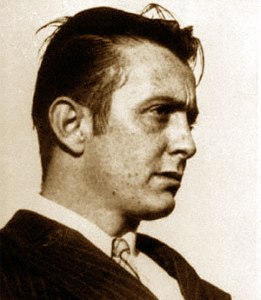
Inferiority might have been your first memory.
Though you were born on American soil,
Denver, CO, April 8th, 1909,
the chinked chains of immigration
had you by the throat and bowels, pinched your nerves
as you butted your head against the scabby base of a totem pole.
You, the little wop, the fenced-in dago, trying to dig his way
to China, or the moon, or to any form of greatness
that would eclipse your undermining complexes.
And so, out of shame and need, out of fevered desire,
you created Bandini, or he you.
Arturo Bandini, rising star and literary godsend
of John Fante’s complicated inner world,
soon to be exported and appraised and adored
by thousands, maybe more.
Arturo Bandini would draw from your history
and chagrin—your philandering, boozing, gambling father,
your mother, having to beg credit to keep the family fed,
your fear and loathing of Jesus,
and love-hate relations with the saints,
all of it would fuel Bandini’s quest
to transcend your blues,
your gnawing sense of lesser-than.
You would become the Joe Dimaggio of the literary world,
the gold-plated pride and joy of your people,
or at least go down swinging.
Bandini, fire in his belly, lean days of determination,
a starved mongrel digesting the pit and seeds
and citrus rinds and sun-tendered leaves
of palm trees in 1930s L.A., an angry, confused, passionate
young man, stalking fury and sound, full of himself
and words that he prayed to God would not let him down.
He, John Fante, the great Arturo Bandini, gave us pages,
a score of scorched pages, not enough according to him
(he would go on to become a Hollywood screenwriter
and malign himself as the worst kind of traitor to his soul and calling)
but he left behind the Bandini Quartet, four novels
with his grit-infused masterpiece, Ask the Dust, forming its apex.
Some angry young men mellow with age,
Fante, it seems, raged until the end.
His legs, and sight, were claimed by diabetes,
and Fante, as a blind amputee, bed-ridden, took one last dive
and salutary fling into the inspired world of Bandini,
dictating his final novel, Dreams from Bunker Hill, to his wife, Joyce.
Bukowski, who had accidentally stumbled upon Fante’s work,
considered him a god.
The two would become friends, and Bukowki would do his part
to resurrect Fante for a new generation.
It seems, after all, that Bandini, upon a cross,
grinning, scowling, dreaming of words
and how to arrange them according to gospel,
had amounted to a scarring glint
upon so much favored dust.
Posted in Poetry, Prose, Uncategorized
Tagged april 8th, arturo bandini, ask the dust, Italian-American, John Biscello, john fante, literature, los angeles, novel, novelist, poem, portrait, prose poem, tribute, writer
Leave a comment
Joan of Arc
Enlightened, perhaps. God-engorged hormones, maybe.
Regardless of why, Joan, you were the rebel prototype
long before James Dean zipped up a red jacket,
or Marlon Brando mumbled and curled his upperlip into a totem,
before Louise Brooks and Josephine Baker and Mae West
scorched bits of screen and earth and tore hearts to shreds
with a flickering edge.
You, Joan, were the world’s most famous, cross-dressing heretic,
the It-girl of alleged sorcery,
a rebel very much aligned with a cause,
coursing a waxwork future and belated sainthood.
It was in your father’s garden, age thirteen, when you first heard the voices, saw the visions.
St. Michael, St. Katherine, and St. Margaret, a trinity of Beauty unbearable that brought tears to your eyes. But they didn’t come to serve as spiritual eye-candy, or to bring you otherworldly comfort. They were delegates, delivering a message direct from the Man Upstairs, a command which, to any less a mystic, might have fallen on deaf ears, a task that would have registered as preposterous or impossible, but not for you Joan: faith was your stock-in-trade.
So you listened, took it in, an illiterate, thirteen-year-old peasant girl on the cusp of puberty,
being told that it was her duty and obligation to help lead France to victory over the English,
to fulfill a destiny that had been part of France’s prophetic pipeline for generations: a virgin will come, a miracle-worker, and she will restore France to its former glory.
You would have been happy to stay at home spinning wool with your mother, tending to the animals, gazing dreamily upon the milkbearded faces of clouds, to pass your time as a humble girl quietly in love with God, but you knew it would be bad form, downright impious, to argue against a trinity of saints that had taken the time to visit you, just you, in your father’s garden.
Not to mention, when God gets in your head, like a luminous migraine, or a marvelous tumor, what can you do except abide?
The rest is history. Or myth. Legend. Pages from a tattered scripture in a gilded dustbin. Something.
There were the victories over England, the coronation of Charles VII, at which you wielded your iconic banner, your capture and imprisonment.
If there had been tabloids, you, Joan, would have been splashed daily across the headlines:
France’s Favorite Maid To Be Tried for Heresy
Joan, the Teenage Witch, Refuses to Admit Allegiance to the Devil
Of course, as God’s cheeky, chosen daughter, you had no intention of going gently into that good night. Several times you tried to bust out of the bighouse, often falling from great heights.
When the Inquisitors grilled and viciously quizzed you with the hopes of railroading you into an incriminating confession, you shrewdly sidestepped and evaded all their tactics, case in point:
Inquisitor: Are you in God’s grace?
Joan: If I am not, may God put me there, and if I am may God so keep me.
You had the bastards squirming, Joan, eating their own blasphemous piles of shit.
But, as it went, they rode a gross miscarriage of justice all the way to the stake, to that fateful day, May 30th, 1431, when they burned you, not once, not twice, but three times, before scattering your ashes into the Seine.
You were nineteen.
Twenty-four years away from being acquitted at your retrial, four-hundred and seventy-eight years away from beatification, and four-hundred and eighty-nine years away from official sainthood.
Which just goes to show that history may be written by the winners, but the rewrites belong to a much higher and more mysterious order.
Posted in Poetry, Prose, Uncategorized
Tagged france, girl, God, Heaven, holy virgin, icon, jean seberg, joan of arc, John Biscello, martyr, mystic, Poetry, Prose, rebel, saint joan, spirit
3 Comments

