-
Archives
- April 2026
- March 2026
- February 2026
- January 2026
- December 2025
- November 2025
- October 2025
- September 2025
- August 2025
- July 2025
- June 2025
- May 2025
- April 2025
- March 2025
- February 2025
- January 2025
- November 2024
- October 2024
- September 2024
- August 2024
- July 2024
- June 2024
- May 2024
- April 2024
- February 2024
- January 2024
- December 2023
- November 2023
- October 2023
- September 2023
- August 2023
- May 2023
- March 2023
- February 2023
- January 2023
- December 2022
- November 2022
- October 2022
- September 2022
- August 2022
- July 2022
- June 2022
- May 2022
- April 2022
- March 2022
- January 2022
- December 2021
- November 2021
- October 2021
- September 2021
- August 2021
- July 2021
- June 2021
- May 2021
- April 2021
- March 2021
- February 2021
- January 2021
- December 2020
- November 2020
- October 2020
- September 2020
- August 2020
- July 2020
- June 2020
- May 2020
- April 2020
- March 2020
- February 2020
- January 2020
- December 2019
- November 2019
- October 2019
- September 2019
- August 2019
- July 2019
- June 2019
- May 2019
- April 2019
- March 2019
- February 2019
- January 2019
- December 2018
- November 2018
- October 2018
- September 2018
- August 2018
- July 2018
- June 2018
- May 2018
- April 2018
- March 2018
- February 2018
- January 2018
- December 2017
- November 2017
- October 2017
- September 2017
- August 2017
- July 2017
- June 2017
- May 2017
- April 2017
- March 2017
- February 2017
- January 2017
- December 2016
- November 2016
- October 2016
- September 2016
- August 2016
- July 2016
- June 2016
- May 2016
- April 2016
- March 2016
-
Meta
Endanger
Posted in Poetry, Uncategorized
Tagged John Biscello, poem, Poetry, reflection, savior, spirit, spirtuality
Leave a comment
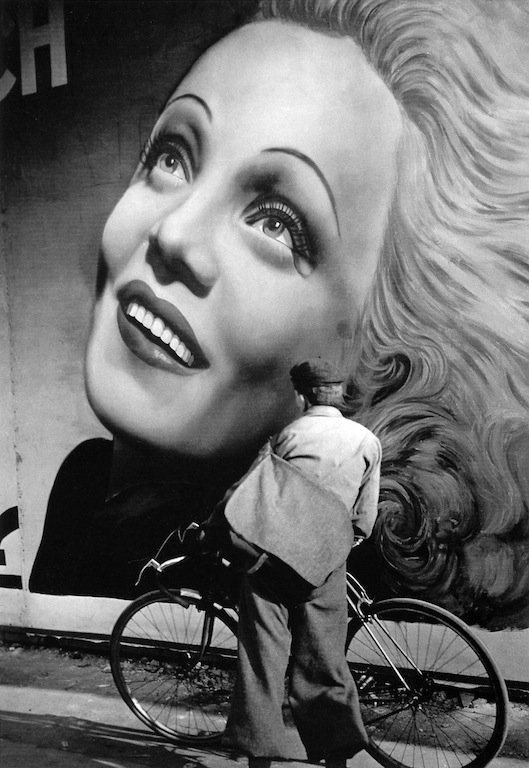
Dietrich in Heaven

In honor of Marlene Dietrich’s birthday (December 27th), my poem “Dietrich in Heaven.” Listen to the spoken word/music track here.
Today I went to Heaven,
just for a brief visit.
It was a nice joint:
tangerine-fleeced runways,
and tufts of flamingo-pink
cloud, mascara-outlined,
curling softly
round the edges.
There were lots of girls
there, a chorus-line of rib-sculpting
corsets, bright wigs, rouge, dark heels
like panthers, flashing sharp teeth
and puffed toes.
The brass section blared
woozy notes, as if too many dives
into the drink tank, had corrupted
the cleanest purest
Legions of their lungs
and blows.
And the smoke,
thickening Heaven,
of deep blue and ash-gray,
rose and spiralled
upupup in tight
denim streams.
Heaven, it seemed to me,
was like Berlin in the twenties.
Maybe cuz I met
the Bluest of blue angels,
Ms. Cool
freezeframe herself,
Marlene Dietrich.
Her voice, a pack of huskies,
after years of too-much-nightclub
smoking, pulling a sled over a slick
below-zero tundra, when she said:
Hullo, dahling. Did you bring a microphone?
The intonation of her words,
clotted peaks and dips: MICroPHOne.
No, Miss Dietrich,
can’t say I did.
I was hoping
since we were in Heaven,
together, that she’d say:
Please, call me Marlene–
but she didn’t.
Too bad, she said,
I was going to sing you
an old German lullaby.
I didn’t want to be presumptuous,
but had to ask: Can’t you sing it
without a microphone?
Deitrich’s head snapped-back,
viciously, as if phantomhands had
yanked on her hair,
the punishment for an offense
she had committed
and out burst
a raspy metallic
yet buttery-smooth
in-the-center
laugh, which went on
and on, its volume
filling the whole of Heaven.
When the laughing stopped,
her head snapped-back to upright,
and she said: I don’t know about
other women, but I require
a microphone from Earth
to sing in Heaven.
She pinched my cheek,
a little too hard.
But that’s your loss, kid,
she said, her voice suddenly
taking a turn toward Bogart.
I wanted to be near Dietrich,
her ice-queenliness
making my blood run
a special kind of warm,
but I was also
scared of her, and said:
It was very nice meeting you,
Miss Dietrich, but I’ve got to go now.
She gingerly fingered
the ruffles,
which looked like petaled white pastries,
on her silk blouse,
and the freeze in her eyes
became daggers and knives,
cutting swiftly
into every one
of my nerve-endings.
I was paralyzed.
Dietrich’s tone,
heavy cream, curdling,
when she said: Why, dahling,
donntt you lovveee me anyymmmorrre?
Without batting an eyelash,
she wrapped both
her bare legs
around my torso, and became
a floating rightangled
vicegrip, ankles twined
ribbonstyle, to keep me
sealed-in and barely breathing.
Far from being my introduction
to sex in heaven
with Marlene Dietrich,
her legs grew longer
and longer, two smoothly shaved
and supple beanstalks,
sprouting out, vertically,
until her toes
became tiny foothills
in the distance.
Then, Dietrich parted her legs,
slightly, so I could wriggle free,
and said: Take my legs
until you can’t take them anymore.
I nodded, and started walking along
Dietrich’s legs, parallel tracks
that went on and on,
past the horizon,
and when I finally reached
the point where
Dietrich’s legs cut off,
I fell back to Earth
hard.
Posted in Audio, Poetry, Press, Uncategorized
Tagged Audio, birthday, femme fatale, golden age, hollywood, John Biscello, Marlene Dietrich, poem, Poetry, silver screen, siren, Spoken Word, tribute, vamp
Leave a comment
Raking the Dust Giveaway
For those who are members of LibraryThing, I am offering free digital copies of Raking the Dust, my second novel, during a giveaway (which runs through January 17th). Link here.
Posted in Artwork, Books, Press, Prose, Publications, Uncategorized
Tagged free book, giveaway, John Biscello, LibraryThing, New Mexico, New York, novel, Surrealism, Taos
Leave a comment
Double Exposure
I tucked my hand into Anya’s armpit and guided her into the bathroom. I closed the door behind us.
Anya immediately dropped to her knees and began puking into the toilet. A lot of it splashed onto the toilet seat, which was still down.
I angled in from the side and flipped the seat up.
Anya retched violently, her body convulsing.
I rubber her shoulder, as Janine had done.
Anya emptied out everything that was inside her.
When she was done she raised her head from the toilet.
Her eyes were glassy. Puke moistened her mouth and the edges of her hair.
I tore off strips of toilet paper and held them out to her.
Your mouth, I said.
She wiped her lips around her mouth.
Did I get it?
Yea.
Would you kiss me right now?
What?
Anya laughed.
I was just wondering if you would kiss me right now, with the puke and everything. Am I too disgusting to kiss right now?
My pulse spiked. It was fast and prickly.
Anya closed her eyes and stuck out her neck. Her lips were slightly parted.
Anya, I said.
She began laughing. It was a hollowed-out laugh, void of warmth.
Anya, she repeated in a dreamy tone. Her eyes remained closed.
I looked down at her.
There’s also some in your hair.
Some what?
Puke.
There is?
Yes.
Anya’s eyes popped open.
Help me stand, she ordered with vigor.
I clutched Anya’s arm and helped her to her feet.
She stared into the medicine cabinet mirror.
I can’t even see myself, she said. My vision is out of whack.
Am I even here, she laughed, a soft, curdling laugh.
You’re here, I assured her.
I pinched her forearm.
Feel that?
No.
I pinched my own forearm.
Me either. Guess we’re both not here.
We’re ghosts, Anya smiled. Haunting our own lives. Can you help me clean the puke out of my hair?
Sure.
I turned on the water, regulating it until warm.
Tilt your head to the right, I guided Anya. A little lower. Good.
I placed the puke-stained strands of hair under the running water.
The soft frizz of Anya’s hair, combined with the warm water threading between my fingers, put me at ease.
I told Anya to switch sides and tilt left and I started rinsing.
When I was done I grabbed a towel from the towel-rack and dried the ends of her hair.
Good as new.
You’re an amazing beautician, Anya smiled.
She looked into the mirror.
I still can’t see myself. Not completely. I’m a smudge. You’re a smudge too.
We’re impressionistic, I said.
We’re ghosts haunting our own lives, Anya reminded me.
Posted in Prose, Uncategorized
Tagged basement, Bensonhurst, boy, Brooklyn, devotion, friends, girl, John Biscello, love, novel, Prose, story
Leave a comment
Glow
Excerpt from No Man’s Brooklyn, novel-in-progress.
The coke parties were my favorite. It was when everyone was happiest. Everyone usually meant my mother, father, and their friends, Tony and Dina.
My mother would tell me—Tony and Dina are coming over tonight—and I knew that meant a coke party and I got excited.
The coke turned them into children again. Or a peculiar breed of children with waxy glowing faces and eyes full of fire. Good fire. Not dragon-fire or hell-fire. The fire of all-night magic.
Tony, who worked sanitation with my father, was a barrel-chested Italian man with tattoos and two thick dark rugs for eyebrows. Like two baby Muppets had sprouted above his eyes. Tony loved to laugh. It was a high-pitched, wheezing laugh, a dolphin squeal that didn’t match his muscles and tattoos.
His wife, Dina, was the smart one in the bunch. That’s how I thought of her because she was a college graduate. She was the only college graduate I knew. No one in my family had graduated college. My father had dropped out in sixth grade, my mother in eighth grade. Because Debby was the smart one I always found it odd that she did coke with the others. I suppose I thought college graduates didn’t do coke, that they were too smart or too good for it. Maybe I thought higher education meant higher living, I don’t know.
Yet I was glad Dina did coke with them, because then everyone was unified in their happiness. Later when my mother quit doing coke and my father continued doing it, the unity dissolved and was replaced by violent discord.
The kitchen was where the action took place. As soon as Tony and Dina entered our apartment, my father would press—Tony did you get the stuff. Tony, smiling big, would put my father’s mind at ease—Yea Louie I got the stuff. And both of them would enliven with anticipation.
Seated at the kitchen table, Tony or my father would razor-cut lines on a small mirror engraved with a Heinken logo.
(I found that mirror about fifteen minutes ago in one of my father’s kitchen drawers. The past is never dead, Faulkner said, it’s not even past. I thought of that. And wondered when was the last time lines had been snorted off the mirror.)
I loved the exactitude of the ritual. The methodical dicing of the lines. The cut plastic straw or rolled-up bill passed around. The vacuum-sucking snorts, and the finicky staccato inhalations draining the residue lining the inside of the nostrils.
My father never let me stay in the kitchen when they snorted. He’d tell me to go in the living room and watch TV. Fortunately, the kitchen was adjacent to the living room, and leaning against the base of the recliner, “watching TV,” I’d angle myself just so and watch them through the doorway. Yet listening to them brought even greater pleasure than watching them.
The din of their voices, growing bright and electric, the ripples of laughter, with Tony’s pitch reaching kettle-steam frequencies.
On those nights they talked and talked and talked, bright ribbons of noise in which they wrapped themselves. I savored and cherished their communion. It was like being coked-up through osmosis.
Their joy was my joy, their cheer my cheer, their energy my energy.
It was togetherness, albeit a second-rate version, for it only lasted as long as the effects of the drug did. The aftermath of the coke parties, the post-script, was never any good.
When we were all high, it was great. The comedowns, on the other hand, left jus jangled.
In those periods, the magic of childhood dimmed and we darkened and grew old before our time.
Between childhood and death lay an inclement center which refused to keep still.
Posted in Prose, Uncategorized
Tagged Brooklyn, childhood, cocaine, coke, drugs, dysfunction, family, friends, glow, John Biscello, New York, novel, parties, Prose, story
Leave a comment
Praise
Quite simply,
the curlicue flake of snow
kisses the child’s lashes,
and winter’s slow hidden pink
marvels
in its own tender praises.
Sacrifice
It is strange,
and indelibly touching,
how a sacrifice to the winter gods
and summertime sadness
co-exist as one
and the same thing.
Posted in Poetry, Uncategorized
Tagged fall, grace, John Biscello, Lana Del Rey, music, poem, Poetry, rebirth, sacrifice, summertime, summertime sadness, Video, Winter
Leave a comment
Unreachable You
It’s tough to always be in love with a ghost. Also it’s easy. The living don’t stand a chance against ghosts. In loving ghosts there are no real complications, no real disappointments, no real anything. There’s lots of teething on absence, lots of wrestling with thin, haunted air.
Loving a ghost is like having some incorruptible tryst in a dream-state. To remain in love with a ghost, to maintain the relationship, you must spend a lot of time in the Land of Dreams, in the Land of the Dead. If you stay there long enough you become more ghost than human. It is one of the side-effects that comes with that sort of traveling.
Anya I long to reach you only because I know that you are unreachable. It keeps my longing in a chrysalis state, a cocoon state. Nothing ever grows, it simply hums and palpitates and aspires toward growth. It is the shadow twin of growth.
Anya, I couldn’t reach you in life, not your deep and true center, and I cannot reach you in death, and so my relationship to you remains one of thorny and perpetual expectancy. To reach you would mean a betrayal of dreams. Or perhaps, if I am honest with myself, they are illusions masquerading as dreams. It is hard to tell, Anya. Impalpability makes for complicated living.
Sometimes you have to walk through the boneyard in order to reach the garden.
This is what I tell myself. What I keep telling myself.
These echoes are tinted, Anya. That sad molten brown of ruptured sunsets,
of treeless fields.
You know what I am talking about Anya. You always did.
Posted in Prose, Uncategorized
Tagged boy, deathy, devotion, dreams, ghosts, girl, illusions, John Biscello, life, loe, novel, obsession, Prose, story, torch song
Leave a comment
Coyote, a Christmas Story
Get on with your dying, Coyote urged. It is time.
I was scared. I was scared of the unknown. I was scared of letting go. Scared of dissolving my identity. Who would I become?
That is the nature of metamorphosis, Coyote said. You don’t know what you’ll be like once you’ve been transformed. Nothing ever stays the same, ever. Deaths and rebirths.
Coyote said it wasn’t that hard. He showed me. In a most violent, vicious and macabre way, he showed me. He climbed onto a barbed wire fence. His body got caught in the curls of sharp wire. He twisted and turned. He was in agony. I listened to his agony. He yipped and howled. It was a sad yipping. The yipping of one who is dying.
Coyote, I cried out. I could have cried out, Jesus. I could have cried out, Buddha. I could have cried out, Mary. There were lots of names I could have cried out and they all would have been okay, or right. But Coyote was the most right.
It took a long short while but soon there was no more twisting and writhing, no more sound. Coyote was gone. His spirit had flown. His body remained. A totem, a sacrifice.
Winter came the next day. Cold winds and snow. I went back to see Coyote. His fur was tinged in white flakes. His body had frozen. As well as his tongue. I stared and stared at Coyote. I fixated on the ghastly remains. That was all I could think about. Then, as if nudged by something in tangible in Winter, my thinking changed. I started thinking about Coyote’s spirit. How it had flown. Once I started thinking of that, Coyote’s voice came to me:
Forget the vessel, how it looks, the agony I experienced when caught in the fence. Those things belong to ephemera. They are temporary. My spirit is immortal. It has flown. A changing of realms has occurred. Dwell on the eternal qualities of my spirit. Dwell within the mysterious chambers of the heart. Has my death taught you nothing?
I went home and thought about what Coyote had told me. The next day when I went back his body was gone. Had it ever been there, I wondered. Had the whole death thing been a wise gag performed by a trickster god?
There was the photo. Proving that it had been real. But what of it? What of reality proved?
Metaphor and myth were the ultimate gateways to metamorphosis.
Buddha said, “In the end there are only three things that really matter: how much you loved, how gently you lived, and how gracefully you let go of things that weren’t meant for you.”
I thanked Coyote for his gift.
And gently turned the page to begin a new chapter.
Posted in Prose, Uncategorized
Tagged animal, christmas, coyote, dark, John Biscello, Light, love, New Mexico, rebirth, soul, spirit, story, tale, Taos, totem, Winter
Leave a comment
Endear
Sometimes
a word
scratched in dark ink
onto a page
is the loneliest sound in the universe,
and yet,
what beautiful solitary company
these verses
endeared to mortal failings.
Posted in Poetry, Uncategorized
Tagged Beauty, dream, endear, heart, John Biscello, loneliness, love, poem, Poetry, sadness, writing
Leave a comment