In this unaired episode of Happy Days, titled “The Other Cheek,” Arthur Fonzarelli, Fonzi, the Fonz, slaps Richie Cunningham hard across the face. Void of context, we don’t know why. Richie’s jaw drops. He is in complete shock. He holds his hand against his crimsoned cheek. Richie careens out of time, out of character. He tells Arthur Fonzarelli, the Fonz, Fonzi, that he’s made a big mistake, a very big mistake, and he would be very sorry—did he know who he just slapped? You just slapped someone who was a child star—remember Mayberry, motherfucker?—and I’m gonna go on to become a major director who makes lots of films, Backdraft and Born on the Fourth of July and Apollo 13, all kinds of films, I’m gonna be the shit, and you, what are you gonna be be doing, Fonz?
When Richie—stationed somewhere between the character, Richie Cunningham, and Ron Howard, the actor playing Richie Cunningham—is done with his rant, the rest of his face has joined his cheek in turning crimson. Henry Winkler, a.k.a, the Fonz, Arthur Fonzarelli, Fonzi, is baffled, and looks around as if trying to pick up on a gag. Was he on Candid Camera? Yet everyone on set looks as baffled as he does, an awkward quiet clotting the air. One of the camera-men coughs. Ron Howard/Richie Cunningham storms off the set, muttering hotly under his breath. The Fonz, still not sure what to do, defaults to his signature move—thumbs jacked up and out, like a jazzy hitchhiker, as he mouthgrooves—Ayyyy! The live studio audience applauds. Or it canned applause? It is hard to tell the difference.
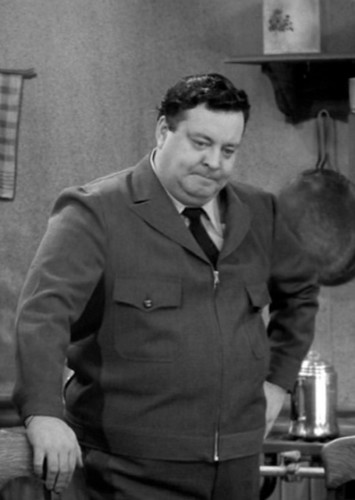
Ralph Kramden sweats and sweats, eyeballs bulging in their sockets. Plagued by the accursed notion that he has become a whale, no, a rhinoceros, no, an inoculated hippo that shows up to birthday parties uninvited. This visual grotesquerie, reflected back to him in the spotless glass of the teapot that his wife, Alice, had brought home, is something he cannot bear. He begins pacing back and forth, back and forth, chewing up clipped mileage in his grubby shoebox of an apartment, wanting to yell, curse, stomp, holler, blame someone or something for this condition which apparently has become him, and he it. It’s murder to know oneself in this way, and not be able shake it off, absolute murder, and the cold beetles of sweat rolling down his back and neck and jowls are making everything infinitely worse. He has been confronted by the purest form of disgust, and if his life were a show, of which he had directorial control, he’d yell CUT, and peel off this suit of blubber he was wearing and allow the sane thin man within to breathe, while rejoicing in the fact that Ralph Kramden, the sweat-slicked hippo of a hothead, was only a person meant to amuse, ha-ha, laugh everyone, laugh, it’s just a fat suit designed for your entertainment—I am not him, he is not me—yet this fictional reverie was betrayed when Ralph caught a flickering glimmer of himself, his true self, in that goddamned glass teapot (where had Alice gotten it? and more importantly, where was she?). Desperate for air, and solace, Ralph opens the window and calls up to his neighbor and best friend, Ed Norton … Norton, hey, Norton!! It is only when speaking this name aloud that revelation hits hard, as if the window had suddenly slammed shut on his head, an aspiring guillotine: Alice wasn’t coming back. There was no more Alice. No more Norton, either. No more Trixie, Norton’s wife. All of them were gone. The schtick which Ralph’s life had become had run it course. He had been left alone, with unbearable reflections, and no one to raise his voice against.
A musician named Sam introduced me to Ask the Dust when I was in my early twenties. It was exactly the book I needed at the time. Sam had heard me read at the Vault, a house-based, performance space in Queens, and afterwards asked me if I had read John Fante. I told him I hadn’t, and didn’t know who Fante was. Sam’s face lit up. I got something for you, he said. That something was given to me when Sam and I met at his house to do some spoken word and music recording. He gifted me a copy of the Black Sparrow edition of Ask the Dust and told me it would change my life. I read it in a couple of nights and was blown away. The romantic solipsist in me fell deeply into the echoes and correspondences of mine and Arturo Bandini’s life (Bandini being Fante’s alter-ego): the Italian-American background, growing up in a household of chaos and addiction, the burning need to escape from home, the outsized literary ambitions. It was the classic sense of lesser-than desperately seeking more-than in order to feel important, validated, confirmed, seen, heard. Ask the Dust, in its hardboiled innate lyricism (thinly concealing wounds and inflammable sensitivities), its flinty phlegmatic timbre, and seismically registered mood swings, lodged itself in my heart and became one of my mini-bibles and crooked valentines.
You got to ask yourself: Do you want to fuck Judy Garland? Or do you want to become her? I wasn’t prepared for this line of questioning. I was eleven at the time. Or twelve. I think, eleven. My mother’s boyfriend had asked me this. My mother’s boyfriend was an idiot. I had considered him an idiot even before he had asked me this question, which really was directed at me more as an ultimatum, but once he asked me this, his status as an idiot was firmly cemented. Of course, I didn’t tell him this. He was bigger than me. And had tattoos. There was a snarly sneer, or sneery snarl—choose your poison—behind his words when he spoke them. Do you want to fuck Judy Garland? Or become her? I knew which option he wanted me to choose.
I was watching The Wizard of Oz for the umpteenth time when he asked me. I looked at the screen. Dorothy Gale, a.k.a., Judy Garland, had just met the Scarecrow who was locked into his stumble-bumble routine. My mother’s boyfriend also stared at the screen. What did he see? A young pigtailed girl in a blue dress that he was pining to fuck, or had pined to fuck over the course of many years and viewings? I felt as if I were in the company of a serial rapist. And my mother was dating this guy?
Think about what I asked, he spoke clinically, then left the living room to give me the proper time and space to digest his inquiry. I felt as if I had been abducted and then dropped off blindfolded at a crossroads. Which way to go? Do I fuck Judy Garland? Do I become her? There seemed to be only two choices, and whichever one I chose was going to become a central part of my fate, my coming of age. Or, I thought, you could stand at the crossroads, muted and blindfolded, and choose no path at all. Just stay exactly where you are, become as the Scarecrow impaled on a post. That too was a choice, a third one.
I had always marveled at the transition from black-and-white Kansas to color-saturated Oz. It seemed the stuff of miracles. In my estimation and desire Oz was heaven. I’d go there someday. Into that world of cinematic color which existed nowhere else. Oz was heaven. My mother’s boyfriend advocated for the serial raping of Dorothy. A house would fall on him someday. Karma’s a bitch that way.
Years later, I would run into my mother’s now ex-boyfriend at a pet shop. I was there to buy a goldfish for my daughter. I don’t know why he was there. Perhaps to buy a gerbil. It seemed a likely story. Anyway, he was standing on line in front of me. He was older. Grayer. Paunchier. I observed the lion tattoo on his forearm. It had faded some. I didn’t want to talk to him, didn’t want him to see me. I tapped him on the shoulder, to this day I don’t know why, and spoke his name—Frank—which had suddenly come back to me.
He turned around. He immediately recognized me. He said my name, as if it were the title of a video game, then stuck out his hand, which I shook. We talked briefly, casual chit-chat, none if it memorable. What I do remember about that encounter: right before I was leaving, after having paid for the goldfish, I said—You know what, Frank, I married Dorothy. And divorced her. Or she divorced me.
Dorothy, he said with mounting confusion. Who’s Dorothy?
You know … Dorothy, I said, then clumsily exited the shop like a scarecrow who was just learning how to use his legs after a long coma in a field of silent wheat.
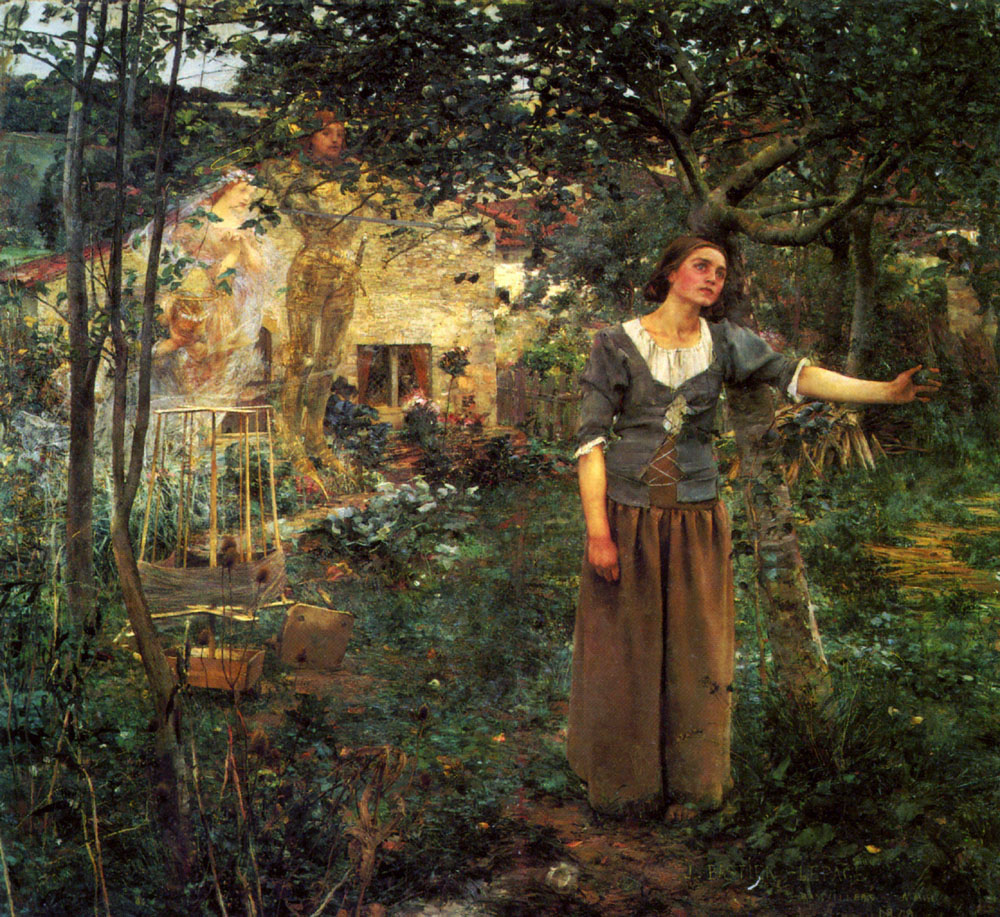
Enlightened, perhaps. God-engorged hormones, maybe. Regardless of why, Joan, you were the rebel prototype long before James Dean zipped up a red jacket, or Marlon Brando mumbled and curled his upperlip into a stylized totem. Before Louise Brooks and Josephine Baker and Mae West scorched bits of screen and earth and tore hearts to shreds with flickering edges. You, Joan, were the world’s most famous cross-dressing heretic, the It-girl of alleged sorcery, a rebel very much aligned with a cause, coursing a waxwork future and belated sainthood. It began in your father’s garden, age thirteen, when you first heard the voices and saw the visions. St. Michael, St. Katherine, and St. Margaret, a stunning trinity that brought tears to your eyes. But they hadn’t come to serve as spiritual eye-candy, or to bring you otherworldly comfort. They were delegates, delivering a message direct from the Man Upstairs, a command, which, to any less mystic, might have fallen on deaf ears, a task that would have registered as preposterous or impossible, but not for you, Joan: faith was your stock-in-trade. You listened, you absorbed, an illiterate peasant girl being told that it was her duty and obligation to help lead France to victory over the English, to fulfill a destiny that had been part of France’s prophetic pipeline for generations: A virgin will come, a miracle-worker, and she will restore France to its former glory. You would have been happy to stay at home spinning wool with your mother, tending to the animals, gazing dreamily at clouds, passing your time as a humble girl quietly in love with God, but you knew it would be bad form, downright impious, to argue against a trinity of saints that had taken the time to visit you and you alone. Not to mention, when God gets in your head, like a luminous migraine or a marvelous tumor, what can you do except abide? The rest is history. Or myth. Legend. Pages from a tattered scripture in a gilded dustbin. There were the victories over England, the coronation of Charles VII (at which you waved your iconic banner), the capture and imprisonment. If there had been tabloids, you, Joan, would have been splashed daily across the headlines:
France’s Favorite Maid to be Tried for Heresy
Joan, the Teenage Witch, Refuses to Admit Allegiance to the Devil
Of course, as God’s cheeky, chosen daughter, you had no intention of going gently into that good night. Several times, you tried to bust out of the big-house, often falling from great heights. When the Inquisitors grilled and viciously quizzed you, with the hopes of railroading you into an incriminating confession, you shrewdly sidestepped and evaded all their tactics, case in point:
Inquisitor: Are you in God’s grace?
Joan: If I am not, may God put me there, and if I am, may God keep me there.
You had the bastards squirming, Joan, eating their own blasphemous piles of steaming shit. But, as it went, they rode a gross miscarriage of justice all the way to the stake, to that fateful day, May 30th, 1431, when they burned you, not once, not twice, but three times, before scattering your ashes into the Seine. You were nineteen. Twenty-four years away from being acquitted at your retrial, four-hundred and seventy-eight years away from beatification, and four-hundred and eighty-nine years away from official sainthood. Which just goes to show that history may be written by the winners, but the rewrites belong to a much higher and more mysterious order.
Invention was your solitude and twin, wasn’t it, Miss Nin? The calculated manner in which you spread secret pages, like silk violet capes or fringed shawls, promising an air of mystery and desire. You enabled the cause of symmetry, so as to confess. Why couldn’t a woman be a fabulous opera fulfilled nightly through shadow-call and gilded tenor? Why couldn’t many hands attend fruitfully to matters of flight and garden envy? Paradise, for you, was always one finite entry away, wasn’t it? A diarist’s mad dash and hush to engorge, inflame, and export the wilds of a soul which outgrew borders and margins, spills of ink immigrating to distances recalled. You warmed yourself in reveries and blood-let, Miss Nin, while attempting to detonate and explode your neuroses, going so far as to leave us detailed maps of your psyche’s labyrinths. Yet, like a cartographer with an interiority complex, your maps led seekers to regions well beyond you. Territories, unmarked, leading us back to ourselves. And, I, a spelunker with a hard-on for sphinxes, used your maps to my own advantage—to reveal and baffle, to veil and dwell—because you see, Miss Nin, your bones bridged me to mine, as mine will to another, and so on and so forth, an underground network of interconnected bridges and tunnels, where lusting pilgrims come to know the tenderest breaking of dawn to light.
Inferiority might have been your first memory. Though you were born on American soil, stubbornly planted there, the chinked chains of immigration clanked and rattled, Marley-style, tightening around your throat, as you butted your head against the scabby base of a totem pole. You, the little wop, the fenced-in dago, red in the face, trying to dig his way to China, or the moon, or to any form of greatness that would eclipse your undermining complexes. Out of shame and want, out of fevered desire, you created Bandini, or he you. Arturo Bandini, rising star and literary godsend of John Fante’s complicated inner world, soon to be exported and appraised and adored by thousands, maybe more. Arturo Bandini would draw blood from your history and chagrin—your philandering, boozing, gambling father … your mother, begging credit to keep the family fed … your fear and loathing of Jesus and love-hate relationship with the saints … All of it would fuel Bandini’s quest to transcend your blues, your gnawing sense of lesser-than. You would become the Joe DiMaggio of the literary world, the gold-plated pride and joy of your people, or at least go down swinging. There he is, Bandini, fire-bellied, lean days of determination and hunger, a starved mongrel digesting the pits and seeds and citrus rinds and sun-tendered fronds of palm trees in 1930s L.A., an ox-driven young man, stalking fury and sound, full of himself and words that he prayed to God would not let him down. He, John Fante, the great Arturo Bandini, gave us pages, a score of scorched pages, not enough according to him (he would go on to become a Hollywood screenwriter and malign himself as the worst kind of traitor to his soul and calling), but he left behind the Bandini Quartet, four novels, with his grit-infused masterpiece, Ask the Dust, forming its apex. Some young men mellow with age. Fante, it seemed, raged until the end. His legs and sight claimed by diabetes, Fante, a blind amputee, bed-ridden, took one last spirited dive and salutary fling into the necessary world of Bandini, dictating his final novel, Dreams from Bunker Hill, to his wife, Joyce. Bukowski, who had fatefully stumbled upon Fante’s work, considered him a god. The two became friends, and Bukowski would do his part to resurrect Fante for a new generation. It seems, after all, that Bandini upon a cross, grinning, scowling, dreaming of words and how to arrange them according to innate gospel, had amounted to a scarring glint upon so much favored dust.
To be a mother, and to double as a dark sorceress, a cleaver of dried bones, could not have been easy. Especially in the 1950s. They burned witches then, as well as reds and blacks and faggots, and other things that didn’t fit the paradigmatic slant. It was a time of burning, though televisions were new, and lawns were green and sprinklered, and men chewed cud while shaving their second faces. Also, they burned witches way back when, and now too, it seems witch-hunts belong to some fraternal order of treason, some moose club with crooked antlers, who knows.
You wrote poems. No, you fevered them. Red-hot blues, peppered shards of black. You held bits of the moon hostage, or she you. You mooned for the world, a she-wolf’s strip-tease, straight to the bone, and also, also there was your death’s head vaudeville act, juggling scythes, gargling ram’s blood and spitting it back out as flames that burned skyward, charring the fluffed bellies of clouds.
Alchemy, vaudeville, burlesque, spells brightening hollowed veins and inflaming corpuscles, spells animating petrified, rotting limbs, Lady Lazarus with a sideways grin, you did it it all, Miss Plath, and still had time to make dinner. Still took care of the kids.
Doing all these things while crossing the River Styx on a paper boat must not have been easy. But the poems, papered heartbeats, glistening with sap and resin, as if torn directly from dream-womb, and left behind for us to ponder, digest, fill our bathtubs with and swim in.
Your silver, vagabond, winterkissed drops, pressed between the margins of an unyielding sea, will not be forgotten, for the moon holds the tides accountable for all its parceled beauty.
It was a matter of helium-speak, and tomorrow-talk, and bright ribbons of noise amounting to nothing.
We, hanging out on the street-corner, conducting ping-pong volleys and raps, ferocity and verve, building ourselves up—who we were and were not, what we would do or had already done. We erected fragile monuments to ourselves, and asked others to pay their respects, perhaps even worship the idols we had carved out of thin air.
Yet, in knowing one another’s monuments to be false, and plastered with shit, we tore each other down, behind shoulders, glances, sarcastic jabs and cuts.
Danny Dazer, who you kidding, you’re not moving to Florida to work at Club Med and screw a new babe every night.
And Mike Chichamimo, we all know there is no hot girlfriend who lives in Staten Island, which is why we never see her, right, but she is real with big tits and a tongue she can’t keep out of your mouth.
We talked big because that was the racket, because we were kids on a street-corner, emotional asthmatics stealing helium from the lungs and lives of others, prospectors mining for hot air.
Tomorrow, yes, tomorrow was our ally, and we charted its petty course, full of sound and fury, our tongues turning tricks and teasing value, out of nothing at all.
Beckett spoke about it: the inability to keep quiet. The inability to not say stories, to not make stories, to not find oneself shaped according to stories fitted to shifting forms. Beckett, with gallows irony, talked plenty about silences. He tried to reach silence, outline silence, through words. He amassed spools of verbiage in his quest to penetrate silence, to not say anything. I will say a lot in not saying anything, or, I will say nothing in many words saying nothing. Everyone dreams differently. Everyone dreams according to their own silences and motives, their own sphinxes and disciples. Whether or not you want them to, the stories go on. Inside me, they never stop. The narrative is ongoing. The narrative splinters into multiple narratives which splinter into more narratives, a hyper-exponential proliferation of narratives wrapped in recursion. In it, I see myself and lose myself and find myself and wonder about myself: the music of solipsism to the nth degree. We give voices to our silences because so much of us lives there unspoken. We long to birth the unspoken. We do this in words on pages. Marks on canvas. Notes in music. Abstractions hosted by masks. We supply ourselves with oxygen through ritual acts of creation. Beckett attempted to reach the end of language through language. His long sonata of the dead was the revival and impossible task he set for himself. Similar to that Einstein creed: You can’t use the same type of thinking that created your problem to solve your problem. Something different was needed. Beckett attempted to go beyond words by using words, tried to corral silence by making silence the domain of language. To not say anything, to ultimately embrace silence, would mean (gulp!) putting the pen down, and placing a moratorium on words. The only way Beckett imagined that would happen, could happen, would be through death. Death, flexing dominion, would have to pry the pen from Beckett’s cold stiff hand. Death would have to impose the gag order that Beckett could never attain by choice. From out of the silence comes words, only to immediately plunge back into the silence. Perhaps, a bit like catch-and-release fishing. The words, secured from the dark, from the silence, and briefest exposure to light, before descending back into the dark, the silence. We come out of silence only to return to silence. A lot of words and stories in between.







 John Biscello