
Convicted sphinx to beguiling raptures,
and time-spanned sync-holes,
literary enigma, Clarice Lispector,
understood keenly the tolling of ruptures
within,
sowing breath’s metered
and fasting threads
to the fractional seethe of holy
and lent.
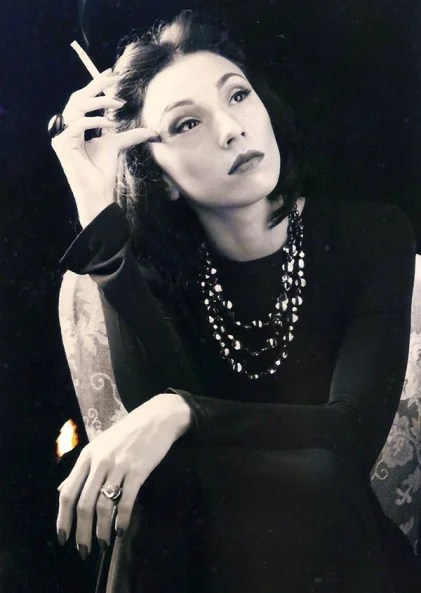
Convicted sphinx to beguiling raptures,
and time-spanned sync-holes,
literary enigma, Clarice Lispector,
understood keenly the tolling of ruptures
within,
sowing breath’s metered
and fasting threads
to the fractional seethe of holy
and lent.
In lyrical, abetted praise
of Patti Smith,
white witch torchbearer
of punk mettle
and lightning bones—
She, wildly grown
and gutter-starred,
remains in love and swelling thrall
to the Romantic timbre
and clash of Rimbaud’s
unrelenting wake,
or Plath’s penning of dateless verses—
In this respect,
vision, and visionaries,
never grow old or fade,
bur rather stand proof-tested
against Time’s scalpel and ruins,
exacting the plated wisdom of Novalis—
all philosophy is homesickness,
and so it goes, generationally engraved,
the song and the singer
forever mating to heed the marvels
of voice to calling.

Last night I dreamed of Roberto Bolaño.
Or he of me.
We were sitting at a dimly lit café,
a subterranean plot of a café,
and Bolaño was drinking chamomile tea.
In the latter stages of his life
chamomile tea had become his drink of choice
as he permanently disfigured the literary landscape
with a pair of scratched glasses and acetylene torch.
Bolaño’s liver had gone to rot
and would not be making a comeback.
His father had been an amateur heavyweight boxing champion.
I wondered what he would think about his son drinking chamomile tea.
My father had been an amateur boxer, too,
but not a heavyweight, and not a champ.
I figured this was something Bolaño and I had in common.
That, and writing.
But I was too scared to bring up writing.
I knew of Bolaño’s legendary penchant for eviscerating other writers,
ones he thought lowered the bar, and I wanted to stack up,
make the cut, and I cursed out this bilious prick Bolaño
without saying a word to him.
I stared at the man, hunched over,
looking somewhat docile and resigned
as he sipped his chamomile tea
in slow and measured sips.
There was nothing to fear,
I was projecting, creating late night cinema
to keep myself on edge.
Then, a mistake.
I asked Bolaño what he was drinking
(having slipped my mind that I had already asked this)
and he said, without raising his eyes—Chamomile tea, stupid.
Stupid?
I felt my triggers flush and activate.
Fireworks went off in my head: Listen,
you scrawny, green-livered motherfucker,
just because you wrote some novels and poems
and denounced the literary establishment
with a holier-than-thou pedigree
and acidic smugness, just because…
My fireworks fizzled out.
I stared at Bolaño who was contemplating his tea,
a Buddha with a middle finger for a tongue.
Both of our fathers had been boxers,
but whereas his father had taught him how to box,
my father hadn’t taught me.
In that respect, I was at a clear disadvantage
if I decided to physically confront Bolano.
Then again, his liver was bad,
and as far as I knew my liver was functioning fine.
So who wins?
A writer with boxing skills and a bad liver,
or a writing with no boxing skills and a good liver?
I’d bet on Writer A.
I was Writer B.
I wanted out of this nightmare café,
out of this dream.
It represented too blunt of a mirroring system.
I rose to leave.
Bolaño’s eyes tracked me.
You should stay, he said. We can talk about writing.
Wait, Bolaño knew I was a writer
and he wanted to talk to me about writing?
All my venom dissipated.
Bolaño and I were on good terms.
I liked this proud, passionate, self-possessed
tea-drinking writer, whose father had been a boxer.
Just like my father.
There was that, and the writing.
We could potentially talk all night.
Visionaries
elope with themselves.
Time-lapses
of a shotgun wedding
in a placeless tent
ministered by the migrating wind
and its sideshow cabal of voices—
In the company of echoes,
you kneel, and grow favorably intimate
with unheard of distances
closing on your lips.
“Outlaw Country,” an excerpt from my novel, None So Distant, published in Spare Parts Literary Magazine as part of their From the Desk series:
Reports of fringy lore on lost highways. Point-counterpoint in a twangy battle of wills. Stay tuned.
I am not going anywhere. There is nowhere to go. Someone took a picture of me, once, whenever, just like this—A girl standing on the highway, packed suitcase, waiting, hoping, or, not waiting, not hoping … pictures lie in ten thousand different ways.
In that scene, I will always be there, here, the side of the highway, and every person that lays eyes on me will superimpose a story, I am imagination’s text and frozen asset, I am the photo that makes you want to believe in eternity as an irregular verb.
I am not going anywhere, yet if you are not going anywhere eternally, is that the trip? Is that the action? The motion? The odyssey? Eternity, even as an irregular verb, is subject to context.
And on the eighth day, unseasonably warm,
the hounds basking in hell,
modeling balmy, crotch-rot bikinis in Gilead,
called out—
Please, God, let our leader
mirror starkly our deepest fears and shadows,
let him be as I, for I
am the candle’s guttering, green light,
advancing the dark to
restore the carcinogenic appetite
and capital cause of cannibalism—
P.S. If you see your mother’s severed limb
in my mouth, please forgive my
obscene eating habits.
Zombies are raised,
and not born,
as I’m sure you already know.
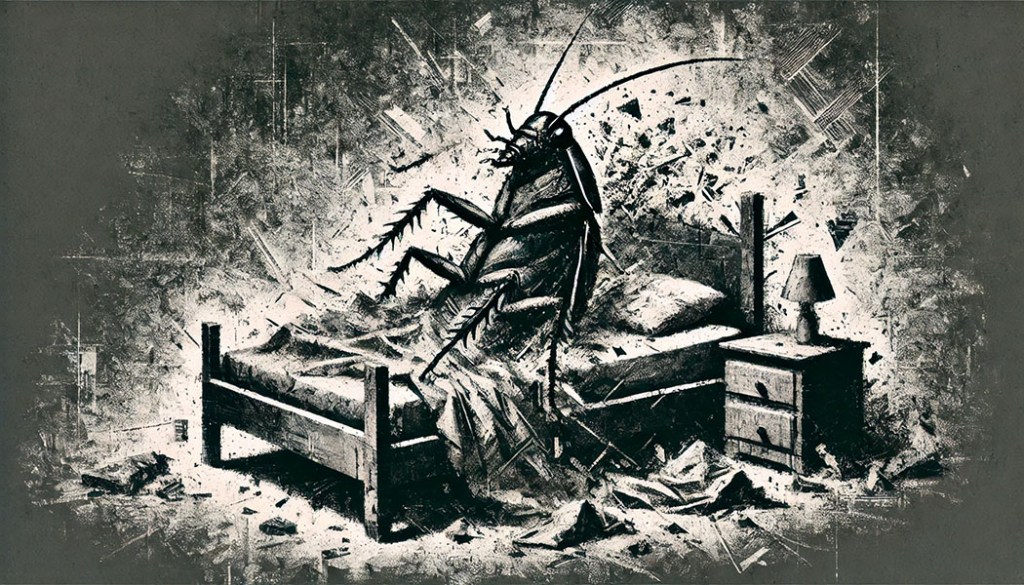
My fiction piece, “Metamorphosis Variations” (inspired by the first sentence of Franz Kafka’s “The Metamorphosis”) now appearing in 3:AM magazine. Excerpt below:
As I awoke one morning, from a night of discarded syringes and cough syrup, I found myself transformed into a woman dreaming she had been transformed into a scream. She, meaning I, awoke, the taste of mercury teasing my tongue, nerve-endings tuned to the residue of the scream I had been: the dead with polyphonous voices.
When the trembling in my legs quieted down, I swung them over the side of the bed, planted my bare feet onto the carpet, and stared at toenails painted faded calico. In staring, with my head bowed down, my hair, a sleep-warmed autumn, fell to either side of my jawline. I knew that in order to return to my pre-dream-state—I was a man of some sort, I think—I would have to pass through another scream, to release something primordial, a catch of hard existential candy lodged in my larynx. I would have to feel myself woman.
God, a plastic surgeon wearing a false mustache and dark glasses, raised her scalpel, and told me: Not all screams are created equal. Then she laughed, the blade moving swiftly.
Hoarfrost mingling
with spring dew–
Hunger, sated to bloom.

