
Some death
is musical,
a candied apparition
scalding the bones
of Venus
in soft chambers
of silk
and notes
of smoldering silence.


She came to know him
through the brushwork of fingers–
Light, the common touch.

I.
Too many small hours
pimped out to wraiths on parade–
Heart, in real time, breaks.
II.
Make me an offer,
they shoot pretty girls, don’t they?
Leave haunting to me.
III.
Baby, forget the petals,
we’ll feed you thorns,
you’ll be like Jesus Christ
in black tights,
a superstar in dark eye shadow,
Joan of Arc with your own pop-branded
stigmata,
the world will adore you–
What do you say?
Will you sign?
Sure, sure, blood is fine.

To be a mother, and to double as a dark sorceress, a cleaver of dried bones, could not have been easy. Especially in the 1950s. They burned witches then, as well as reds and blacks and faggots, and other things that didn’t fit the paradigmatic slant. It was a time of burning, though televisions were new, and lawns were green and sprinklered, and men chewed cud while shaving their second faces. Also, they burned witches way back when, and now too, it seems witch-hunts belong to some fraternal order of treason, some moose club with crooked antlers, who knows.
You wrote poems. No, you fevered them. Red-hot blues, peppered shards of black. You held bits of the moon hostage, or she you. You mooned for the world, a she-wolf’s strip-tease, straight to the bone, and also, also there was your death’s head vaudeville act, juggling scythes, gargling ram’s blood and spitting it back out as flames that burned skyward, charring the fluffed bellies of clouds.
Alchemy, vaudeville, burlesque, spells brightening hollowed veins and inflaming corpuscles, spells animating petrified, rotting limbs, Lady Lazarus with a sideways grin, you did it it all, Miss Plath, and still had time to make dinner. Still took care of the kids.
Doing all these things while crossing the River Styx on a paper boat must not have been easy. But the poems, papered heartbeats, glistening with sap and resin, as if torn directly from dream-womb, and left behind for us to ponder, digest, fill our bathtubs with and swim in.
Your silver, vagabond, winterkissed drops, pressed between the margins of an unyielding sea, will not be forgotten,
for the moon holds the tides accountable for all its parceled beauty.

Excerpt from No One Dreams in Color:
Childhood.
Sometimes it feels like a piece of hard candy I swallowed long ago, and the hard candy remains stuck in my throat. Most of the time, I am unaware of its presence, but then something will shift and I will feel it in my chest, something stuck there like a rock or calcified lozenge, and I can’t stop thinking about it. Fixating on it. I want to cough it up and see that undigested bit of hard candy in my palm, right in the center of my palm, tangible evidence that it is finally out of me, or I want to reach down into my throat, way down in there, past all my words and defenses, and pull out the saliva-soaked hard candy, pinch it between my fingers, saying—There you are, you little bastard.
Childhood. Consolidated into a single edible metaphor, a harmless piece of candy you’d find in a glass dish at your grandmother’s.
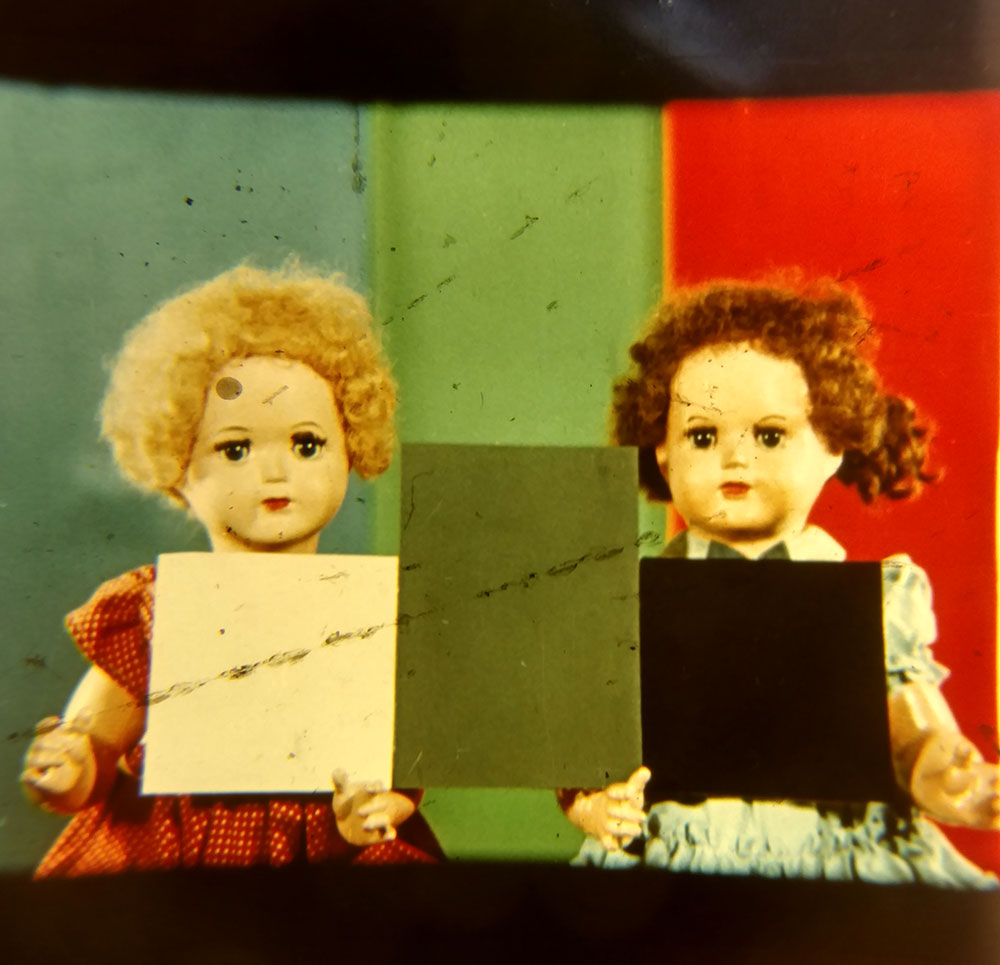
NO ONE DREAMS IN COLOR:
Man Vanishes Without a Trace.
This, the dramatic headline which stirs Andrew DiBenedetto’s curiosity, and initiates a life-changing course. The vanished man is Paul Kirby, whose nine-minute film, Wendigo—the only film Kirby ever made—was one of Andrew’s sacred cinematic totems. Compelled to visit Nine Peaks, the remote New Mexico town which had become Kirby’s adopted home, Andrew will discover that Kirby was one, among many, who have mysteriously vanished, and that Nine Peaks is, as claimed by one of its locals: an anomaly wrapped inside an anachronism and swallowed by a riddle. Andrew’s story quickly and irrevocably becomes entwined with the stories of others: Ali, a thirteen-year-old loner, comic book buff, and Beastie Boys fanatic, who is once again being tormented by werewolves; her mother, Callie, Paul’s lover, who has started working at the enigmatic Dream Bank; and Mack, the cameraman, who shot Wendigo with Paul up in the mountains. When the borders and barriers between dreams, memory, fiction and reality begin to dissolve, Andrew and company must navigate the shifting and unstable narratives of a weblike paradigm.
Equal parts psychic noir and existential montage, No One Dreams in Color explores the nature of time, identity and loss, while featuring a roll-call of cameos by such noted icons as Moon Knight, Bob Dylan, Carl Jung, Leonard Cohen, God, Mister Ed, Abraham Lincoln, and Santa Claus.

The original plays that I have written for young people, during my tenure as a drama teacher and as the director of a youth theater ensemble, are downloadable as reading/performance resources on Teachers Pay Teachers. Plays, which cover an age range from 1st grade through high school, include: THE SHADOW OF PETER PAN, MYTHOLOGY MASH-UP, AESOP REMIXED, THE LITTLE PRINCE IN EGYPT, THE MAGICAL MYSTERY TOUR, BENCHMARK, A BLACK SHEEP IN WOLF’S CLOTHING, MISTLETOE AND THE MYTH OF BALDER, THE NUTCRACKER IN A FLASH, and, THE MYTH OF DEMETER AND PERSEPHONE REVISITED.

NO ONE DREAMS IN COLOR:
Man Vanishes Without a Trace.
This, the dramatic headline which stirs Andrew DiBenedetto’s curiosity, and initiates a life-changing course. The vanished man is Paul Kirby, whose nine-minute film, Wendigo—the only film Kirby ever made—was one of Andrew’s sacred cinematic totems. Compelled to visit Nine Peaks, the remote New Mexico town which had become Kirby’s adopted home, Andrew will discover that Kirby was one, among many, who have mysteriously vanished, and that Nine Peaks is, as claimed by one of its locals: an anomaly wrapped inside a conundrum and swallowed by a riddle. Andrew’s story quickly and irrevocably becomes entwined with the stories of others: Ali, a thirteen-year-old loner, comic book buff, and Beastie Boys fanatic, who is once again being tormented by werewolves; her mother, Callie, Paul’s lover, who has started working at the enigmatic Dream Bank; and Mack, the cameraman, who shot Wendigo with Paul up in the mountains. When the borders and barriers between dreams, memory, fiction and reality begin to dissolve, Andrew and company must navigate the shifting and unstable narratives of a weblike paradigm.
Equal parts psychic noir and existential montage, No One Dreams in Color explores the nature of time, identity and loss, while featuring a roll-call of cameos by such noted icons as Moon Knight, Bob Dylan, Carl Jung, Leonard Cohen, God, Mister Ed, Abraham Lincoln, and Santa Claus.

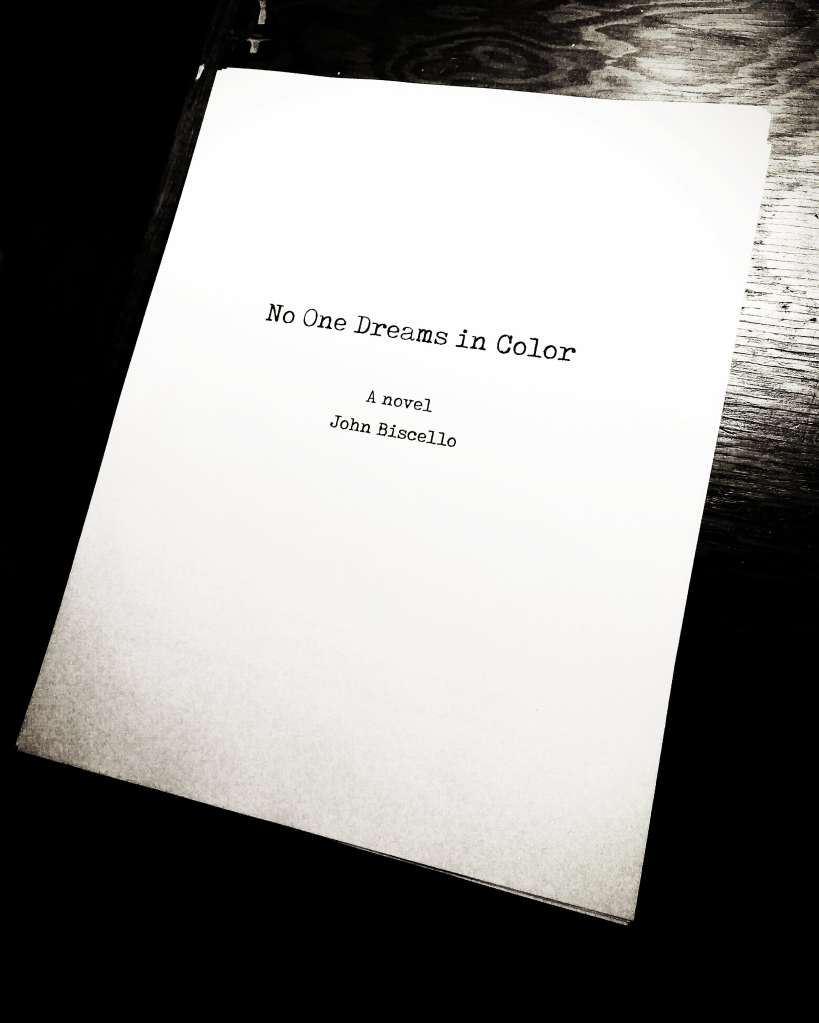
Completed manuscript.
No One Dreams in Color is my sixth novel. I never take for granted the completion of a novel, nor do I ever know which one could be my last. It always begins witth a few key ideas or concepts, several core refrains, and from there it becomes an enterprise of faith, intution, trust, consistency of discipline, and curiosity. I relish the process, and have found that each novel, as a soverign entity, demands its own form and set of principles. In the case of No One Dreams in Color, I experienced the joy and intrigue of wandering wide-eyed through a mutable labyrinth; a labyrinth that I was simulatenously creating, and being created by. I am happy, and somewhat relieved to have made it out of the labyrinth, yet I am also feeling wistful and sad that I am no longer there, wandering, with that exquisitely lonely sense of purpose which is my favored bliss.
When I was a boy, my dream was to be a writer, to write stories and books that I could share with the world. That little boy in me still burns with the same sense of quest, and love’s labor for the world of story. I am grateful for and to my vocation. Word by word, novels come into irrefutable being.
Rock on, creators. Rock on.
 John Biscello