Anne Sexton

It begins with a stopwatch, and a glass of water.
The stopwatch belonged to her father, or to her father’s father.
The glass of water is a joke. Imagine trying to remedy
all that desert within, all that scabbing red sand blown, with a single glass of water.
No, Anne, your dry heaves ran deep, your mirages coercions
shivering like wet sheets of plasma. The eye could only see so far,
the confessions could only cart you a dash further than the eye’s migration,
and where you left off, you began to teeter, and veer, to gag on green wind.
In the fairy tale, you were the witch, with seaweed for hair, and the daughter,
the red-hooded little girl with a broken stopwatch functioning as a false talisman:
time was not on your side, it climbed all over you and clung
like co-dependent parasites on parade, and you writhed in agony,
cried out for your father, before lying down and falling asleep on the forest-bed of pines.
When you awoke, the world was white, new-white, clean-white, too-clean-white,
scary-glaring,
and there was the blurred transit of hands, hooks, smocks, scrubs, operating instructions,
soft voices like slippered footsteps on carpeted stairs,
a mounting turban of verdigris bandages.
None of it made sense. You did the best you could, you stood up,
you sat down, you confessed, as if every word was a grain of sand spitballed
into the eye of Eternity, you crafted a swimming hole in your desert
and brought lovers there to soak with you.
The sun kept on, as did time, wind, pills, angels,
you sang through your wounds, daily,
your typewriter a pet from heaven, which you ribbon-fed scaly bits of hell.
It went on, and on, until it didn’t, the angels scattering all at once,
or perhaps reshuffling to gather and lift you up.
It ends with a stopwatch, locked in a drawer,
and an empty glass, where water
once touched lips.


Sexton_3


Posted in Poetry, Uncategorized | Tagged , , , , , , | Leave a comment

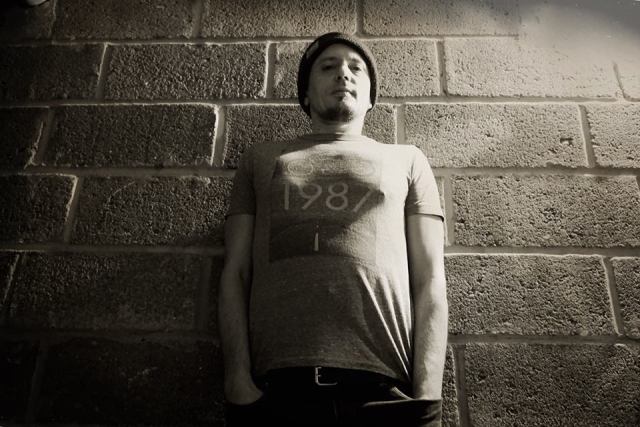
John Fante

Inferiority might have been your first memory.
Though you were born on American soil,
Denver, CO, April 8th, 1909,
the chinked chains of immigration
had you by the throat and bowels, pinched your nerves
as you butted your head against the scabby base of a totem pole.
You, the little wop, the fenced-in dago, trying to dig his way
to China, or the moon, or to any form of greatness
that would eclipse your undermining complexes.
And so, out of shame and need, out of fevered desire,
you created Bandini, or he you.
Arturo Bandini, rising star and literary godsend
of John Fante’s complicated inner world,
soon to be exported and appraised and adored
by thousands, maybe more.
Arturo Bandini would draw from your history
and chagrin—your philandering, boozing, gambling father,
your mother, having to beg credit to keep the family fed,
your fear and loathing of Jesus,
and love-hate relations with the saints,
all of it would fuel Bandini’s quest
to transcend your blues,
your gnawing sense of lesser-than.
You would become the Joe Dimaggio of the literary world,
the gold-plated pride and joy of your people,
or at least go down swinging.
Bandini, fire in his belly, lean days of determination,
a starved mongrel digesting the pit and seeds
and citrus rinds and sun-tendered leaves
of palm trees in 1930s L.A., an angry, confused, passionate
young man, stalking fury and sound, full of himself
and words that he prayed to God would not let him down.
He, John Fante, the great Arturo Bandini, gave us pages,
a score of scorched pages, not enough according to him
(he would go on to become a Hollywood screenwriter
and malign himself as the worst kind of traitor to his soul and calling)
but he left behind the Bandini Quartet, four novels
with his grit-infused masterpiece, Ask the Dust, forming its apex.
Some angry young men mellow with age,
Fante, it seems, raged until the end.
His legs, and sight, were claimed by diabetes,
and Fante, as a blind amputee, bed-ridden, took one last dive
and salutary fling into the inspired world of Bandini,
dictating his final novel, Dreams from Bunker Hill, to his wife, Joyce.
Bukowski, who had accidentally stumbled upon Fante’s work,
considered him a god.
The two would become friends, and Bukowki would do his part
to resurrect Fante for a new generation.
It seems, after all, that Bandini, upon a cross,
grinning, scowling, dreaming of words
and how to arrange them according to gospel,
had amounted to a scarring glint
upon so much favored dust.

fante


Posted in Poetry, Uncategorized | Tagged , , , , , , , | Leave a comment

Moon Shots

From “Houses of a Crystal Muse” (Wild Embers Press), poetic collaboration/conversation with Antoinette Nora Claypoole. Coming December 2019.

crystal muse

Posted in Books, Poetry, Press, Publications, Uncategorized | Tagged , , , , , , | Leave a comment

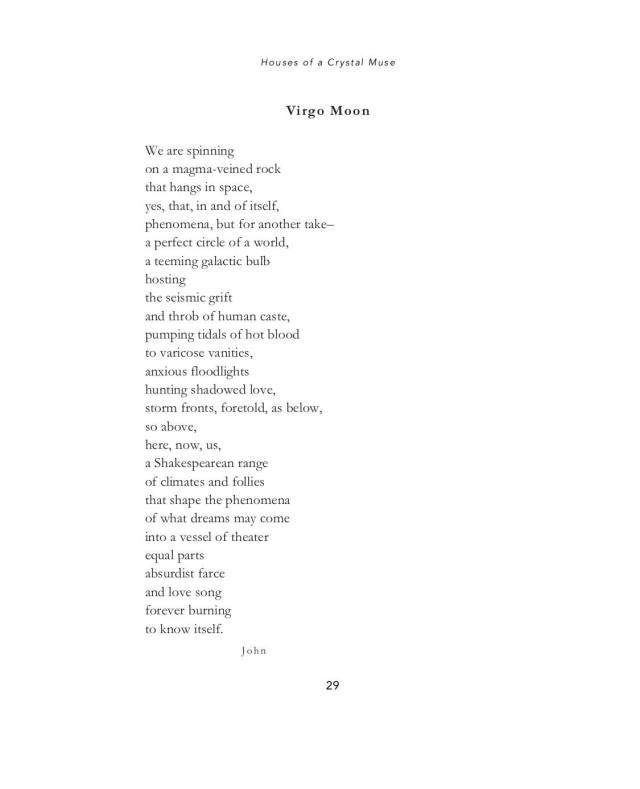
Galactic Bulb

Teaser poem from the upcoming collection, Houses of a Crystal Muse (Wild Embers Press), an astro-poetic collaboration/dialogue with Antoniette Nora Claypoole. Featuring images by Issa De Nicola and Anthony Distefano. 75540030_10158944902407619_5546266534055247872_o
Posted in Artwork, Books, Poetry, Press, Publications, Uncategorized | Tagged , , , , , , , , | Leave a comment

Warehouse

A deserted warehouse.
This is where the Red Joans gather.
It is the same deserted warehouse, again and again, an exact replica, that serves as the meeting-place for all the Red Joans. The warehouse is a desolate shrine to recursion, its soul a cross between an attic and a crisis.
Sometimes the warehouse is situated on a pier, sometimes in the industrial bowels of a city, sometimes at the edge of a pasture hemmed in by hills that gossip in green untranslatable whispers.
Wherever it is located, inside the warehouse there are stacked tiers of unmarked crates. No one knows what the crates contain. They might be empty. Empty, or filled with contents, it makes no difference. The crates are stage props, part of the warehouse’s set design, sequential blocks for building ambience.
There are several high, rectangular windows, mostly blacked out. The edges of the windows have been darkened, yet there is a mottled frost, a calcified milkiness that obscures any clarity.
The walls of the warehouse are papered with calendars, reflecting different themes from different eras. Sports, swimsuit models, cats, horses, astronomy, movie stars, and on and on and on. 1972. 1945. 1980. 1963. 1959. 1988. And on and on and on, all the years randomly aligned, side by side, a mass-market continuum.
There is a man seated on a rickety wooden stool in the far corner. He is a security guard named Al—wherever the warehouse, and whenever—the man is always Al, and he is always asleep on his rickety wooden stool, snoring, his clefted Adam’s apple bobbing metronomically up and down, his plain blue-gray cap tipped back, hands resting on his doughy paunch with his hands looped into his belt.
You, Al, are presently dreaming of one of the calendar girls from 1977, Miss May, a buxom blonde in a cherry-red bikini, arched on her knees in the powdery white sand on some island beach, the turquoise ocean shimmering crushed crystals in the background. Miss May’s gaze is provocatively direct, just as it is in the calendar, her squinting engineered for sensuality, as she hopes to cajole whoever’s looking at her to surrender to sexual thoughts, thoughts of sex in a glossy paradise with a woman who every man is scheduled to desire, and for some unfathomable reasons she desires you, Al,  you who becomes vigorously responsive, as you watch yourself lock bodies with Miss May and the two of you crumble into the silksoft sand like dried flowers, with the crystal-coated turquoise ocean shimmering behind you, its surf pounding an appropriate rhythm for romance under the sun.
Al’s dream will pass. As others will come, and pass. There is a lolling cadence and register to Al’s dream-life in the warehouse, and the thing is: Al never awakens. His position in the warehouse—snoring, asleep, dreaming—is fixed, he is the warehouse’s rigged constellation, a doped part of its architecture, same as the unmarked crates.
When the Red Joans gather in the deserted warehouse, they ignore Al, or perhaps don’t see him at all. At best, he qualifies as a fuzzy object situated on the periphery of their vision, at least, he is an empty stool caped in shadows.
In the warehouse, the Red Joans move in tandem, a filial symmetry to their collective motion. They often speak as a webbed choir, their voices strands beaded with clusters of overlapping words. At times this generated a spectral stereo-effect, and when their words fluently melded and unified into a level monotone, they registered the “We” which spelled out their highest aspirations.
Try and imagine countless deserted warehouses, each the same yet different, containing groups of young girls, ranging in age from twelve to eighteen, each different but vying for sameness, and if you possessed the talents of an omniscient eavesdropper, you might hear waves of audio that would organically coalesce into a wall of sound, echoes circulating in a heat-prickly orbit, all these voices creating an aural tapestry that was at once epic and fragile.
There, in deserted warehouses, the Red Joans, hydra-headed in their subordination to the Phoenix, gathered under bleary lighting the color of dirty egg yolk, with the mildewy scent of aged wet cork lingering in the sedentary air. There they will talk about things that no one will ever hear.

phoenix

Posted in Prose, Uncategorized | Tagged , , , , , , | Leave a comment

Roles of a Lifetime

Evie often had trouble determining where she ended, and someone else began. That someone else being a role she adopted for stage. It was a common problem, a customary side-effect to acting, she understood that, but what vexed her most about it was her vast indifference.
She didn’t care where she began and someone else ended, or vice versa. Didn’t care if the lines became irremediably blurred. She also relished her loss of awareness around slipping into other personas. She didn’t want to know who she was, not really. She didn’t want to look back or inside and see someone that resembled her, or anyone else for that matter. Something in her was drawn to void. Always had been. A place where nothing was nothing was nothing, and she could swim in it. Or float in the cirrus of ether.
The persona she adopted didn’t matter, she wasn’t genuinely attached, because she would be operating from a place of void. One was the same as the other as the other. None of them were her. And she wasn’t her. The void signed off on everything. In invisible ink.
There is void in your system, in your bloodstream, in your bones.
This was how she sometimes talked to herself about it.
She disliked passion. No she didn’t dislike passion, she didn’t trust it. It seemed the ultimate cover-up. And she didn’t want to cover up. This was one of the reasons why she shaved her head. Why she never wore make-up. One of the reasons why she dreamed she was someone else, and that someone else dreamed they were someone else, and that someone didn’t dream at all. That someone was the last straw, the dreamless one, the spectral tenant rooted in vacancy. That someone was a question mark bent into cursive, or something resembling cursive.
You never come up against void. That doesn’t happen. You come up against your resistance to void, that’s what stops you. Void is something you pass right through. That is the scary thing for many. No doors, no barriers, no end points, no parameters. You float right through and you then realize, in ways that can be both terrifying and liberating, the endlessness to emptiness. It is like a mutiny of self occurs, and everyone you thought you were is thrown overboard. This is when you feel the ghost that you were and always had been, this is when you become haunted by your own ghost-life. It is like a concert without any music.
Evie knew that the others could sense the void in her, they swarmed like frenzied night-moths to glaring white absence. People were magnetically drawn to Evie’s void, because it was easy to project onto, or into. There was nothing there. They could commandeer her blank canvas for their own purposes. There’s nothing there, so please allow me to fill it up. Violent doodles. Rampantly sketched glyphs. Future melancholy. Etchings of verve and disapproval. There were no limits when it came to the call and response of emptiness.
Evie knew this. Even if the people who were doing this didn’t know why they were doing this, or that they were doing it at all. Evie didn’t mind. Hanging out on the periphery of the void, none of it touched her. And so she chose roles to play, or they chose her. It was one way to pass the time.


Posted in Prose, Uncategorized | Tagged , , , , , , | Leave a comment

The Beastie Boys Don’t Live Here Anymore

I tell myself stories in the dark, Anya.
It helps. Or maybe it doesn’t.
Maybe it makes things worse. Or keeps everything the same. Which is a different kind of worse.
Anya I long to reach you only because I know that you are unreachable. It keeps my longing in a chrysalis state, a cocoon state. Nothing ever grows, it simply hums and palpitates and aspires toward growth. It is the shadow twin of growth.
Anya I couldn’t reach you in life, not your deep and true center, and I cannot reach you in death, so my relationship to you remains one of thorny and perpetual expectancy. To reach you would mean a betrayal of dreams. Or perhaps they are illusions masquerading as dreams. How to tell the difference?
If the center is where grief lies, I have been spanning the perimeter, dancing the same lame jig for far too long. Someone once wrote you should proceed from the dream outward. What about proceeding from reality inward?
I tell myself stories in the dark, Anya.
Whether or not they help is either of primary consequence or none at all.
Sometimes you have to walk through the boneyard in order to reach the garden.
This is what I tell myself. What I keep telling myself.

the basement

Posted in Books, Prose, Publications, Uncategorized | Tagged , , , , , , | Leave a comment

Osmosis

The coke parties were my favorite. It was when everyone was happiest. Everyone usually meant my mother, father, and their friends, Tony and Dina.
   My mother would tell me—Tony and Dina are coming over tonight—and I knew that meant a coke party and I got excited.
   The coke turned them into children again. Or a peculiar breed of children with waxy glowing faces and eyes full of fire. Good-fire. Not dragon-fire or hell-fire. The fire of all-night magic.
   Tony, who worked sanitation with my father, was a barrel-chested Italian man with tattoos and two thick dark rugs for eyebrows. Like two baby Muppets had sprouted above his eyes. Tony loved to laugh. It was a high-pitched, wheezing laugh, a dolphin squeal that didn’t match his muscles and tattoos.
   His wife, Dina, was the smart one in the bunch. That’s how I thought of her because she was a college graduate. No one in my family had graduated college. My father had dropped out in sixth grade, my mother in eighth grade. Because Debby was the smart one I always found it odd that she did coke with the others. I suppose I thought college graduates didn’t do coke, that they were too smart or too good for it. Maybe I thought higher education meant higher living, I don’t know.
   The kitchen was where the action took place. As soon as Tony and Dina entered our apartment, my father would press—Tony did you get the stuff?
   Tony, smiling big, would put my father’s mind at ease—Yea Louie I got the stuff.
   Seated at the kitchen table, Tony or my father would razor-cut lines on a small mirror engraved with a Heineken logo.
   (I found the mirror about fifteen minutes ago in one of my father’s kitchen drawers. The past is never dead, Faulkner said, it’s never even past. I thought of that. And wondered when was the last time lines had been snorted off the mirror.)
   I loved the exactitude of the ritual. The methodical dicing of the lines. The cut plastic straw or rolled-up bill passed around. The vacuum-sucking snorts, and the finicky staccato inhalations draining the residue lining the inside of the nostrils.
   My father never let me stay in the kitchen when they snorted. He’d tell me to go into the living room and watch T.V. Fortunately, the kitchen was adjacent to the living room, and leaning against the base of the recliner, “watching T.V.,” I’d angle myself just so and watch them through the doorway. Yet listening to them brought even greater pleasure than watching them.
   The din of their voices, growing bright and electric, the ripples of laughter, with Tony’s pitch reaching kettle-steam frequencies.
   On those nights they talked and talked and talked, bright ribbons of noise in which they wrapped themselves. I savored and cherished their communion. It was like being coked-up through osmosis.
   Their joy was my joy, their cheer my cheer, their energy my energy.
   It was togetherness, albeit a second-rate version, for it only lasted as long as the effects of the drug did. The aftermath of the coke parties, the post-script, was never any good.
   When we are all high, it was great. The comedowns, on the other hand, left us jangled.
   In those periods the magic of childhood dimmed and we darkened and grew old before our time.
   Between childhood and death lay an inclement center which refused to keep still.

47389841_2069855269734720_2978551096697421824_n

Posted in Books, Prose, Publications, Uncategorized | Tagged , , , , , , , | Leave a comment

The Parlor

   The girl who was to give me the special massage was young. It was hard to say how young. She could have been twenty-five, could have been twelve. She also could have been one-hundred, or one-hundred and twenty, an ancient person on the verge of returning to the source of bloom. My guess is that she is twenty or twenty-one.
   She has pin-straight, dark hair, and a wide, flat nose, with cushiony give. I look down at her hands. They are small and pale, the nails unpainted and rounded into half-moons.
   She tells me her name is Jasmine.
   I ask her if that’s her real name.
   She says she doesn’t understand.
   I ask her if Jasmine was the name her parents gave to her.
   Oh yes yes, she smiles, nods.
   Then she gestures toward the massage table and tells me to lie down.
   Should I take off my shirt?
   Yes, unless you don’t want to.
   No, I do.
   I take off my shirt.
   How about my pants?
   It’s up to you.
   I leave my pants on. And lie down on my stomach and fit my face into the hole at the head of the table.
   The carpet on the floor is a burnt orange color, reminding me of Halloween. I can’t see Jasmine, but I can hear her. She is squeezing liquid out of a bottle, and then she is rubbing her hands together. I imagined Charly’s recorder capturing the sounds.
   I feel Jasmine’s liquid-slicked hands press down on my back, just below my shoulders. She begins kneading the muscles with rhythmical insistence. She works over the whole of my back with democratic fluency, and then starts in on my left arm. She reaches the halfway point, just above the elbow, when my arm is suddenly seized by cramps and starts convulsing.
   Are you okay, Jasmine asks.
   Yea fine, I say and try to shake out the shakes. When I’m done I allow my arm to fall prone by my side, and immediately there comes another series of paroxysms, this time accompanied by a searing pain in my left shoulder.
   Try to relax, Jasmine says, and places her hand on my trembling shoulder.
   I can’t, I say, and the tremors spread to others parts of my body—my leg, my foot, my face—all on the left side.
   I use my right hand to push myself up and fall off the side of the table and onto the carpet. I can now see Jasmine, who sees me, and screams. As if she’s looking at a ghost.
   Her scream cuts through me, and I scream back—What is it, what-what?
   Your face, Jasmine points, as she backs away. You have no face.
   I rise to my feet, the left side of my body still in the grips of a seizure, bolt through the doorway, nearly knocking over Katie who was about to enter the room, make my way down the hallway to the bathroom, where I click on the light, look into the mirror. My face is there. It is my face. Save for the twitching of the eyelids, everything was normal, the same as always.
   Charlie comes into the bathroom.
   Danny what happened?
   I turn to him.
   Do you see my face?
   Yea I see your face, why?
   Is there anything different about it?
   Different, what do you mean?
   Anything wrong with it, anything missing?
   No there’s nothing wrong with it, everything’s there. What the fuck’s going on?
   I tell Charlie what happened in the other room, and how Jasmine had seen me with no face.
   That’s some freaky shit, Charlie pipes in. What kind of place did Jake bring us to?
   A place where people lose their fucking faces, I quip.
   Charlie gives my face the once-over, smiles—Well it’s all there now.
   My tremors having mostly subsided, I go into the waiting room and sit down on the couch.
   Katie returns, followed by Jasmine, who is holding a tissue near her eyes.
   Katie hands me my shirt, which I put on. Then she tells Jasmine to apologize to me. Jasmine softly apologizes.
   It’s okay she didn’t do anything wrong, I say to Katie. I don’t know what happened.
   I replay the story for Katie and when I get to the part about Jasmine seeing me with no face, Katie begins speaking to Jasmine in Chinese, Katie’s voice sharp and crescendent during certain points in their exchange, as if she’s scolding Jasmine.
   When they are done speaking Chinese, Katie asks me if I’d like to continue with my massage. With Jasmine, or with someone else.
   I tell her no I’m fine, then turn to Jasmine. You said you saw me with no face? I don’t understand. No face at all?
   I’m sorry I’m sorry, Jasmine responds quietly, sometimes I see things . . . I’m sorry. Jasmine lowers her head and exits through the curtained doorway.
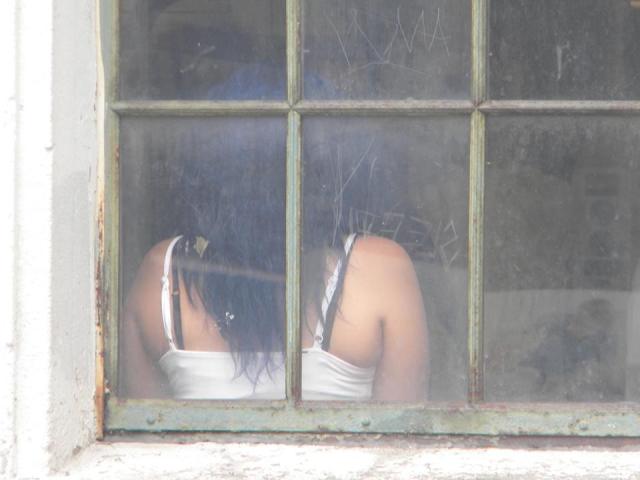
dissolution
Photo by Anthony Distefano
Posted in Books, Prose, Publications, Uncategorized | Tagged , , , , , , , | Leave a comment

Between Stations

   I was on the subway platform waiting for the train when I spotted a thin girl in torn jeans and bright green tank-top walking in my direction. Her hair was a bushel of unruliness. As the girl drew nearer I realized it was Anya and called out her name.
   Her response was slow, as if my voice had reached her on delay.
   Daniel, she said, my name clotted in gauze.
   Then recognition brightened and lifted her voice and turned my name into a coarse cheer—Daniel. Holy fucking shit. Daniel.
   Anya breezed into my arms for a hug. I could feel too much of her skeleton.
   Anya mumbled words into my ear. Her voice was as whittled as the rest of her.
   I was looking over her shoulder and wanted to keep looking there. I was afraid to release her and step back because then I’d have to look at her face. I knew it bore waste and ruin that my mind would latch onto. And play back to me again and again. The portrait of a death-mask that now covered Anya’s real face, her buried one.
   Inevitably I stepped back and took in what was not there, what had gone missing.
   I didn’t need to follow the track-marks on Anya’s arms to understand the nature of her cave-in.
   We talked while we waited for the train. I don’t remember if our exchange was awkward, hurried, sentimental, remote, can’t remember anything we said to each other. My memory of it is white noise.
   Then I did something which made me feel shitty and ashamed but I did it anyway.
   When the train pulled in I told Anya I wasn’t getting on, that I had just gotten off the train when I saw her and was headed out of the station.
   Something in me couldn’t bear the prospect of sitting next to Anya on the train, of us talking. I didn’t want there to be any words between us. Ours had become a ghost story and I wanted silence to fulfill its arc.
   I’m not sure if Anya knew I was lying, but I suspect that she did because if I had gotten off the train I would’ve been on the opposite platform and Anya, no matter what state she was in, was never easy to fool or put things over on. Her radar for bullshit was top-notch.
   Plus when saying goodbye she hugged me with such emphatic force that I was sure she was trying to emotionally implicate me for abandoning her. At least that’s how my guilt registered it at the time.
   My final image of Anya is through the train window, her back turned to me.


11694869_948986195154972_6787796154688612345_n

Posted in Books, Prose, Publications, Uncategorized | Tagged , , , , , , , | Leave a comment