
-
Archives
- October 2026
- September 2026
- August 2026
- May 2026
- April 2026
- March 2026
- February 2026
- January 2026
- December 2025
- November 2025
- October 2025
- September 2025
- August 2025
- July 2025
- June 2025
- May 2025
- April 2025
- March 2025
- February 2025
- January 2025
- November 2024
- October 2024
- September 2024
- August 2024
- July 2024
- June 2024
- May 2024
- April 2024
- February 2024
- January 2024
- December 2023
- November 2023
- October 2023
- September 2023
- August 2023
- May 2023
- March 2023
- February 2023
- January 2023
- December 2022
- November 2022
- October 2022
- September 2022
- August 2022
- July 2022
- June 2022
- May 2022
- April 2022
- March 2022
- January 2022
- December 2021
- November 2021
- October 2021
- September 2021
- August 2021
- July 2021
- June 2021
- May 2021
- April 2021
- March 2021
- February 2021
- January 2021
- December 2020
- November 2020
- October 2020
- September 2020
- August 2020
- July 2020
- June 2020
- May 2020
- April 2020
- March 2020
- February 2020
- January 2020
- December 2019
- November 2019
- October 2019
- September 2019
- August 2019
- July 2019
- June 2019
- May 2019
- April 2019
- March 2019
- February 2019
- January 2019
- December 2018
- November 2018
- October 2018
- September 2018
- August 2018
- July 2018
- June 2018
- May 2018
- April 2018
- March 2018
- February 2018
- January 2018
- December 2017
- November 2017
- October 2017
- September 2017
- August 2017
- July 2017
- June 2017
- May 2017
- April 2017
- March 2017
- February 2017
- January 2017
- December 2016
- November 2016
- October 2016
- September 2016
- August 2016
- July 2016
- June 2016
- May 2016
- April 2016
- March 2016
-
Meta
Weather Report
Posted in Poetry, Uncategorized
Tagged climate change, going within, heartsong, homing in, John Biscello, love is real, Poetry, we the people
Leave a comment
Anthemic
Comfort is a privilege,
yet kindness and dignity,
charity and compassion,
are spirit-given rights
and blessings,
the seeded marrow
and initiative
of our soul’s turnings
toward unequivocal light.
The Meaning of the Mob
(I wrote this piece, “The Meaning of the Mob,” over a decade ago, but felt moved to share, because words bridging action matter.)
The Meaning of the Mob. I say, the Mob, meaning
the Definitely Uncertain, Fixed—a liberal form of physics—
or the clotted swarm wallforming brick by brick,
a mosaic pattern. Pick a number, any number, it’s a given.
A given what, you say, a given that, heads together, mindless, will make of a stone’s throw a hard cold pledge—
Indivisible, in Mob We Trust.
Meaning the Mob
made of a stone’s throw a lottery-like contest,
one hurl after the next,
snuffing out solitary skull-candles
in the name of making nameless a victim
swallowed by sand.
And blood. And the song sung not unlike syncopated tocks of a rockingchair horror-christened,
the chant a band of hands knotted together:
In Mob We Trust . . . In Mob We Trust . . .
circling the victim,
swallowed by sand. And blood.
And it was black. It was black and they couldn’t see . . . and the track like that of an animal’s . . . they couldn’t see . . . it was black . . . and they couldn’t see . . . the moon—Mack the Knife, the Fat Pope, the Poet’s Dream—blacked out . . . they couldn’t see . . . so it was only . . . natural.
Torches.
Lit to burn off black skin, to burn black the chant—we win! we win!—to burn black the black, cuz sin-cleansing be the business of townsfolk
assimilating a godgiven blank,
and black the blues’d but not broken souls stolen from split dawns,
cleaving huddled crying masses,
brothers and sisters adrift in salted storms—
and give us your poor! your huddled masses!—
but so many vessels disappeared never washed ashore.
Found
aflutter on treelimb’s sway,
a savage prop, deformity of art,
shaped by mindless mob
in the shame of God.
Meaning, unclear,
cuz faces meld milky into a blur,
murder repetitively attempted
on Life of Self
identity melt
down—
step
by
step
sharing cold common turf,
lesser themselves they become
closer to None,
the birth of myopic nations,
D.W. Griffith racist,
history’s torn pages—
and in Bethlehem same as Alabama
a blood-born photo-op for the swarm-ready faceless.
Y’see,
treason’s gotta be a no-brainer,
lest the rule of the roost is jeopardized:
lest we cry a million broken cradles
for the Sheperd boy, the blackskinned angels, the crossbearing toy—
of a god, a whim, a fate—
an overwrought lie
sold and bought
down the river
and everybody knows, everybody knows, everybody knows,
all rivers lead to seas,
but how sweet the amnesia
when nobody knows, nobody knows, nobody knows,
the troubles we’ve seen,
on the surface of deepsea oilslicked, clot-heavy,
and holding in its crotch—
a thousand and three grieving mermaids.
Meaning
everybody knows
nobody knows
who fo sho knows
a fist is an infant afraid to flower:
hour by hour,
the sand’s slip quakes the legs of littleones with boombox-glued-ears, hearing:
You’ve gotta fight the power,
you’ve gotta fight the powers that be.
Chuck D. leading the charge of a million-starred march,
walk the talk grind-frictioning sparks,
to start a campaign against
light on dark topfucking,
and these days better tomorrows,
for one and all,
means mob mentality’s gotta liberate the link from the chain—
changing the face of the faceless, naming the unnamed—
and in this I need to believe,
dissolving the meaning of the mob
into bridges bonding one soul to the next,
a show of hands linked by breath
and a show of respect
where a love supreme is given a chance
to ripen and seed its wilds anew.
Posted in Poetry, Uncategorized
Tagged all lives matter, be the change, breathing lessons, John Biscello, love is real, Poetry, respect, solidarity, the lovers the dreamers and we, we the people
Comments Off on The Meaning of the Mob
Declaration Rites
When a nation
becomes a paid advertisement
for itself
founding fathers
turn over in their graves
which they share
with the ghosts of slaves
whose chains they inherited
on karmic loan.
A Love Supreme 2020
It is,
here and now,
a marvelous free bounty
and blessed inheritance,
this world of breath,
our most vital resource
and best friend,
master to our disciple,
and how clear must it become
for us to not only see
but to cherish and revere
this precious and fragile gift,
which, when threatened or imperiled
by a virus of novel origins,
or one circulating through dreamless racism,
snaps the threads of we-being-ness
which we all share,
We,
each and every one,
none excluded,
the mortal bearers
of light’s passage to air
and grieve,
We,
the reapers and sowers
of seeds radically spread
to grow the greening wilds
of a love supreme.
United We Stand
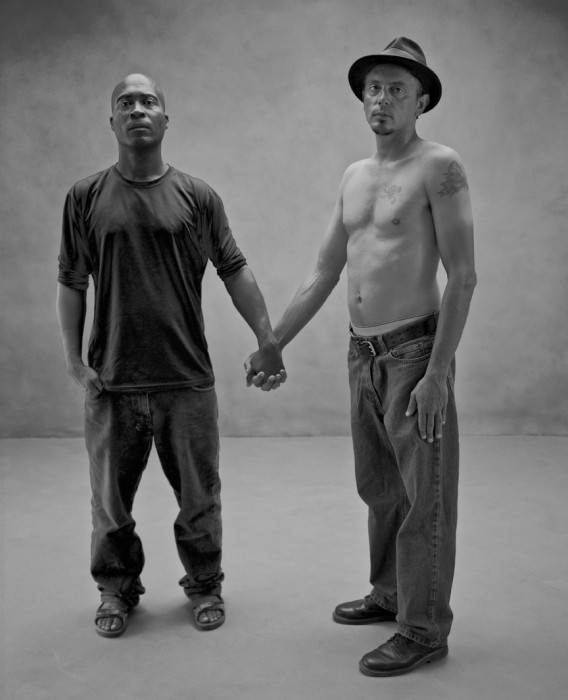
Photo by Zoe Zimmerman
George Floyd and Us
Here is a candle,
a flagged token of light
and trespass
in the small hours
for a man who is
no longer with us,
who, for eight minutes and forty-six seconds,
desperately attempted to save his own life
through bated pleas and Mercy’s petition,
which, in the blindest seize
and theft of broad daylight
was violently denied,
and turned repeatedly over
to a long shadow
with too much black on its hands,
too much fear-based acid dripped from within,
and make no mistake, we the people,
upon this earth, sharing seasons and soul’s plights,
reap the corrosion and soiled bones,
whether we know it or not,
flyers to a raging pandemic of prejudice,
shame and debasement
that keeps us gagged
and bound to viruses of our own making,
and so, on this night,
a small measure of prayer-flung light
offered humbly,
a warm hand to join the hands
of those in mourning
not only for the man
whose blood now holds
false badges in true judgment,
but for a collective crisis
that is long overdue
for dawn’s promise
of a brave new day.
Masks
Excerpt from a novel-in-progress:
It was in the year _______, that a maskless society had ceased to exist. A decision was made by people who made decisions of that nature (yes, the masks, the decision-making, the proper authorities, all this stuff was no longer part of delineated hierarchies—who did what and why—all had become part of a cryptic jumble wadded in bowels of electric red tape, society now a covert subset of gumballs.)
Everyone was issued a mask. All the masks were the same. A uniform anonymity, a sea of samefulness, or rather there was only one standard issue mask with three different colors. Red, blue and green. The colors you were assigned to wear was based on zoning. Your location dictated your color.
When a child was born they had to be registered with the M.O.D. (Masking Ordinance Department) and implants would be surgically implanted into the facial pores. If a child wasn’t registered, and the proper authorities found out, the child would be seized and enrolled in what was known as the Nursery. No one knew the location of the Nursery, or much of what happened there, but basically the Nursery children were wards of the government until they were old enough to be released back into society.
If you took your mask off, your facial pores would release an acidic chemical issued from the micro-pellets which had been implanted into your face, and you would burn. And keep burning. The scalding would be excruciating, intolerable, and it wouldn’t be long before you put your mask back on, which would defuse the acid. This temptation of mask-removal had been the cause of many disfigurements, which of course, remained hidden from public view. No one saw the wounds beneath the mask, no one played screaming mirror anymore to someone else’s unverified crises. Points of reflection had diminished in stature and vocabaulary.
Signs were posted everywhere, rectangular slabs of mildly glowing metal that warned in red lettering: Demasking is a Crime.
There were the fugitives. Those who refused the indoctrination of masking. Fugitives, unfortunately, didn’t have a very long shelf-life on the outside. The barefaced ones stuck out like sore thumbs and were easy to apprehend. Some did wear masks, of their own stylistic design and color. These masks might be modeled after indigenous masks from Africa, from the Lakota-Sioux, from Zuni, they might be modeled after Venetian or No masks, there were masks of colorful anarchy, masks with long Zucchini-hose noses, masks engraved with floral patterns and imprints, masks of sleepy revolt, attic masks, eyeless mouthless masks with swirling riots of cursive, masks abstracted into vowels, masks of whetted translucence, masks that radiated a funereal whiteness, masks of glaring hyperbole and exposed hypotheses, masks that had frozen the contorted muscles of screams into the mask’s texture, masks with quizzical half-smiles petrified into question marks.
There was an entire subculture of people who crafted and donned masks to assert their individualism, or to place a visual and symbolic wedge between themselves and the Anonymites (how they euphemistically referred to the uniformly masked members of society) and they flung themselves and their radical masks into the thick of it all, like bombs in a crowded marketplace, bombs with the kamikaze intent of exploding umbilicial strands of mucus and magma. Their time out in society usually didn’t last very long. Anonymites would turn against them, turn them in. Bad apples exhibited in a public cart was something that most people didn’t want to see, or to be made visually available to the world at large.
White vans would roll up and men dressed in white linen and white caps, looking very much like crosses between milkmen and painters, would seize the Radicals and wrangle them into the van and they would not be seen or heard from again. Rumors had it that they went to a place called the Repository, though, like the Nursery, not much save for the notion that it probably existed, was known about it. The men in the white linen outfits and white caps were referred to as the Dogcatchers. No one knew who first started calling them that, but it stuck and circulated, and as a result the Radicals then became known as Strays.
Dogcatchers, Strays, Anonymites.
The world had become quartered into agitated simplicities.

Posted in Prose, Uncategorized
Tagged demasking is a crime, John Biscello, Masks, mirrors within, novel, Prose, reflection points, the faceless
Leave a comment
The Jackdaw and the Doll
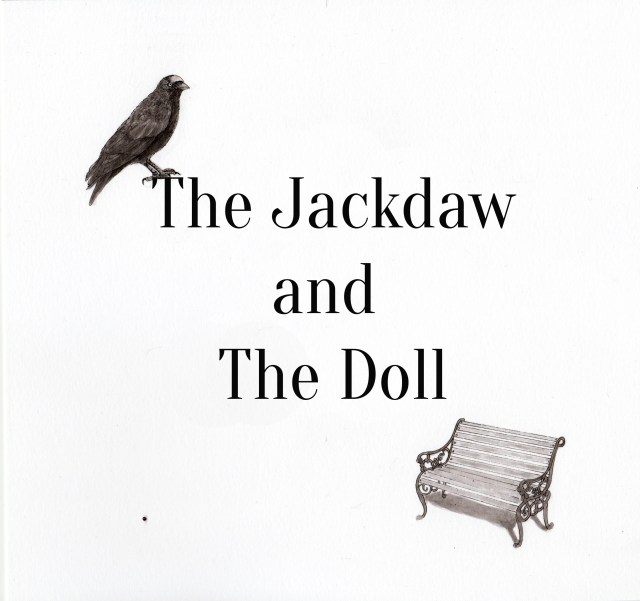
In what has been an inspired harmonizing of words and art, and a storyscape richly carved out of light, shadows and dream-stuff, The Jackdaw and the Doll has been completed. This fable, penned by yours truly, and illustrated by pen-and-ink sorceress of worlds within worlds, Miss Izumi Yokoyama, has reached the end of one phase, in what we we hope will be a charmed and magical journey into the hearts of readers.
We now embark on our next phase: finding the the right publisher to help our Jackdaw take flight.
And away we go!
Posted in Artwork, Books, Press, Prose, Publications, Uncategorized
Tagged Artwork, children's book, fable, franz kafka, izumi yokoyama, John Biscello, Prose, the jackdaw and the doll, winged wonder
Leave a comment

