Roseblood

Siesta

(In response to Tera Muskrat’s “Fiesta at the Siesta”)
Homey fingerlock love
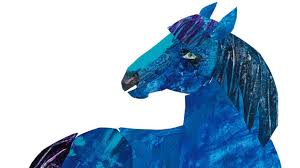
& pop & play that blue fiddle,
that funky music, brown
& rightboy, know what ahm
sayin–No, eh?–well
what ahmn sayin is grace
ten times over, 80-proof
cuz all dem sin-yoo-reetas
& fools know that
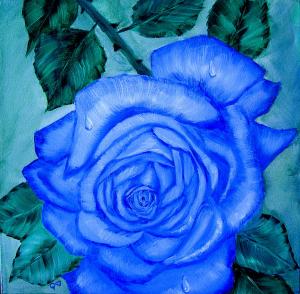
a rose
between Carmen’s teeth
is a rose
is a rose,
no?
Posted in Artwork, Poetry, Uncategorized | Tagged , , , , , , , , , , | Leave a comment

Bird in a Hand

A silver lining
on the raven’s bruised left wing–
endowment for the arts
Posted in Poetry, Uncategorized | Tagged , , , , , | Leave a comment

Station Identification

Professional lips
moving at the speed of bullshit–
wait for the pause, wait.
Posted in Poetry, Uncategorized | Tagged , , , | Leave a comment

Pronoun, Singular

I
for
an
I,
the faltering trade-in
of an egotist
contracting tunnels
at the expense
of light’s vented
kiss.
Posted in Poetry, Uncategorized | Tagged , , , , , , , | Leave a comment

Busy Signal

br-land-cover
Excerpt from Broken Land, a Brooklyn Tale:
There’s not really a name for what I do.  I am not an investigative journalist, I am not a private eye.  I am not a minstrel essayist.  There are many things that I am not.
If I were forced to impose a designation upon what I do, I’d say I’m a … curious.  That’s all.  Just curious.
Anyway, if I had an office and it had been a rainy Tuesday, then a tragic blonde with legs like scissors strong enough to cut a flesh-and-blood man in half might have walked in … but that’s not the way this story begins.
This story begins with a phone call from Jimmy Barrone, a writer and old friend of mine, who I hadn’t heard from in years.  His voice was tight and choked with tears, as he gurgled—Still curious, Salvo?
I knew it was Jimmy, because he was the only one from the old neighborhood who still called me Salvo.
Jimmy, I said, long time no hear.
Jimmy’s dead, Salvo.  Do you understand?  I’m dead.
I countered Jimmy’s hysterics with good old-fashioned logic.
You’re not dead, Jimmy, I said.  You’re talking to me on the phone, therefore you’re alive.  Got it?
Jimmy snuffled some kind of primitive response, and went on—I don’t know who’s who anymore, or what’s what.  I’m breaking apart, Salvo.  Fractals.  Twelve Jimmy’s, then thirty-six, then forty-eight.
I followed the beat of Jimmy’s math, and tried to get through to a singular Jimmy, the one I had known since childhood.
Jimmy, I said, before you go to pieces with all this radical subdivision, tell me exactly what you think is happening.
I’m not me, were the last words Jimmy spoke before the line went dead.
I called back: a busy signal.
I calmly hung up the phone and sat at my desk.  I picked up my plastic pencil sharpener and began sharpening pencils (#2’s, orange-yellow).  It was what I did when I wanted to think things over, calmly.
While my curiosity had been piqued, and I fully intended to head over to Jimmy’s place and see what I could find out, I was not going to rush into the matter.  I was not one to rush into anything, even when a distress signal has been fired like a flare in my direction.  I didn’t trust distress-signals, especially when they came from writers.  Especially writers who had been raised Catholic and had grown up in Brooklyn.
I also understood that anxiety and panic were highly contagious maladies.  It was my responsibility to keep myself clean and healthy and sound.  Which required exacting detachment.  Too little and you were caught in a trap.  Too much and you drifted away.
Posted in Prose, Publications, Uncategorized | Tagged , , , , , , , , , , | Leave a comment

1923

   In the black and white photo, 1923 written in faded pencil in the lower left hand corner, neatly scalloped perforations along the borders—my grandmother and her sister, Rose, are standing on the beach.  Coney Island.  In the background the crowd is a swell of bathing suits and exposed flesh.
   My grandmother and her sister are standing side by side, practically grafted at the hip, the both of them smiling wider rubbery smiles.  Summertime smiles.  Rose is several years younger than my grandmother. She is also slimmer and slightly taller.  Her narrow beak-like nose seems, in contrast, to extend the width of her almond-shaped eyes.
   My grandmother—squat, buxom, busty—has a darker complexion than Rose, and that’s how I’ve always known my grandmother: sun-baked, year-round, reminding me of an overdone potato.
   I look at the writing—1923—and wonder whose handwriting it is.  I try to imagine it being written in the year 1923, then try to imagine the year 1923, what it was like, try to imagine the hustle and verve and majesty of Coney Island in its heyday, try to imagine the Depression, which will come on like a plague in six years and cast a dark pall over people’s visions and dreams and optimism.  I try to imagine these things and only get as far as surface thoughts, lean imaginings.
   In relation to me, my grandmother has always been old, and when I see this photo of her in 1923, I feel as if I’m looking at the person who played my grandmother in the early part of her life.  Not was her, but played her: the young actress who fulfilled the role until a slightly older actress stepped in, who was then replaced by a slightly older actress, and so on and so forth.  Now that my grandmother is dead she is no longer played by anyone.  No more flesh-animated actors are required to keep the drama alive and running: my grandmother, as a ghost, has been liberated from further participation in Life-the-Movie.
   Thinking of the photo, 1923, I think of myself, how I’m growing older, and if I were to look at photos of myself—when I was eight, fourteen, twenty-one, twenty-six—I would see all the people who I thought I was, all the actors who played me for a while.  By the time I pass away, there will exist a slide-show gallery of actors and masks to view in relation to my life, but the sum-of-all-their-parts will not equate to the definitive version of me, won’t even come close.
   Absence, I suspect, holds the dearest most essential parts of us, which is why a photo of my grandmother in 1923, is a misleading speck of evidence in a much larger and more mysterious investigation.
Posted in Prose, Uncategorized | Tagged , , , , , , , , | 2 Comments

Princess Leia on the Rocks

Excerpt from “Stray Passages:
My time in San Francisco lasted a little over a month and would have been even shorter if not for Diana.  I arrived and decided to check into a hostel in North Beach.  I picked North Beach probably because of the connection to Kerouac, I don’t remember.  I stayed in a dorm-style room and one of my four roommates was a guy named Bill from Boston.  He had a shock of frizzy hair and wore glasses that were taped in the middle.  He reminded me of Dave Mustaine, the singer from Megadeth.  We both liked to drink: I was an Olde English guy, and he went in for Mickey’s and Ballantines, so the two of us, and his traveling companion, Tracy, wound up doing a lot of drinking together.  Bill would say he was a bum and a drunk and he planned on being those things as best and as long as he could.  Tracy was in art school in Boston, but was taking a semester off.
One night she showed me some of her work, which had a dark and morbid feel, sort of like Tim Burton off his meds if Tim Burton were on meds which I don’t know if he is.  I was kind of attracted to Tracy, who had long dark hair and an elfin face with bright open eyes, and since she had made it a point to inform me that she and Bill had been boyfriend and girlfriend but weren’t anymore, I thought something might happen between us but it never did.  I could tell that Bill was still really hung up on her and there was this sweetness to Bill that made you never want to do anything that might hurt him.
Several days after I got to San Francisco it was Halloween, and Bill and Tracy made themselves up as car accident victims, complete with blood and gore, and I let several of the girls in the hostel dress me in drag and a bunch of us went to the Halloween parade in the Castro.  Much of my memory from that night is fuzzy, but I do remember being perched on a mailbox, which is where me and Diana met.
Mail-order bride, she said, referring to both my outfit and the postal box beneath my ass.
Yes . . . lick a stamp, stick it on my forehead, and I’m all yours.
Diana was dressed as the ever-popular slave-bondage Princess Leia.  She was short and busty with copper-skin and a full bushel of dark curly hair.
You make a very pretty girl, she said, then: Which way do you swing?
Depends on my options, I said, then quickly added: No, I’m straight.
Good, she said, and that was how things got started between me and Diana.
Diana started hanging out with me, Bill and Tracy.  Bill had gone against his bumming principles and gotten a job as a barista at a coffeehouse.  He hated the morning hours as he was always doing battle with epic hangovers.  Tracy said she planned on finishing school then coming back to live, probably in Berkeley, where her friend Nicole was.  I had applied for temp work, but as would happen throughout most of my travels during my life, I only put half-assed energy into finding work.  I had no desire to work.  It destroyed the dream-quality of the cities I was in and how I related to them.   Still, I was running low on money and needed to do something.  Except for the one day I put in as a temp doing clerical work in an office, which netted me around $50, I adopted Bill’s bumming principle, which he wasn’t living up to, and stopped looking for work.  Three weeks in, I ran out of money and that’s when Diana came to my rescue.  Even though she and I weren’t an item, we hadn’t even kissed, she took me in because: I was a writer and she believed in me.  This was the first time in my life I had experienced this: the fact that I wrote, and that she liked or believed in what I wrote, was at least partially responsible for getting me free room and board.
She said I could stay with her in her dorm room in Mills College in Oakland.  Until I got on my feet.  But her hospitality made me want to stay down.  She would attend classes during the day and at night we would either go out to eat or cook in her room.  She said we were both lucky, because her father, who was a heart surgeon, had given her a credit card with unlimited funds, so he was footing the bill for the two of us.  Diana was Turkish and said that her father, who was a pretty traditional Muslim, would be pretty pissed if he found out she was paying the way for some unemployed Catholic-Italian writer.  She seemed to enjoy the idea of this, so maybe she was trying to strike back at her father for reasons she never talked about.
Then came the Thanksgiving blow-out which ended everything.  It actually started on the night before Thanksgiving, when she and I watched a film together and drank beer and champagne.  We were both pretty drunk and sitting on her bed, facing one another, infected with a serious case of champagne giggles, which then turned sexual as she told me: We should have sex.
Diana was a virgin and said she was saving herself for the right moment, the right guy, and all that.  Which I respected, especially since I didn’t think I was the right guy.  I liked Diana, enjoyed her company and conversation, but wasn’t gutturally attracted to her.  When she suggested sex, I reminded her about waiting for the right guy, the right moment, and she said: Fuck that.  This is the right moment.  You’re the right guy for this moment.  Don’t you like me?
Yea, I like you, I said.
But you don’t want to go out with me?
We do go out, almost every night.
No, seriously.  You’re not into me like that, right?
I knew this moment was coming and had tried, with the desperate strength of a coward, to push it out of my mind as often as I could.
I like you Diana, but you know….
No, I don’t.  Tell me.
My alcohol high, and its power as a liberator, had met its match.  I had to tell the truth.
You’re not really my type, I said.  You’re just . . . not my type.
Diana nodded.  Her eyes seemed heavy with hurt.
Well, she said, in a very serious tone, for tonight, if you want to have sex with me, just pretend that you like me.
I like you, Diana—
Pretend that you like me like that.  Just while we’re hooking up.
I can’t do that, I said.
You can’t even do that, she practically shouted, her eyes getting big.
No, I mean I can do it, if you want me to….
Forget it, she said.  Just forget the whole thing.
Okay, I said.
We sat quietly for a minute.
Then Diana said: You should probably go sleep in the other room.
The other room belonged to Gail, her roommate, who had gone back to D.C. to visit her family.
I nodded and went to the other room.
A half-hour later, I heard Diana sobbing, loudly.  When I didn’t respond, either by asking her if she was okay or by going in the room to check on her, her sobbing got louder.  Which pissed me off, as I now felt she was trying to manipulate me with her tears.  If she cried long enough and loud enough I would be forced to go into the room to check on her.  It was what any decent person would do.  But I felt cold inside and the more she cried the colder I felt, receding deeper and deeper into myself.  Fuck it, I thought: this is who you are—a bum, a freeloader, an ingrate, a cruel bastard.  I didn’t necessarily want to be those things but part of me, the devilish part, got a kick out of being those things, or at least thinking of myself in those ways.  Back then, I thought being a dick made me powerful and immune to all kinds of stuff, and didn’t realize it just made me a dick.
Anyway, Diana fell asleep crying, I fell asleep cold and silent. The next day, we still had the Thanksgiving dinner she had been planning, as she said she didn’t want the food to go to waste, and we both agreed I would leave as soon as possible.  Two days later, a couple of friends from my neighborhood and a few family members, pooled together enough money for a bus ticket and wired it to me.  Three more days on Greyhound and I was back in Bensonhurst.
Posted in Prose, Uncategorized | Tagged , , , , , , , , | Leave a comment

Flea Circus

greyhound II
Excerpt from “Stray Passages”
Greyhound:
  1. A sleek, streamlined, swift-as-the-wind breed of dog.
  2. A coughing, sputtering, wheezing, smoke-blowing mutt, prone to flea infestation.
   I spent a great deal of my twenties canned inside the dank sweaty armpit of travel Americana: Greyhound.  It was an essential part of my informal education.  Whether due to economics, compromised self-esteem, brain damage (my mother, when pregnant with me, fell off a horse AND got into a car accident, though not on the same day) or ingrown romanticism: I wanted to be a flea, wanted to be among the fleas.  I thought a flea-sized perspective was an important one to have, a great way of seeing and experiencing America.  And I had always felt more innately flea than butterfly or wasp or scarab beetle.  Sometimes I dreamed of becoming a firefly, lantern-lighting my way through all the gardens in Brooklyn at night, but that was just a dream.  No, the life of a flea was the life for me.  When I became a regular on Greyhound, I started thinking of us—me and the other regulars—as a migrant flea circus or traveling harem of parasites.  You could scratch and scratch with long daggered nails, scratch until your skin was bloody and raw, and we might crumble and fall like fetal bits of mucus, but we’d be back.  We were fleas in league with our durable distant cousins, the cockroaches.  Cans of Raid and a Bic lighter, roach motels, kamikaze housewife slippers, toxic pellets—we would take it all in and keep ticking.  We were, as my Depression-era grandmother used to say: immune to extinction.
Posted in Prose, Uncategorized | Tagged , , , , , , , , | Leave a comment

Spleen

   We didn’t talk about it, but we knew we’d never amount to anything, no matter what we did.
   No matter how celebrated the accomplishment, no matter how big the lie and the audience buying it, nothing could ever fill those holes inside us, bruised clefts hidden from eyes, though we’d never relent, shooting gophers and planting strange crops.
   Fear of climate, and tangles of root, would keep us busy, our hands forever at the mercy of hidden forecasts.
   We were, as my friend Joey once called us—The Dirtbags of the Universe.
   I’m not sure what prompted him to say it, probably just one of those caustic blurts that we, kids from Bensonhurst, specialized in—and after he said it, I looked at him, said nothing, maybe smiled, but the term immediately burrowed in one of those holes inside me; became an echo, gathering dark, before it splintered and sharpened into an insight.
   Joey was right. We were the Dirtbags of the Universe, even if we were not.
   We felt ourselves to be so, which amounted to more than truth—collectively, we possessed the character of a single raindrop, skidding toward an open sewer, just because.
Posted in Prose, Uncategorized | Tagged , , , , , , , | Leave a comment

Memory Babe

kerouac1

(In honor of Jack Kerouac’s birthday, March 12th, an excerpt from my Greyhound travelogue, “Stray Passages”)
   I discovered Kerouac, by chance, when I was nineteen and as a wide-eyed babe greedily suckling Kerouac’s vision-engorged tit, that  which he had eaten and swallowed, that which he loved and was made up of, was passed on to me.
   I had been working as an editorial assistant at Families First, a parenting magazine located in the Village.  One of my favorite things to do during my lunch breaks was to pop into the bookstores in the neighborhood—Strand, Shakespeare & Co., Barnes & Noble—or to browse the offerings of the book-sellers lining the sidewalks.  On this day I had gone to Tower Records, and in the basement there was a section that carried a small sampling of literature and magazines.  I saw the book, On the Road, picked it up, read the synopsis on the back cover, and decided to buy it.  I had no idea who Jack Kerouac  was, knew nothing about the Beat Generation.  My reading selections up to that point, aside from that which had been assigned to me in school (and “assigned” reading material, no matter what it was, usually felt bereft of a certain joy, a certain curious warmth, that came to me when I picked or discovered the books on my own, outside of school) had been comic books, Choose-Your-Own-Adventures, The Hardy Boys, horror stories, crime novels, serial killer biographies.   My house was not in the least bit a literary one, in that all my father read were local newspapers and the liner notes inside album sleeves, and my mother self-help books.
   So I started reading On the Road during my train ride home back to Brooklyn, and as always happens with first love: its stamp was immediate and irrevocable.   I zipped through the book in a couple of days and when I was done I was running a very high happy fever.  I was hot and giddy with inspiration, I was in that woozy state, which I would experience again later on with books like Tropic of Cancer (Miller) and The Daring Young Man on the Flying Trapeze (Saroyan) in which I felt like my brain-breaths had been stopped in their tracks, or were in a state of exalted suspension.  I hadn’t known writing could be like that: the musicality, the verve, the livingness of it.  The language itself wasn’t just telling about things, it was the thing itself, it reflected and oozed and exuded the essence, and for me,  who had spent a lot of time with Joe Hardy and Spider Man and Charles Manson, this Kerouac was something brand-new and different, yet also heartwarmingly familiar.
   Thoughts of traveling, of hitting the road, had been ballooning inside me for several years, and Kerouac’s flood had broken me open.  I felt ready to do it.  While my job at the magazine was a good one—there were the free shows and events and all-expenses-paid press trips, the fact that my editor had become like a second mother to me, the access I had to resources such as the computer and printer and postage meter, all things that abetted me in my quest to “make it” as a writer—I had no desire to be a journalist, nor to climb the editorial ladder.  I was obsessed with one thing: Experience.  Experience, at the time, meant this magic abstract tangible, a golden grail that if you quested hard and long enough, with the proper context of vision, you could find and hold and have.  So, in a nutshell, my goal was:  Go and find Experience, as if accumulating pieces of gold, accumulate as much of it as you can, until you are filthy rich with material.  Then, convert your currency into words, into writing, and its value will be recognized and appreciated by the World-at-Large.
   Looking back at this twenty-year-old, his head throbbing with visions and a preordained sense of destiny, I have to laugh, but my laugh is a heart-gladdening one.  I’d root for this kid, and kids like him everywhere, any day.  The beauty in foolishness is something that remains very dear and warm to me, and I hope I’m still saying and feeling that when I’m seventy, when I’m ninety.
Posted in Prose, Uncategorized | Tagged , , , , , , , , , | Leave a comment