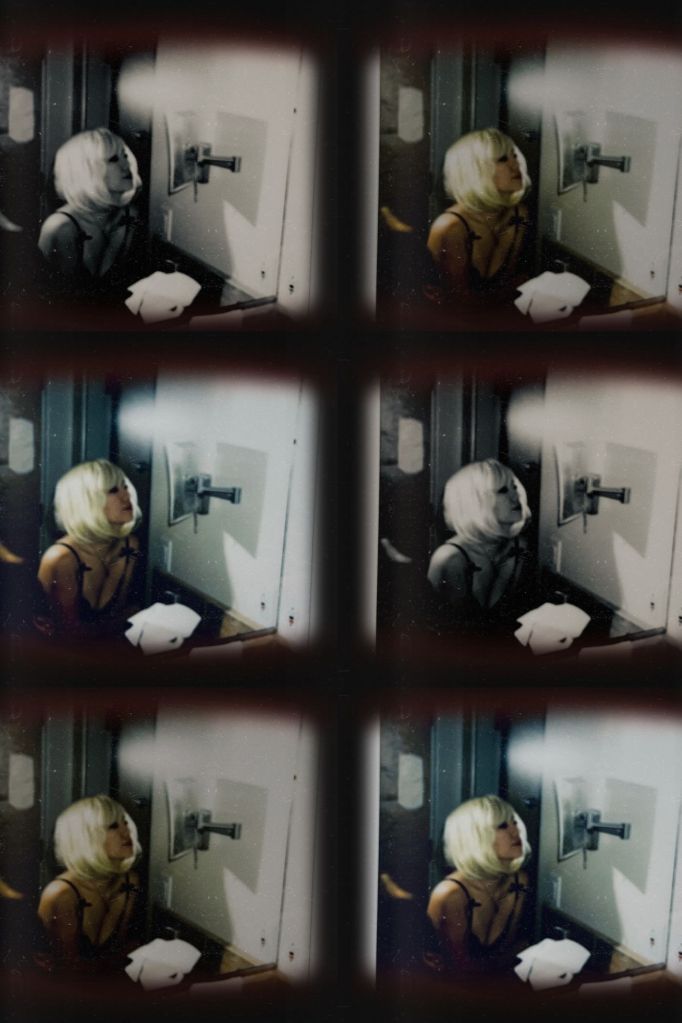
All Prairie Dogs Go To Heaven

Excerpt from None So Distant:

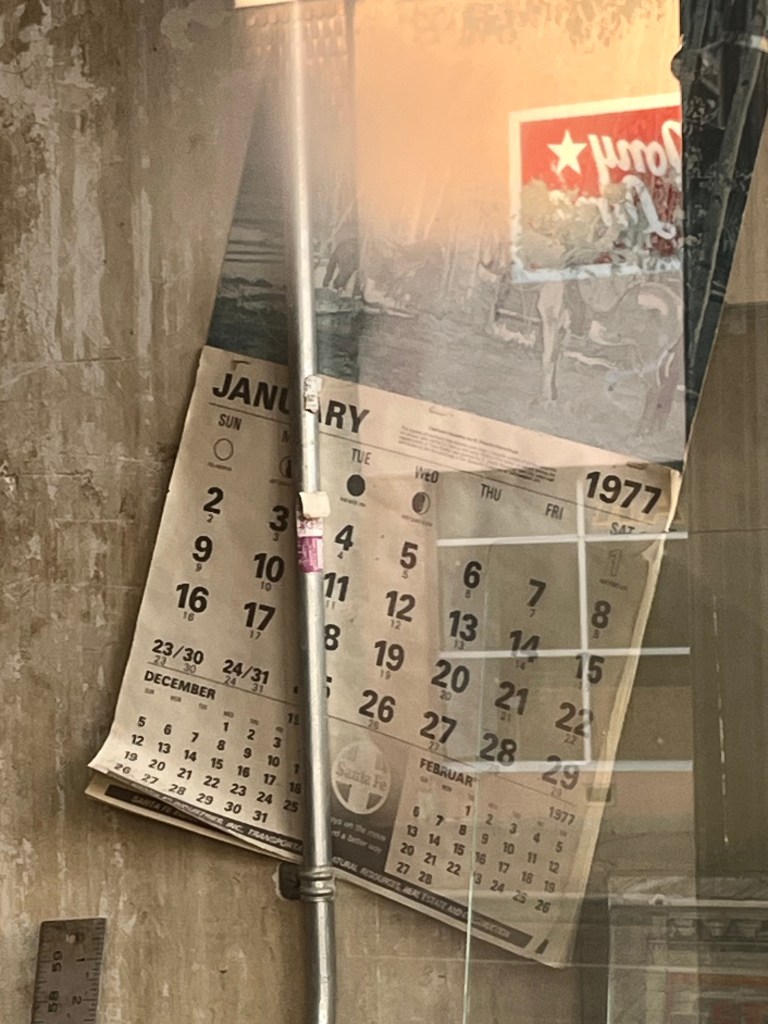
We recall fondly. We recollect. The good old days in which we titled windmills redolently and rode clanging dusty boxcars across the glaring horizontal spread of america. What a lay we said hitching up our pants sticking our peckers into every gopher hole and indian eardrum we could wrestle or manage. The good old days an unrolling panoramic canvas of america painted over with screaming reds graying blues mudpacked browns other colors running together like luxuries found lost. We posed as stiff hipped sheriffs marshaling laws to frontiers unexplored my god we were real artists then painting with the light just right to conceal any shadows unwanted creeping across borders.

Posted in Artwork, photography, Poetry, Prose | Tagged , , , , , | Leave a comment

Fruit

I was happy to find out that my story, “Fruit,” was selected as a “Brooklyn 2023 Non-Fiction Prize Finalist” for Brooklyn Film & Art Festival’s competition.

A filmed recording of the piece is being scheduled.

“Fruit” can be read here.

Posted in Cinema, photography, Poetry, Press, Prose | Tagged , , , , , , , , , , , , | Leave a comment

Sea Change

Excerpt from my recently completed novel, Worlds Last Imagined. This fragment is a meditation upon the tenuous and subjective relationship between memory and fiction:

She stood at a distance, imagining her daughter there, playing. She saw how her daughter lit up with glee when she was near the sea, or scampering along the shoreline, collecting shells, poking holes in the mud with a stick, or simply ambling along ensconced in the mercury of being. What is the difference between memory and fiction? She watched and listened, as a mother would watch and listen. The sea splashed forth, retreated, splashed forth, retreated, doing its sea-swing. The rhythm was soothing, unmistakable, dependable. This was the sea of her past, her childhood. Her daughter had never been to the sea, had never played in the sea, as she was playing now, a fugue and ghostly footage in her mother’s time-hunted eyes. She went to the rocks and sat down, staring out from behind dark sunglasses. She recalled days and nights on the beach with her girlfriends. They were young once. I was young once. Now, I am older and my unnamed daughter who never had a chance to experience time moves lyrically along the shoreline, glee-infected. What is the difference between memory and fiction? Ephemera becomes us, and we it, whether we like it or not. Some ephemera, geared on a fast-track, takes away what we never had, what we never knew, what could have been, the sweep of gusts invading a sandy beach. The sea, a smooth slate-gray mirror, briefly, then comes the comb-blade teeth of ripples disturbing the smoothness, and in its place, a grammarless script. What is the difference between memory and fiction? She looked out at her daughter, a hundred feet or so measured in years, in loss, in no time at all, her daughter wandering elliptically along the lacy edge of sea, rhythm unbroken. Behind her daughter’s nimble footsteps, she saw flashing traces of color, the remnants of fractured rainbow in harmonic motion, following the cause of light.

Posted in Books, photography, Poetry, Prose | Tagged , , , , , , , , , , | Leave a comment

Ask the Dust

A musician named Sam introduce me to Ask the Dust when I was in my early twenties. It was exactly the book I needed at the time. Sam had heard me read at The Vault, this house-based performance space in Queens, and afterwards asked me if I had heard of John Fante. I hadn’t. Sam invited me to his house to do some spoken word and music recording, and when I was there, he gave me a copy of Ask the Dust and told me it would change my life. I read it and was blown away. The romantic solipsist in me fell into the echoes and correspondences of mine and Arturo Bandini’s life (Bandini being Fante’s alter-ego): the Italian-American background, growing up in a household of addiction and chaos, the need to escape from home, the outsized literary ambitions. It was the classic sense of lesser-than desperately seeking more-than in order to feel important, validated, affirmed, seen, heard. Ask the Dust, in its hardboiled innate lyricism (thinly concealing wounded and inflammable sensitivities), its phlegmatic timbre, and seismically charted mood swings, lodged itself in my heart and became one of my mini-bibles and valentines. Today it randomly popped into my mind: how much this book had meant to me as a young writer and lover of self-styled mythologies, in what Fante had called, “lean days of determination and hunger.”

Posted in Books, Poetry, Prose, Publications | Tagged , , , , , , , , | Leave a comment

The Bride

Posted in Artwork, Cinema, photography, Poetry, Press, Prose, Publications, Theater | Tagged , , , , , , , , , | Leave a comment

Review Tales

Excerpt from Jeyran Main’s recently published review of The Jackdaw and the Doll on “Review Tales.”

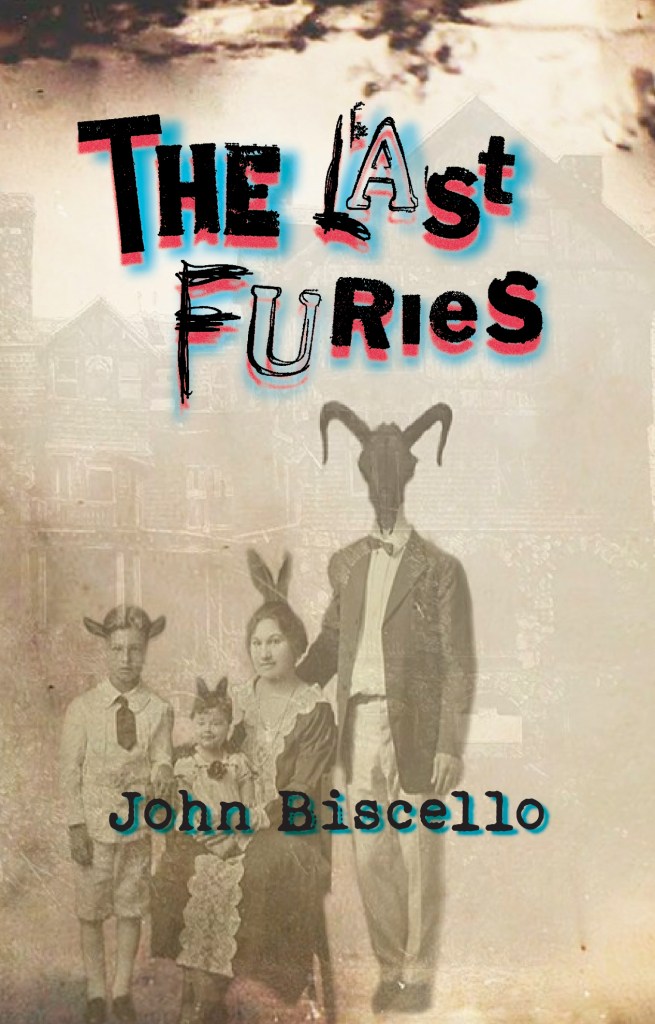
The Jackdaw and the Doll is an ode to the storyteller’s journey, a celebration of the art that arises from the deepest wells of human experience. Biscello’s masterful storytelling, combined with Yokoyama’s exquisite art, makes this book a treasure worth revisiting. It’s a testament to the enduring power of love, compassion, and the creative spirit. In a world craving meaning and connection, this book emerges as a beacon of hope and inspiration, deserving of a prominent place on every reader’s bookshelf.”

Full review here.
Posted in Artwork, Books, photography, Poetry, Prose, Uncategorized | Tagged , , , , , , , , | Leave a comment

Ariana and I

Excerpt from Worlds Last Imagined:

   Ariana and I attended our own funerals. It was something we did from time to time. We saw ourselves lying there, pretending to be dead, saw a wavering horde of faceless and nameless figures weeping and going silent for us. I held the silence close and listened in. Then I placed the silence inside a jar, labeling it Adagio Silence.

   Who were these people? Where had they come from? Why were they mourning us?

   Ariana looked at me looking at her, the dead her.

   You look so beautiful Ariana, I said. You look like an angel dressed in winter white.

   Ariana smiled and said I was always, without trying or realizing it, always finding words, the right words, the warm ones, the living ones.

   Ariana’s compliment left me breathless, like babylegs kicking me in the belly. I looked down at me, somebody’s idea of a portrait. Like staring at the sun, or into a mirror without end, you can’t look for too long. A careful glance, a passing one. To see yourself dead required a well-practiced casualness.

   I asked Ariana how long we should pretend to be dead. She said she didn’t know. The theater of playing one’s own ending was irreplaceable.

   When the visitors left, a new silence entered the ceremony. It brushed against me, like small muzzy animals. I left this silence uncollected, didn’t name it. I stay on guard against becoming greedy and gluttonous. I heard the laughing first, then saw Ariana rising from her dead, and because her teeth were painted red, she now looked like a different kind of angel, a teasing one, a demonic one.

   Are we done pretending, I asked Ariana, who often did this, just started resurrecting without saying a word, levitating above her casket, and I noticed the casket’s interior was lined with pale violet satin, a nice touch, elegant, Ariana moving over snowdrifts darkened with fresh blood, moving into winter, away from herself and into herself all at once. I couldn’t take my eyes off her. I witnessed Ariana’s resurrection, not my own. Still, I mourned for us both, I played at mourning for us both, gave my best theater to pity and grief.

   Ariana stood by my side, staring blankly at her empty casket. I stared at her empty casket and then at my empty casket.

   I asked Ariana if she was going on as Ariana, or … was that who she was now, who she is? She didn’t respond. That silence I preserved in a jar and labeled it Identity Silence.

Image by Heather Ross

Posted in Uncategorized | Leave a comment

Worlds Last Imagined

New novel completed. Grateful for my Abiquiu retreat, where I got to balance work process, nourishing solitude and exploration of this area’s breathtaking beauty.


WORLDS LAST IMAGINED
In these time-bending, multiform chronicles,
A) A pair of “tweeners,” the names given to metamorphic vagabonds who move between worlds with improvisational fluidity, are undertaking the ultimate road trip, while
B) a reluctant tracker, who’d much rather remain in his motel room bingeing on reruns is called upon to find the tweeners … meanwhile,
C) an empty boat washes up on the shore of a coastal Japanese city, revolving around a love story and
D) the approximately infinite potentialities of what it means to be Yoko Ono—
a name, a semblance, a pair of scissors, a tape recorder on a snowy night, pieces of sky.
As a mythopoetic composite, where apocalyptic bop meets speculative noir, Worlds Last Imagined offers a visionary romp through identity, ephemera, and stories without end.

Posted in Books, photography, Poetry, Prose | Tagged , , , , , , , , , , , , , | Leave a comment

The Bride and Berlin

While The Bride did not win in its category (Best Actress in a Short Film), we did gain our first laurel as the cinematic journey of the Bride continues on the film festival circuit, far and wide.

Posted in Artwork, Audio, Cinema, photography, Poetry, Press, Prose, Theater, Video | Tagged , , , , , , , | Leave a comment

Titanic

If there were two, then let us say there were two. The two danced on the time-haunted deck of the Titanic, they called it the Titanic because they understood the floor beneath their feet was not to be trusted, nor the worldscape, which was always at the mercy of shifting tectonic plates. Here today, gone tomorrow. Gone tomorrow, here today.

She, one of the two, lowered herself upon the creak-wooden floor and blew him. She rose up, musky penile skinflakes clinging to her lips, and he, the other of the two, lowered down and blew her. They swapped out organs liberally, as they saw fit, they were measurably reciprocal in their take and give.

They blew each other back and forth seesaw-style because they loved each other, because wind was their mentor and silence their grace, because they desired to become immaculately vulgar, they blew each other because the fate of every Titanic was inescapable, they blew each other because they were two.

There might have been others. They didn’t see them. She said she was a mother once, possibly twice. He said he played a child at least a thousand times. Every generation slips a knot. The blue want of the world was hunger impossible, or desperate flights from hunger impossible.

He wet the tip of his finger and plugged it inside his ear, conceiving of ear as he did this, imagining it a bright clay appendage, a tender mollusk. She removed her ear and replaced it with wax candy lips, a Cubist invention of her own volition. They, the two, devoured each other historically, simultaneously.

The world had gone and stayed unimaginably gone. They were two, and they were. It was enough. The most concise and satisfying math equation ever. To be there and to be gone. To be simultaneous and to absent. They found all this out by dreaming through and through. I mean dreaming that went all the way through, no turning back.

Imagine, if you will, two tiny O-shaped mouths like goldfish puckers, suckers for absorption, and therein lies the gremlins, mysteries and vast greening ponderances of life.

Once upon a time…

Posted in Poetry, Prose | Tagged , , , , , , , , , | Leave a comment