
From the Polaroid Noir series
From the Polaroid Noir series
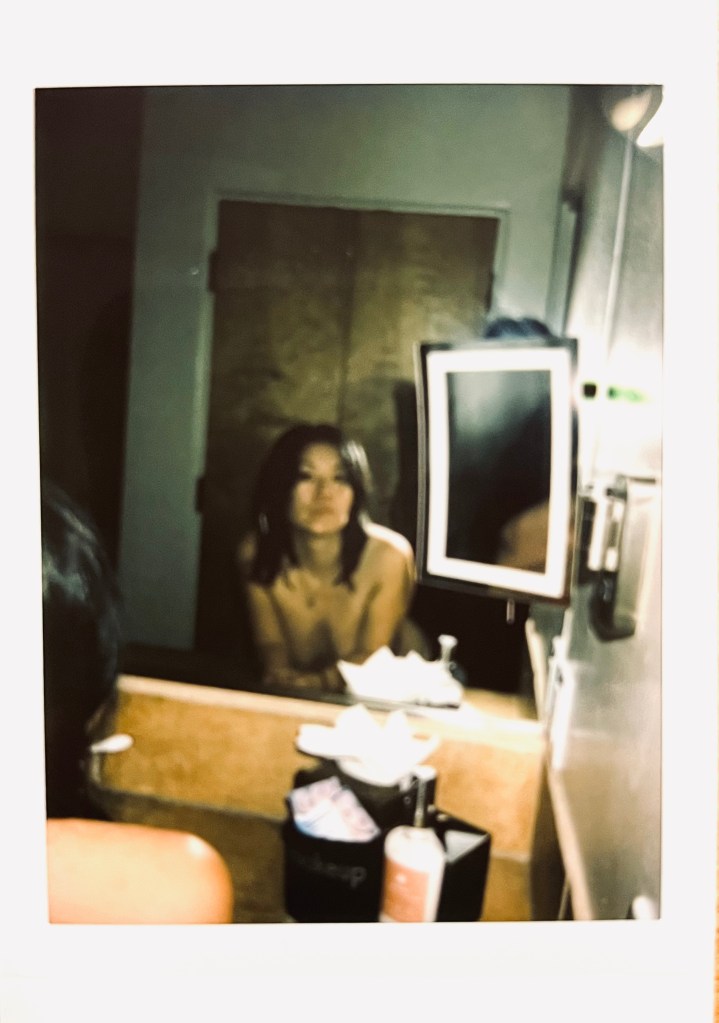
From the Polaroid Noir series

From the Polaroid Noir series
“Evie laughed to herself. It was just acting. Then again, she often did have trouble determining where she ended and someone else began. She wasn’t sure if this was a side-effect to acting, or to existing. Or if there was even a difference between the two.
When she searched herself, what she found was: she didn’t really care where she ended and someone else began, or vice-versa. She relished her loss of awareness when slipping into other personas. And whatever persona adopted, there wasn’t any genuine attachment, because she would be operating from a place of void. One was the same as the other as the other. None of them were her. And she wasn’t her. The void signed off on everything. In invisible ink.
With nesting doll instincts she dreamed she was someone else, and that someone dreamed they were someone else, and that someone didn’t dream at all. That someone was the last straw, the dreamless one, the tenant of emptiness.”
Excerpt from The Last Furies.
Actress, model, icon, and Warhol’s “It Girl'” Edie Sedgwick, was one of the inspirations that informed the genesis of the character, Evie Chase, from my novel The Last Furies.

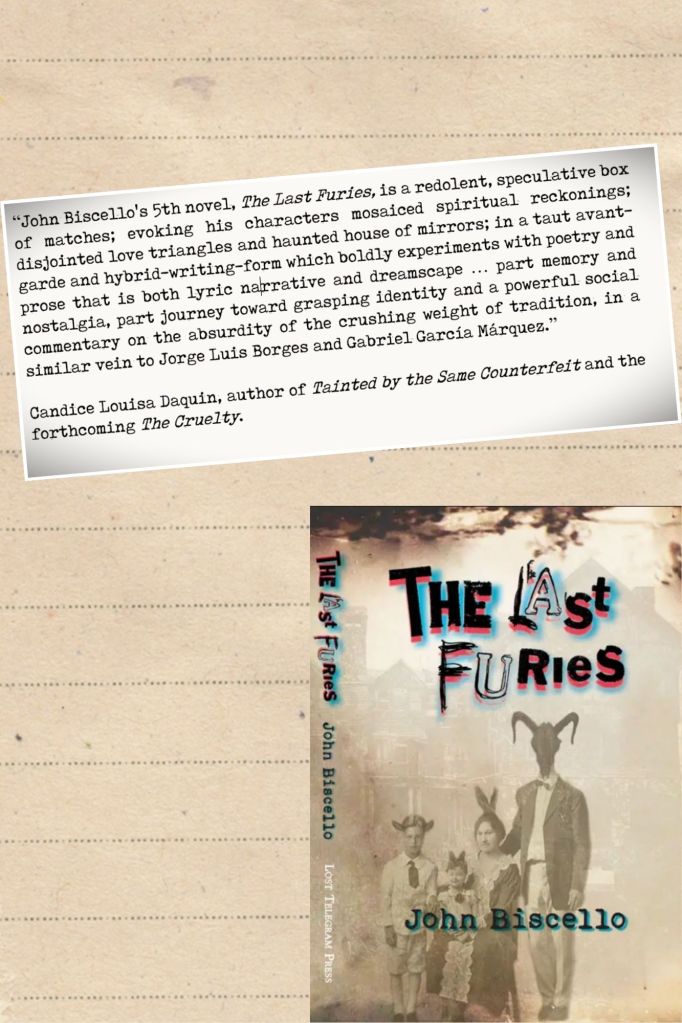
Deeply appreciated Candice Lousia Daquin’s incisive and in-depth review of The Last Furies. Excerpt of the review below:
“With a background in screen-writing, these influences are Biscello’s nod to cinema and emphasis on art and visual components, often eschewing traditional formatting, in keeping with surrealist writer Mikhail Bulgakov’s style, to explore emotion and spiritual quests, without typical rule-book. The publishers, Lost Telegram Press, have created an artbook with interior postcard, to complement this fragmentary style, where cinematic-scene-play, sits with a lush dream-style, reminiscent of French New Wave in its refusal to explain itself. A screen-play within a novel, permitting entry from our own ubiquitous world, to this discomfiting navarre.”
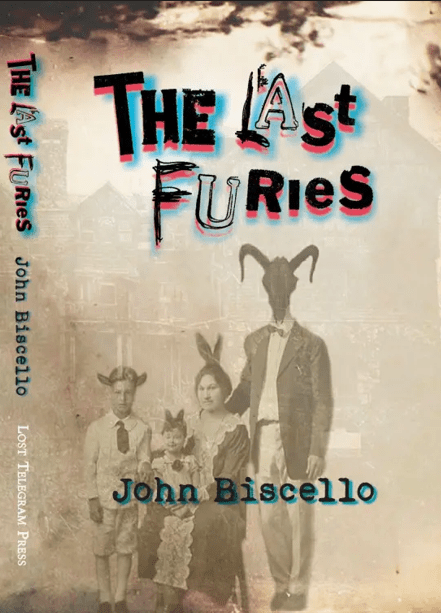
A schedule of upcoming events, pertaining to the publication of my new novel, The Last Furies (Lost Telegram Press).
Miko was a singer with her voice in the clouds. They called Miko blue. Occasionally there would be flashes of red. In the fall, Miko would softly mimic the elegy of leaves and become yellow. She would, in voice and longing, die a yellow death and find herself settled among the tender mortuary of leaves. Lost leaves. Lost hours. Lost time. It’s what kept her searching. Not for a specific period in her life, not for a denoted passage. Not for a time she had known. It was the search for a time she hadn’t known. She wanted to find again the time she hadn’t known. The key word in that desire was again. It was saudade as ineffable reflux, as yellow panting for motley leaves and vagrant winds. I don’t know it, this unknown time, yet there is an inexplicable germinal quality to again in my finding it, an inalienable sense of return. Most returns are impossible, or revolve centrifugally around diminishment. Miko’s ghost, having advanced beyond her life at a young age, echoed back to her in song, the invisible passages she must travel in tracking the lost hours.
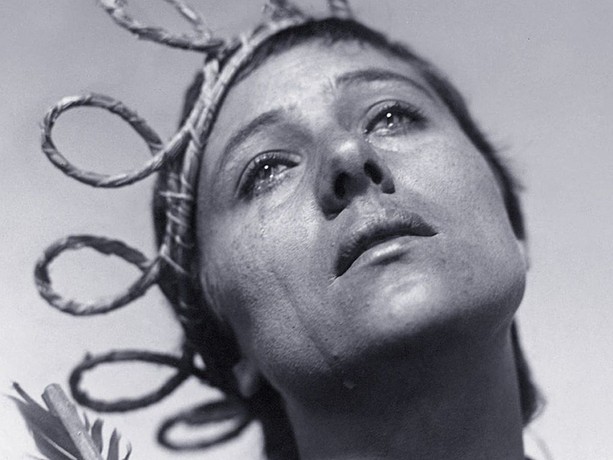
“To know the face of Renee Maria Falconetti, a living mask of plasticity molded to the inner world of a young Joan, is to know the private history of a spiritual crisis. Falconetti wrings every last nuance and syllable out of her facial vocabulary, in taking the viewer through the serrated moodscape of an endangered martyr. There is the glazed vacancy, that faraway within, implying Joan’s intimate consort with angels or the otherworldly. The blinkless moonshot eyes, teetering on the brink of grave absolution. Lids drawn over those eyes, like a sluggish cortege or fated blinds. Falconetti’s amorphic palette of expressions operates with a stringent economy that both speaks and mutes volumes. In one scene, when one of Joan’s Inquisitors demands to know who taught her the Our Father prayer, Joan, with a tear carving a glisten down her cheek, answers—My mother.
Falconetti’s face, in that moment, is an open invitation to enter the mortal suffering of a young girl who dearly misses her mother, her home, her simple life.”
Excerpt from my novel, The Last Furies.
Carl Theodore Dreyer’s 1928 silent film masterpiece, The Passion of Joan of Arc, is one of the key elements in the Furies intersecting narrative.
Print, digital and audio editions of The Last Furies now available through Lost Telegram Press.
“All Bert and George ever did was wander in the desert. An endless wandering, sandblasted peregrinations to nowhere, a tubercular odyssey with no point. They wandered, kept each other company, drove each other nuts, got into and out of scrapes and follies. The desert, in all its starkness and death-resin, might not seem like an ideal breeding ground for vaudeville, but these two men showed otherwise. They showed that comedy’s scoliotic backbone originated in a sturdier more epic spine.”
Excerpt from my novel, The Last Furies.
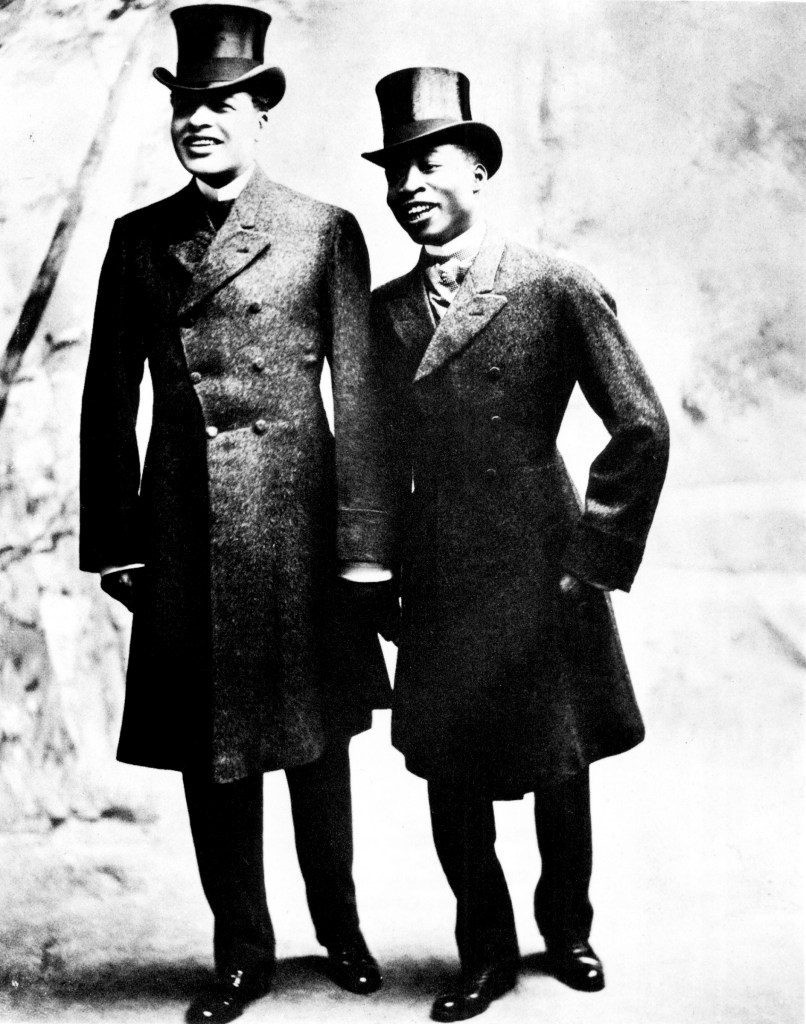
The two men in the photo, Bert Williams and George Walker were a pioneering vaudeville duo (Williams-and-Walker), who were the first Black recording artists in 1901 and the first Black performers to write, produce, and star in a full-length Broadway musical in 1902. About Bert Williams, W.C. Fields said: “He was the funniest man I ever met, and the saddest man I ever knew.”
Two characters, “Bert” and “George,” inspired by Williams and Walker, are forlorn wanderers in the endless desert, which cuts across the mutable geography and timelines of The Last Furies, and the duo’s exploits are recorded as part of a surreal radio program whose bandwidth covers eternity.
It was a time in her life when she was not there, not inside herself or her life. And she was pregnant. Pregnant by the wrong man, so many wrong turns and wrong men, and this one, a mislaid night gathering force and momentum in the base of her spine, her small history measled with shivers and white spiders. Placing her hands in the soil and planting things helped, because then the earth became her body, the earth which never suffered an identity crisis. Hands moving through soil was balm and shelter. Another was reading. Entering the lives of others was like playing safely in the country of shadows. The novel she had read, written by a South Korean woman, mirrored her psychic landscape to a tee. In the novel, a woman was breaking apart. Quietly, quietly. No one heard a sound. Until the woman began demonstrating unusual and erratic behavior, a deviation from the norm, and then the woman, as an aberration, was somewhat heard and somewhat noticed. The woman’s ghost took center stage in her life, and she, practicing séance and exorcism all at once, became the body and template to a chronic haunting. A haunting whose night spilled forth into broad daylight. It was, according to many, disturbingly unnatural to see night insinuate itself into day. The woman’s husband was revolted by this grotesquerie. And, by proxy, revolted by his wife, who had become the insistent bringer of night. The author lights the novel dimly, a muted sepia with hints of ash, and perfumes its air with dying roses. It is a novel that is both quiet and quietly devastating, a cortege of soft footfalls echoing in a long hallway. It was as if the woman in the novel was continually awakening from a dream, and with each inebriated awakening, with each round of stupor and revelation, a new fold emerged, a new edge spanning chrysalis. The novel broke off where the woman was beginning and ending.
By reading this novel, three times, the woman outside the novel took a census on melancholy and came up empty. Yet she kept on reaching, beyond herself. Where was I became where am I, which eventually morphed into I must return … and everything was set in motion. She would give birth to a daughter who would be raised fatherless (which wasn’t novel, many were raised fatherless, whether a father was in the picture or not), she would move back into herself, bloodying her hands along the way in smashing mirrors (but how beautiful the pools of blood darkening the slick lunar glaze)—she had been reflected back to herself as a woman trapped in a novel that no one was reading, and no one had written, but she was not that woman, that woman was trapped in a changeless fate, crystallized in fable and dirge … she was not that woman, she was herself outside a novel, herself inside life building itself to house her name, her slow and holy name committing ceremony to mother-tongues.

