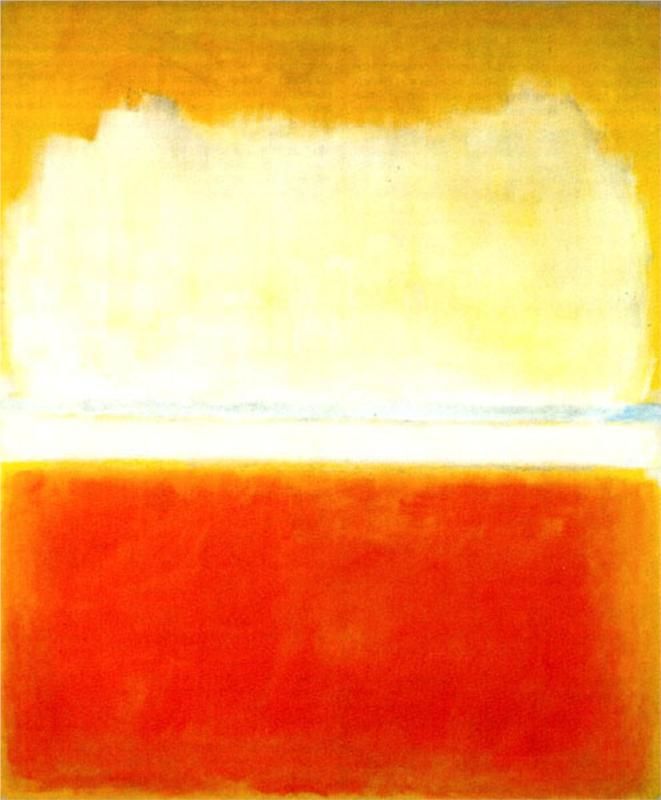
Red Wedding Day

Hey, little sister, what is it you wish?

A nice day for a red wedding

A nice day to start again.

Posted in Artwork, Audio, Cinema, photography, Poetry, Press, Prose, Theater, Video | Tagged , , , , , , , , , , , | Leave a comment

Through a Screen Darkly

(A review of Lisa 2, v1.0, by Nicholas Rombes)

It begins in an irremediable present-tense, a limbo of cirrus and gray, in which the voice of a man, functioning out of narrative necessity, becomes spectral detective to the story of his family’s disintegration. Here, we begin again, the saccharine melody of Percy Faith’s “Theme from a Summer Place” playing, its innocence the honeyed veneer to a malovelently Lynchian underlay, as we cut to a family—husband and wife, David and Lisa, and their eight-year-old daughter, Marin—spending a summer-lovely vacation in rural Northern Michigan. The cottage at which they are staying, belonging to Lisa’s dead aunt, becomes the incubator for an existential nightmare, where his wife Lisa’s boxy doppelganger originates in Lisa 2, an old model Apple computer.

Resuscitating the relic from 1984, Lisa 1 (as David begins to think of his wife), begins writing her plays on Lisa 2, and David becomes aware of changes in her writing: darker, stranger, more overtly graphic. What most disturbs David: There is a different voice he is hearing, both on the page and in the “reality” of their interactions. It is not Lisa’s voice. Not the voice of his wife, the Lisa that he knows and is intimately acquainted with. She is becoming someone else, with physical, verbal and emotional changes underscoring this transformation, or “possession” as David sees it (Lisa 2 is implicated as demoniacal kin to H.A.L. from 2001). David’s interpretation of the situation opens the splintered gateway to a multi-layered novel which traffics in the mutable lore of memory and perceptual slants. How each one of us curates and caretakes our own reality based on fears, projections, predilections, desires. This is reinforced by the novel’s second narrative, in which we get Lisa’s point-of-view regarding what happened that summer and her husband’s disapperance.  

Stories emerge from the cracks and fissures, out of internal necessity, and in the case of David and Lisa, the story-behind-the-story (or perhaps parallel to or couched within) is that of a married couple drifting apart, as if their mutual orbit had subtly deviated from the planet around which their lives had been built and regulated. And their precocious daughter is caught in the middle of this sundering and crisis, which is made all the more heartbreaking when juxtaposed against the endangered moments of family tenderness and bonding that are sprinkled throughout. This includes the connection that David and Lisa have forged through films, a sort of second-hand love-language raised from shadow-play.

 Remixed hints of Bradbury, Black Mirror and Kafka subtly register, and the novel, in tone and essence, plays out new wavishly lo-fi, creating its own glitchy nostalgia in a liminal haunt. Unease low-humming in blank spaces, ghost-feed in the gaps, is what Rombes specializes in. What is not there creates a visceral and auditory spell, as this book demands to be heard as well as read. There is a line spoken by Fred Madison, the character played by Bill Pullman in David Lynch’s Lost Highway, a creed that could be applied to the unstable calculus of Lisa 2, v1.0: “I like to remember things my own way … not necessarily the way they happened.”

Memory, as flash-cards sequentially patterned to illustrate evidence, is not to be trusted, but memory as a breeding ground for fiction, is wildly fertile in its proliferations. In this respect, Rombes’s novel offers a deliciously twisted and amorphous voyage into hazardous waters, and on the phantom map detailing the dimensions of Lisa 2, the markings might read: Here there be mirrors, screening as monsters.

Lisa 2, v1.0, published by Calamari Archive, available here.

Posted in Artwork, Books, Cinema, photography, Poetry, Press, Prose, Publications | Tagged , , , , , , , , , , , , , , , , , | Leave a comment

The Bride at Jean Cocteau

Our experimental chamber film, The Bride, will have its Santa Fe debut, screening at the historic Jean Cocteau Cinema.

Posted in Artwork, Audio, Cinema, photography, Poetry, Press, Prose, Theater, Uncategorized, Video | Tagged , , , , , , , , , , , , | Leave a comment

Women Without Men

They grew breasts beyond compare. They grew breasts because they had to. Flat-chested, they weren’t considered manly enough. Grow some breasts, the administrative contingent would say. Grow some breasts and then maybe you can join us on the battlefield.

A very large gauntlet was thrown. Which precipitated breast-busting, molding, sculpting. The men underwent procedures. The men became breast-first men, chests puffed, chests inflated (some would say patriotically). They grew breasts and were saying, not in so many words—We are prepared to have cold steel bayonets plunged into our tender asking breasts, we are ready to have our chests punctured, to forfeit our lives for the sake of national debt, live theater, censored pride, grains of salt, whatever. Whatever.

The sloganeers coined slogans for the Breast Boys: Breast-Led Till Dead, or, God Breast America. The slogans worked. They seeped in like narcotic gnats. They boosted morale virally. Some of the men got lost fondling themselves. Others succumbed to the load-bearing weight of their redefined carriages. Yet the slogans kept sloganing, record-scratch echoes in hidden hallways. What you couldn’t do: wrap the dead bodies in slogans.

The bodies piled up, victims of bayonet plunges, chests deflated, perfectly engineered breasts gone to rot. Yet, despite the growing carnage and body count rise, men continued to grow breasty, with new slogans superseding the old ones—Put your breast foot forward, or, These nipples don’t run, on and on and on, slogans and jingles inspiring hordes of breast-endowed men, their manliness never a question yet always in question—busty, monumental, pillowy—these became catchword adjectives, and everywhere, everywhere the battlefields became premature burial grounds for scorched flowers and breast-led men laid to incalculable waste.

Posted in photography, Poetry, Prose | Tagged , , , , , , , , , , , | Leave a comment

The Old Neighborhood

Recorded version of my piece, “Fruit,” which was a 2023 Non-Fiction Prize Finalist in Brooklyn Film & Arts essay competition. The story revolves around shame, powerlessness, addiction, and survival techniques during days of Brooklyn youth.

Posted in Audio, Books, Cinema, photography, Poetry, Press, Prose, Uncategorized, Video | Tagged , , , , , , , , , , , , , , | Leave a comment

Blue Star trilogy

After completing my most recent novel, Worlds Last Imagined, it, along with two other novels–No One Dreams in Color and None So Distant–comprise what I’m calling my Blue Star trilogy (2020-2024). The blue star reference pertains, at least in its seed-basis, to an “above air” ceremony I attended on winter solstice night, 2020, led by my friend, Duane Crowfeather.

These novels are spiritual kin, revolving around an axis of shared themes: vanishing points, storytelling, myth, dream-consciousness, memory, language and silence, film, music, the amorphic relationship between internal and external realities, and cyclical journeys through bardo chambers. Also, I got to explore and develop a style of playing, a “free-jazz-meets-vaudeville” correlative, which is called apocalyptic bop. More on that another time.

No One Dreams in Color is slated to be published in spring 2026 by Unsolicited Press. I continue my active search for supportive homes for the other two novels.

Sticky-note reminder to metamorphic self: Stories are the impossible. They never die.

Posted in Artwork, Books, Cinema, photography, Poetry, Prose, Publications, Theater, Uncategorized | Tagged , , , , , , , , , , , | Leave a comment

Cowpunk at the Purgatory Corral

Excerpt from my novel, None So Distant:

We are out here on all fours panting in the sun the bleary merciless maraschino sun burning us. It has been a long while one of those spells that feels foreverish out here in these fields unseen dreaming of god knows what. We are permanently scarred. Some of us suggested we become a group that goes by the name Permanently Scarred maybe a band except none of us sing or play an instrument. I’d say we are disembodied voices except we are on all fours with the sun burning us so something like bodies like skin must be our lot and inheritance. Knowing the void answerless you’d think we’d stop asking questions but we don’t What’s for dinner Where’s the moon Did we do something to deserve this. We ask answerless and listen hoping dreamless. You could call us a sorry bunch but then again not knowing whether finite or infinite there is nothing to assess no one to blame. There’s just us on all fours the sun burning unrelenting. If we decide to call ourselves Permanently Scarred maybe one of us will learn to sing so we can earn our name. It’s either that or absolute silence which none of us have yet tried.

Posted in Books, photography, Poetry, Prose | Tagged , , , , , , , , , , , , | Leave a comment

All Prairie Dogs Go To Heaven

Excerpt from None So Distant:

We recall fondly. We recollect. The good old days in which we titled windmills redolently and rode clanging dusty boxcars across the glaring horizontal spread of america. What a lay we said hitching up our pants sticking our peckers into every gopher hole and indian eardrum we could wrestle or manage. The good old days an unrolling panoramic canvas of america painted over with screaming reds graying blues mudpacked browns other colors running together like luxuries found lost. We posed as stiff hipped sheriffs marshaling laws to frontiers unexplored my god we were real artists then painting with the light just right to conceal any shadows unwanted creeping across borders.

Posted in Artwork, photography, Poetry, Prose | Tagged , , , , , | Leave a comment

Fruit

I was happy to find out that my story, “Fruit,” was selected as a “Brooklyn 2023 Non-Fiction Prize Finalist” for Brooklyn Film & Art Festival’s competition.

A filmed recording of the piece is being scheduled.

“Fruit” can be read here.

Posted in Cinema, photography, Poetry, Press, Prose | Tagged , , , , , , , , , , , , | Leave a comment

Sea Change

Excerpt from my recently completed novel, Worlds Last Imagined. This fragment is a meditation upon the tenuous and subjective relationship between memory and fiction:

She stood at a distance, imagining her daughter there, playing. She saw how her daughter lit up with glee when she was near the sea, or scampering along the shoreline, collecting shells, poking holes in the mud with a stick, or simply ambling along ensconced in the mercury of being. What is the difference between memory and fiction? She watched and listened, as a mother would watch and listen. The sea splashed forth, retreated, splashed forth, retreated, doing its sea-swing. The rhythm was soothing, unmistakable, dependable. This was the sea of her past, her childhood. Her daughter had never been to the sea, had never played in the sea, as she was playing now, a fugue and ghostly footage in her mother’s time-hunted eyes. She went to the rocks and sat down, staring out from behind dark sunglasses. She recalled days and nights on the beach with her girlfriends. They were young once. I was young once. Now, I am older and my unnamed daughter who never had a chance to experience time moves lyrically along the shoreline, glee-infected. What is the difference between memory and fiction? Ephemera becomes us, and we it, whether we like it or not. Some ephemera, geared on a fast-track, takes away what we never had, what we never knew, what could have been, the sweep of gusts invading a sandy beach. The sea, a smooth slate-gray mirror, briefly, then comes the comb-blade teeth of ripples disturbing the smoothness, and in its place, a grammarless script. What is the difference between memory and fiction? She looked out at her daughter, a hundred feet or so measured in years, in loss, in no time at all, her daughter wandering elliptically along the lacy edge of sea, rhythm unbroken. Behind her daughter’s nimble footsteps, she saw flashing traces of color, the remnants of fractured rainbow in harmonic motion, following the cause of light.

Posted in Books, photography, Poetry, Prose | Tagged , , , , , , , , , , | Leave a comment