We Pause for Glacial Identification

It is the winter within, the writer dying, the chaos bible scored in ice, texts of veins, I mean, I think I mean, veins of text, veins and bulging whorls of text embedded in ice, and your body moving through space and time is a glacier, or so you imagine, but then you realize (at some point you will realize) that you are entombed within the hulking chrysalis of glacier, a slow-moving behemoth, a blue-white mausoleum, you are awed by its size and silence—and you are existing within it. Crazy. To realize you are cargo and passenger of this vessel, the ship on which you are traveling is a glacier, which makes sense, now that you consider the shape and texture of your perception glassily blurred, as if projecting through sheafs of warped and mumpy cellophane. There is no discipline in this. There is nothing for you to practice, to do. The glacier, densely benumbed in godlike grandeur, drifts along icy waters—your ship, your home, houseboat, that’s it, the glacier is your houseboat. Far, far away from tons and cities, from society’s pall and viscous scrim. Where are all the rapacious gazes? The rapists? No evil people, the philosopher once opined, only evil revelations. None of these recollections from your previous life, or previously imagined life, amount to anything. You have moved beyond the confines of memory. In other words, in different worlds: the government and its legislative capacities that Memory sets up in the self is now defunct. Or, your moving distance, defaulted you from its jurisdiction. Regime change can be as simple as dislocation.
Posted in Poetry, Prose | Tagged , , , , , , , , | Leave a comment

Memory and Fiction

What is the difference between memory and fiction? What are the intersecting policies of their tenuous and subjective relationship? For example: You have a woman, a mother recalling her dead daughter. She sees her daughter playing on the beach, she is viewing this scene and relating to it as archived footage catalogued under the auspices of Memory: Once upon a time, my daughter played on the beach, and I watched. I witnessed her. Except … this never happened. The mother’s daughter died when she was three days old, she never had a chance to substantiate and affirm her life through the continuum of memories, memory-building … there was no projecting the self repeatedly into scenes, incidents, episodes, that one day would be recollected. The beach scene never happened, yet the mother, in her time-hunted eyes, was watching it happen, again … she was recalling vividly what for her was a bittersweet memory, with narrative attached—My daughter was so happy that day, playing with the sea, the waves. The mother is not experiencing her daughter and the beach as an invented story, an obliging fiction, she is re-membering, re-calling, not fabricating … this happened and is happening now, all at once. You have to wonder how much of what we’re remembering is what we want and need and are compelled to remember, how much of memory is fiction masquerading as factual imprints, or impressions based on phantoms, the publication of haze, the fever-dreams of want, the lingering spells of haunt. How many memories are sketched from outlines of what never happened?

Posted in Poetry, Prose | Tagged , , , , , , , , | Leave a comment

Monkeys and Barrels

None of it was going anywhere. It had been a while. Both things were true. Both could be beginnings. So let’s go with both: None of it was going anywhere. It had been a while.

I felt like a dehydrated man wandering aimlessly in a wasteland of publishing. To clarify: the publishing industry being the wasteland. Then, a chance. A dehydrated man wandering aimlessly in a desert lives for chances. Which is why the tease of mirages prove to be the death of many.   

Anyway, a chance: I had an appointment with the V.P. of the big publisher C.C. Burton. My friend, Lana, a fellow writer, who always backed and supported my work, had wrangled the appointment with Elaine, the V.P., who was an old friend of hers. Elaine, like myself, was of Italian-American heritage. Elaine, like myself, was from Brooklyn. And because my novel was a crooked valentine to the Brooklyn of my youth, Lana thought that it might be a perfect fit for Elaine’s sensibility. It sounded promising. Most mirages do. They glitter in the daytime and disappear in the twilight. Of course, it’s always twilight when you arrive at the mirage. I’m sure Einstein could explain it. Anyway, the meeting.

I stepped into Elaine’s posh office. I saw a smallish woman dressed in a pale lavender suit seated behind a massive desk. Her hair was sculpted high. I wondered if she had sculpted it with Aqua Net. Was there still Aqua Net? Had it been banned by the Ozone Commission? My grandmother had petrified her hair on a daily basis with Aqua Net. My grandmother was long dead. Not because of the Aqua Net, mind you. Elaine appeared to be in her late fifties, early sixties. Definitely of the Aqua Net generation.

Mister Fillameno, Elaine said, please sit down.

I sat down in a wooden chair, facing her. I felt as if I were at the principal’s office, and was about to be reprimanded for something I had done wrong in class. Which was often how I felt. Especially when seated across from vice presidents with sculpted hair and lavender suits. Which was not often.

Elaine and I chatted. About Brooklyn. About no longer living in Brooklyn (I had expatriated to Nine Peaks, a small town in New Mexico, twenty years ago). We chatted about this and that, a casual volley, which led to my novel. And why she was passing on it.

You’re obviously a very talented writer, she said, and then highlighted what she loved about the book—the characters were incredibly nuanced and layered, particularly Anya in her tragic sadness. Yet, and it was a big yet—YET—the novel is too short to publish, especially by an unknown author. She needed a novel with more meat on its bones, more heft and bulk, if she were going to peddle it.

I don’t remember if she actually used the word peddle but that’s what I heard—peddle. Which made me think of hot dogs peddled by vendors at Yankee Stadium. Or a BMX racer with glow-in-the-dark-pedals. Elaine went on about pacing, character development, length, which then tied into prevailing marketing trends, and that’s when I cut her off.

I don’t write for the market. I write for the angels. And for God.

Where had that come from? I had never thought of myself as writing for the angels. And God. But it felt true when I said it. I could tell Elaine didn’t like being cut off, especially right in the middle of her dissertation on prevailing marketing trends. She pursed her lips tightly. They grew ashen, then pallid. Mortuary. I thought a touch of lipstick could revive them.

Lipstickless, Elaine sniped—That is all well and noble, Mister Fillameno, but I can assure you that God isn’t running the market. And he isn’t the one who will publish your books.

I didn’t know what to say. Elaine had me over a barrel. Was that the right saying? Had me over a barrel? Why a barrel? And wasn’t there something about monkeys and barrels?

Good luck to you, Elaine clipped, letting me know that our meeting was officially over and I should exit her office.

I stood up to leave, disoriented. I was still thinking about God and the angels. And monkeys and barrels. I hadn’t yet caught up to the present moment, to what was happening. I was leaving. Was meant to be leaving.

Good day, sir, Elaine said, as a sort of nudge to get me moving.

I left Elaine’s office. Walked the length of the carpeted hallway. To the elevator. Took it down to the lobby. Walked the marble floor to the glass revolving doors. And stepped out onto the teeming daytime sidewalk. I felt as if I had just vacated one dream, and entered another.

It felt good to be back in New York. It had been a while. And none of it was going anywhere. I started walking. I thought of previous rejections of my work, filing through the internalized catalog. Too short. Too long. Too obscure. Too much this, not enough that. It’s always something, as the late great Gilda Radner would gripe. Yes, sir, back in New York. Just another pinballing speck in the shadow of anonymity. In the shadow of monolithic buildings. This made me happy and sad. I wasn’t a young man anymore. Expect I was. Einstein could explain it.  

You’ve got plenty left in the tank, kid. I often referred to myself, in the third person, as kid. It was a Babe Ruth thing. He called everyone kid, no matter wat their age. Apparently because he could never remember anyone’s name. Babe Ruth. There was a man who defied the odds. A cigar-smoking, hot dog-gobbling, beer-swilling giant who announced himself to the world as legend.

Who cares about age, I told myself. There’s no such thing as time anyway. Live as if you’re already dead. Then, and only then, will you come to fully embrace life and experience truer freedom.

What had happened to me? Somewhere along the way I had lost my nerve. My moxie and chutzpah. Parts of me, perhaps a bit punch-drunk, had gone into hiding. They didn’t want to get hit anymore. I understood. I sympathized with those parts. I had become a dormouse on a ledge. Or a vagrant Buddha standing on the street corner in the rain. Parts of me had.

Yet today, today something in me, something that had been walled up and dammed, had broken open. I owed it to Elaine. Her passive-aggressive assault on God and the angels. Her faith in prevailing marketing trends. Her use of the word peddle. I walked the streets of New York that afternoon, feeling pissed off. Feisty. Ready to take on all comers. I felt completely ready to let all my monkeys out of their barrels. Just to see them dance.

Posted in Prose | Tagged , , , , , , , , , , , | Leave a comment

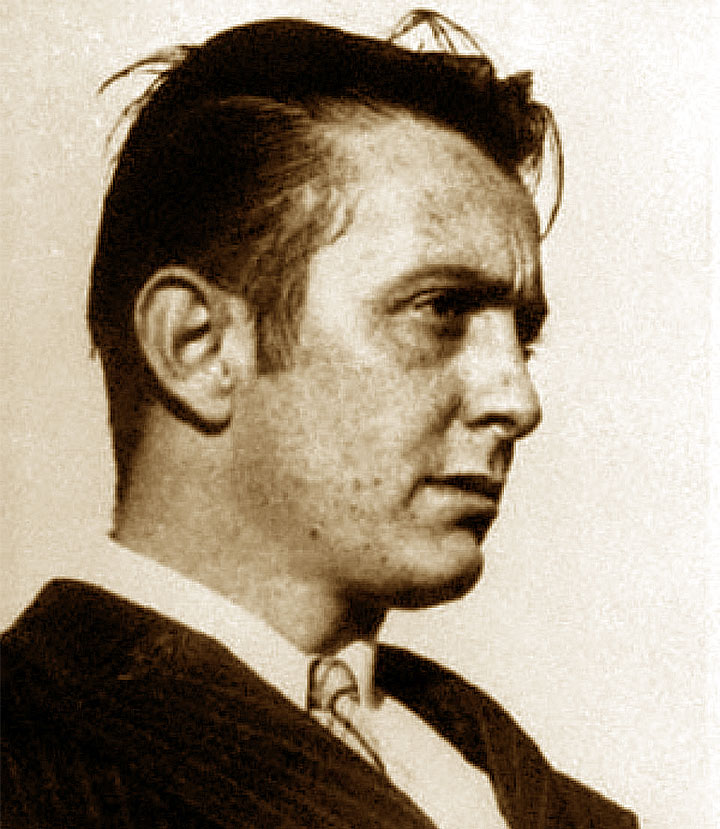
John Fante

John Fante splashed vinegar into the eyes of the world. The vinegar was house-made, from his mama’s trusty cupboard. Mama’s cupboard contained a lot, an old-world apothecary glutted with cloves of garlic, deceit, shame, bones, crucifixes, oregano, thyme, rosary beads, dried insults. Fante swallowed Mama’s cupboard whole, and inherited deep red measures of his father’s bladdeerblown rage. The world was a stage set for Arturo Bandini to take his place. The role of a lifetime. Fante wouldn’t disappoint. He’d play Bandini like a sword thrust, like a jittery grenade. Desperation would become the pack of wild rabid dogs nipping at his heels—he’d outrace them, stay out in front, he would last, and in his gritty perseverance, the dirty greasy no-good name of Bandini would become golden and catered, marquee in its flashbulb pop. Fante could see it all, spread before him like a soft warm blanket in which the gravest of psychic wounds could be swaddled. He, third-class citizen and immigrant louse, he, John Fante, would beat the world into submission, and eternity would vouch for him.

Posted in photography, Poetry, Prose | Tagged , , , , , , , | 2 Comments

Jean Rhys

Jean Rhys was a bedraggled feline. She’d slink through cobbled alleys, lap up Parisian rainwater. High sky glance the glittering harem of stars, and long. Cats are the masters of longing. Spiders are patient, but when it comes to longing, cats are unparallelled. Jean Rhys carried the swell and salty blessings of sea in her breasts and ovaries. She palpitated, regularly and religiously, the ocean as mirror, as window to the past. Cherish. If only cherish could find her longing, treasure it, then the two would harmoniously mate and spit out frothy sea babies, glistening baubles of agate and coral. If only… If only was the hymn that Jean spoke to sing herself to sleep, she undeserving of scorn and rape, would cover herself warmly beneath a bedspread of shadow, a most favored cocoon.

Posted in photography, Poetry, Prose | Tagged , , , , , | Leave a comment

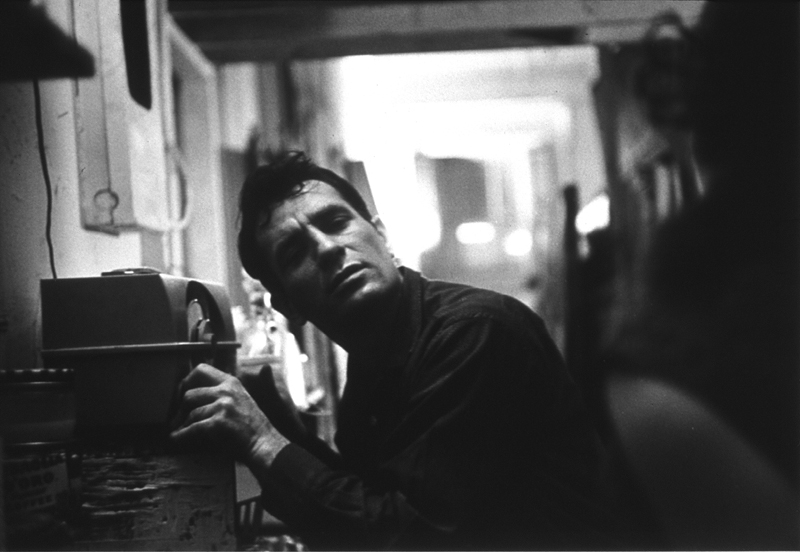
Kerouac

Kerouac whizzed and hummed. He lived with smoldering zest a crumbling highway within. He took to this unlighted highway, equal parts tour guide and lost little lamb, nuzzling a candle, believing that even the littlest light would make him brave, being brave was important, he was not brave, he was very brave, the pendelum hosted two faces, and rebellion was never far away. Perhaps bravery is brightly colored balloons we blow up, hold for a while, then bequeath to the sky. Jack tacked up pictures of himself as a legend in the quaint bedroom of his mind, childhood as a kingdom would prevail within, if not without … without meant a consortium of doubts which would slay, assail, scour. How to claim the first gold of one’s visions? How to ennoble lyrics as if blessed by right rain and river’s memory? Mystical concerns. Littleboy ambitions. A beggar’s opulent banquet, untouched as thin blue baroque smoke woven into edible cursive.

Posted in photography, Poetry, Prose | Tagged , , , , , , , | Leave a comment

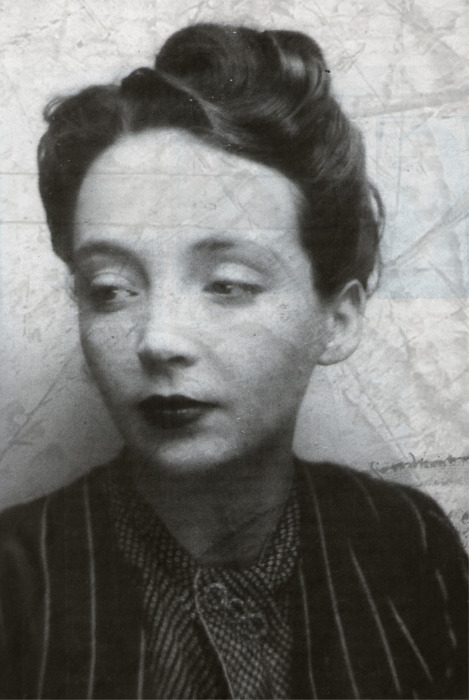
Marguerite Duras

Marguerite Duras crowed about nothing. And nothingness. Lyrics like so much silky water threaded in the raptures of an eddy. Whirling, heady, intoxicating, a dizzying effect that spoke sheerest volumes about the secret history of love. Love for M.D. was hard water on a balmy summer’s day, crossing the Mekong in memory of crossing the Mekong once upon a time. The scent of eucalyptus. A ceiling fan wafting a pathetic breeze. Death in the early afternoon. Waiting. There was a lot of waiting in Duras. A lot of halted expectations, dashed hopes, and elliptical orbits. She circles—to move, to not go anywhere. Forward motion and progress are reviled, scorned, dismissed. She is the asthmatic schoolmarm from the tropics with a twist of acidic chagrin in her bald, bare-faced lessons.

Posted in photography, Poetry, Prose | Tagged , , , , | Leave a comment

Beckett

Samuel Beckett plunged his head so far up his ass, daylight became a dream and conundrum. He saw the world through shit-filtered glasses, the bluest of roses manure-caked, anal cavity functioning as the base of inspiration, as the grimy pulpit and roost of rule. Beckett made singular art out of raging solipsism and gallows balm. The prostate became his tongue, the sphincter his lungs. No truce, no proof, he carried on. And on.

Posted in photography, Poetry, Prose | Tagged , , , , , , | Leave a comment

No Dominion

Dark.

Lights up.

Piles of sand on stage. Reddish sand.

In some areas, the sand is piled high, forming mini-dunes. In other areas, thin flat layers.

Sticking out of the sand are shards of glass.

A woman lying on stage wakes up. Why hadn’t we noticed her before?

She is wet. Her long dark hair is plastered to her shoulders and back.

The woman looks around. Tries to get up. Her legs don’t work.

A voice projected loudly, as if through a metallic cylinder, from offstage: What do you mean her legs don’t work?

The woman ignores the voice. Start to crawl. Crawls here and there, inspecting the shards of glass projected glintingly from the piles of reddish sand. The woman picks up a handful of sand and lets it slip through her fingers.

The woman hears the sound of a far-off train. The whistling, the rumbling.

A young boy in a checked hunter’s cap enters. He marches forward militantly, with a sense of great purpose and conviction. Stops in front of the woman.

The woman opens her mouth to speak. Awful otherworldly screeching comes from her.

The woman places her hands over her ears.

The boy places his index finger archly over his lips.

Then the boy picks up a shard of glass, the one titled yesterday. Or tomorrow. From where you sit, much remains unlettered and inscrutable. The devil’s in the details.

The boy sits down next to the woman and slowly rotates the shard of glass, inspecting it with a judicious eye. After several rotations, the boy places the glass in his mouth.

The woman opens her mouth to shout, the awful loud screeching, hands over her ears.

The boy removes the glass from his mouth. Sets it down on the ground. Sifts through a pile of sand and collects shards, lining them up. He rearranges the sequential combinations of the shards until he is satisfied with a specific order, then gets up and leaves.

The woman stares at the glass-arranged pyramid shape the boy has left on stage.

The boy returns, camera in hand. He points the camera at the woman.

The woman turns away, hiding her face.

Metallic voice from offstage: She never said she would show you.

The boy lays the camera down on the stage and exits. Maybe skipping. Yes, let’s say skipping. The boy skips offstage.

The woman stares at the camera. She picks it up.

An old woman in a floral-print housedress comes out. She says—Not that again…will you put that thing away?

The woman doesn’t know how to react.

The old woman, in what they used to call a tizzy, snatches the camera from the woman, says—I’m going to hold this for you. If your father came home and saw you with this thing again.

The old woman shakes her head, and then exits in a perfectly straight line.

The woman manages, with great strenuous effort (and a little help from the audience, particularly the bald man in the third row, second seat from the aisle, who is practically willing her to stand up: clenched jaw, closed trembling fists, beet-red face, you can do it), to stand on her two legs.

Metallic voice offstage: Steady, now, steady.

One leg gives the woman more trouble than the other.

The woman trudges unevenly to different parts of the stage, inspects the sand its resident shards of glass.

Music. Riotously, percussive.

A child in a plastic monkey mask comes out. The child dances around wildly, arms and leg akimbo. Stops dancing and strikes a Herculean pose.

The woman goes over to the child.

Begins to lift the child’s mask from the bottom. Bright light spills out from under the mask.

The woman lets go of the mask. She slowly and theatrically backpedals to suspenseful music.

The child extends its hand. The hand is small and exceedingly pink. The woman doesn’t take the hand.

The woman doesn’t know what to do. Her eyes dance crazily in their sockets.

The woman picks up a shard of glass and thrusts it toward the child.

The child accepts the glass, inspects it, then tosses it aside. The child touches its mask, near the mouth. Then the child extends its hand toward the woman.

This time, the woman takes the hand.

Metallic voice offstage: There was something to be said for touch.

Another child comes out swimming. This child is wearing a dolphin mask. The child approaches the woman from behind.

The woman turns.

The dolphin child hands her a mask. It is an ibis mask. The woman puts it on.

Metallic voice offstage: And death shall have no dominion.

Percussive music returns.

All three masked figures begin dancing around wildly. Suddenly, the woman’s legs begin to falter. She drops to her knees.

Music stops.

Both masked children are whisked away, as if tethered to invisible strings.

The woman takes off the ibis mask.

Opens her mouth.

The awful screeching.

Hands over her ears.

Lowers onto her belly.

Spasms.

Stillness.

The older woman in the floral-print housedress returns, followed by the young boy in the checked hunter’s cap.

The boy, holding a camera, snaps several photos of the woman lying prostrate.

The older woman collects several shards of glass and then ceremonially places them on the woman’s back.

The older woman and the boy exit.

Stillness.

The sound of wind blowing.

Then the sound of a far-off train.

Rumbling.

Whistling.

Silence.

Fade to a different quality of dark from the one in which we started.

Posted in Poetry, Prose, Theater | Tagged , , , , , , , , , , , , | Leave a comment

A Man Walks Into

A man walks into a man. He realizes it’s the same man … they’re … the same man. They merge. Naturally. Inviolably. A man walks into a man and a merger occurs.

Who was I before I walked into myself? Can I walk out on myself? The merger feels permanent, irreversible.

This man, having walked into himself, now walks into a woman. Naturally, they merge. The woman wonders if the man has become her. The woman wonders if there are men now inside her, how many, etc. The man wonders if the woman has become him, how many women, do they have names, histories. Where does woman leave off from man and become woman, and what about my thoughts (the woman is thinking), are my thoughts my thoughts, are they man thoughts, are they many men thoughts? There is now a thorny gambit of beginnings and endings, crossed lines and blurred boundaries.

A man walks into a man … imitating a child. This is not unlike (the man child thinks) opening your mouth wide and swallowing an entire miniature circus, and the circus in its zeal and mania and kazoos and mirthful mayhem affects you from the inside in, the inside in down deep. You are now a man who hosts a circus, that circus being the childhood you swallowed, and some might say inadvertently. You were a man who walked into a man imitating a child and now you can kiss your business lunches and wingtips goodbye. Say hello to pie in the face and running willdy with scissors. Roll up your trousers and skin your knees and then go out and find a mother made of women who walked into mothers who will peroxide your scraped and dirty knees. Is that the destiny of men who walk into men imitating children?

A man walks into a bar. Ouch. The bar is metal. Unforgiving.

I need a different kind of bar, the man says, rubbing his impacted nose. Let me try again…

A man walks into a bar. The bar is filled with all kinds of men and women who are walking into each other, lost, searching, fevered for the right merger, the absolute one. If the man walks further into the bar, he will walk into becoming they, if he walks out of the bar, he will walk into staying himself, alone … for a little while. The man clearly understands that as long as men and women are walking, mergers of infinite varieties are inevitable.

Posted in Poetry, Prose | Tagged , , , , , , , , , , | Leave a comment