There is a rumor that Laura Palmer’s going to be at the dance.
While you don’t know her personally, all you can think about is the exquisite mystique of her corpse, and how her live voice, on a tape loop, kept repeating—So … you wanna fuck the prom queen?
Just the faintest tickle of the idea that Laura Palmer, THE Laura Palmer might breeze into the school auditorium, and perhaps stand only ten feet away from where you are standing, you holding a plastic cup filled with cherry punch, dressed in a suit that was your brother’s, god rest his soul . . . Laura, could I get you a glass of punch? (good, in your head, you didn’t stutter or stammer when propositioning Laura).
You suddenly realize that cherry punch is leaking from a hole in the bottom of your cup, and onto your new shoes, as you tip the cup horizontally which unfortunately sends the entirety of your cherry punch splash-spilling onto the tiled floor. The cherry punch now pooling around your shoes reminds you of cartoon blood, and you remain transfixed by this grotesque effect until, out of the corner of your eye, you spot a figure, crowned in a baroque silver tiara, and wearing a white ruffled blouse and tight-fitting blue denim jeans, walking backwards through the doorway. She seems to be rewinding at a spasmodic, off-kilter pace, toward you.
You cannot understand the words coming out of her mouth, as they sound as if they are being gargled, and are being spoken forward, away from you, with the girl continuing to rewind, and you locked in a pause, awaiting her targeted arrival.
When she gets to you and wheels around, as if she were wearing roller skates, it is the smile that you can bear least, and how its presence, what you might call its inadmissible entry in a forest with no moon, causes you to look down at the mess you’ve made, and please god, tell me why anyone would serve cartoon blood at a high school dance?
In this episode of Happy Days, Arthur Fonzarelli, Fonzie, The Fonz, slaps Richie, hard, across the face. Void of context, we don’t know why.
Richie’s jaw drops. He is in shock. He holds his hand against his crimsoned cheek. Richie careens out of time, out of character. He tells Arthur Fonzarelli, the Fonz, Fonzie, that he’s made a big mistake and he would be really sorry, did he know who he just slapped? You’ve just slapped someone who was a child-star, remember Mayberry motherfucker, and I’m gonna go on and become a bigtime director who makes lots and lots of films, Backdraft and Born on the Fourth of July and Apollo 13, all kinds of films, I’m gonna be the shit, and you, what are you gonna be doing Fonz?
When Richie—stranded somewhere between the character, Richie, and Ron Howard, the actor playing Richie—is done with his rant, the rest of his face has joined his cheek in blazing crimson. Henry Winkler, a.k.a., The Fonz, Arthur Fonzarelli, Fonzie, is baffled, and looks around, as if trying to pick up the feel of a gag. Was he on Candid Camera? Yet everyone looks as baffled as he does, an awkward quiet thickening the air. One of the cameramen coughs.
Ron Howard/Richie storms off the set, muttering something heated under his breath. The Fonz, still not sure what to do, defaults to his signature move—thumbs jacked up and out, like a jazzy hitchhiker, as he mouthgrooves—Ayyyyy! The live studio audience applauds. Or it is canned applause. It is hard to tell the difference.
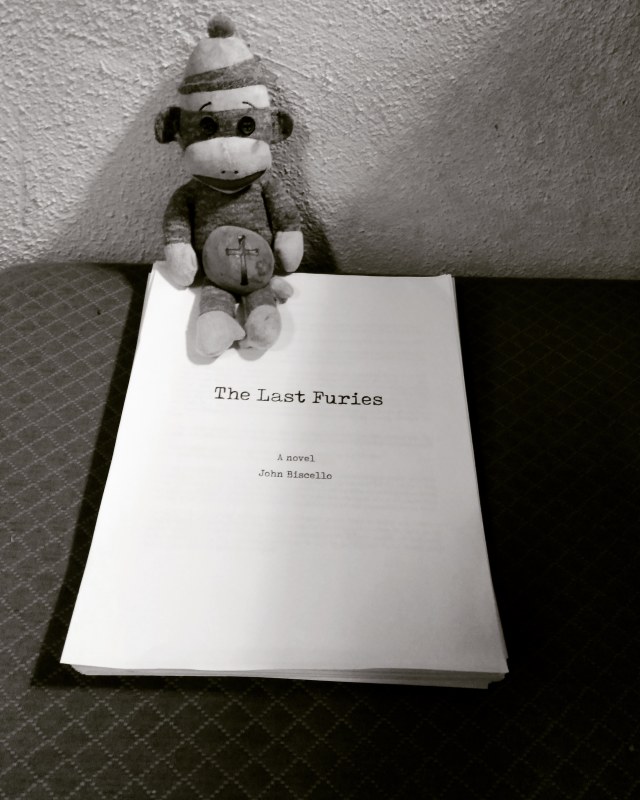
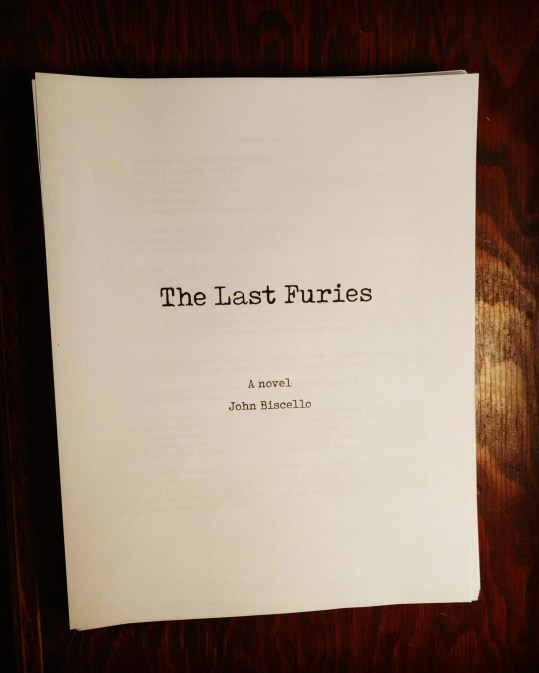
In this lyrical and speculative mosaic novel, enter the fractured worlds of an actress, playwright, and immortal poet, whose legend and influence create an energetic web, equal parts love triangle and haunted house of mirrors. At the bated edge of dream and revelation, spanning New York, Mexico, and a twilight Bardo realm, each of the characters—Viola, Evie and Arturo—undertake metamorphic journeys through the interior hinterlands of the psyche, in their quest for home and spiritual reckoning. Mythology, pop culture, cinema, theater, and sorcery dwell in the multi-chambered heart of the mutable narrative, which includes Joan of Arc, a suicide cult, the Arcana of the Tarot, vaudeville remixes, shamanic alchemy, and a mystical radio whose bandwidth covers all of time, space and history. Re-seed your sense of wonder and the marvelous, as you step into the shadowy labyrinth that is The Last Furies.
Urban slice-of-life in this live reading from my novel, No Man’s Brooklyn, at last November’s Prose Month event.
NO MAN’S BROOKLYN:
From the valentine boneyards of working-class Brooklyn, comes a tale of first love, lost innocence, tragedy, and forgiveness.
Daniel Trovato, having left his native Bensonhurst years ago to start a new life in L.A., is recently sober and enjoying cult success through his Sworn Witness series of graphic novels. When he receives word that his childhood love, Anya, the girl to whose absence he has remained faithful, has died from an overdose, he is compelled to return home. It is there that he will walk through the ghostly twilight of an unfinished past, and revisit both the romantic lore and shadow-life of his childhood. The enduring torch he’s carried for Anya, “the girl from nowhere,” who was found in a trashcan and adopted by a Russian family; the hazy circumstances of his mother’s suicide when he was fourteen; glacial estrangement from his father; the street-and-concrete joys, follies and rawness of an urban boyhood. Ultimately, No Man’s Brooklyn is about the mythic journey we take to meet our core self, and a lyrical testament to the words of Dylan Thomas: “The memories of childhood have no order, and no end.”
I had the privilege of writing the introductory essay for Passage of Days, an exquisite collection of photographs by world-renowned photographer, Pierre-Toutain-Dorbec. Soon to be released.
PASSAGE OF DAYS: Through a lens starkly, undertake a photographic odyssey into the sun-baked heart of Morocco’s High Atlas Mountains. Spanning the years 1975-1981, Pierre Toutain’s Dorbec’s visits with the Imazighen people who live in the Imilchil region, led to a visual record and testament to a pastoral way of life attuned to the cyclical flux of seasons, to the rhythms of nature herself. This exquisite black-and-white collection reflects a chronologically compressed life in the day of the Imazighen, underscored by the interior narratives and silent stories implied in a stunning montage of portraits, while also capturing the grit, symmetry and high-desert mystique of the resident landscape.
Dreams,
undeferred,
coupled with Hope,
that thing unfettered,
to keep us company
and warm our solitude,
as we stumble bravely
through a long night’s journey
into the bated gospel
of days rising to claim us.



 John Biscello