Completed draft of my sixth novel: No One Dreams in Color.

Completed draft of my sixth novel: No One Dreams in Color.

For anyone interested in tuning into my 11/12 reading of No Man’s Brooklyn for the SOMOS Literary Salon, below is the link to a recorded version of the event.
NO MAN’S BROOKLYN: From the valentine boneyards of working-class Brooklyn, comes a tale of first love, lost innocence, tragedy, and healing. Daniel Trovato, having left his native Bensonhurst years ago to start a new life in L.A., is recently sober and enjoying cult success through his Sworn Witness series of graphic novels. When he receives word that his childhood love, Anya, has died from an overdose, he is compelled to return to the “old neighborhood.” It is there that he will walk through the ghostly twilight of an unfinished past, and revisit both the romantic lore and shadow life of his youth. The enduring torch he’s carried for Anya, “the girl from nowhere,” who was found in a trash can and adopted by a Russian family; the hazy circumstances of his mother’s suicide when he was fourteen; glacial estrangement from his father; the street-and-concrete beats and rhythms of an urban boyhood. Ultimately, No Man’s Brooklyn is about the mythic journey we take to meet our core self, and a lyrical testament to the words of Dylan Thomas: “The memories of childhood have no order, and no end.”

Image by Anthony Distefano
In conjunction with National Prose Month (November), and as part of the SOMOS Reading Series, I will be reading from my novel, No Man’s Brooklyn, via Zoom. Q & A to follow the reading.
Friday, November 12th @ 5:30pm (MT).

From the valentine boneyards of working-class Brooklyn, comes a tale of first love, lost innocence, tragedy, and healing. Daniel Trovato, having left his native Bensonhurst years ago to start a new life in L.A., is recently sober and enjoying cult success through his Sworn Witness series of graphic novels. When he receives word that his childhood love, Anya, has died from an overdose, he is compelled to return to the “old neighborhood.” It is there that he will walk through the ghostly twilight of an unfinished past, and revisit both the romantic lore and shadow life of his youth. The enduring torch he’s carried for Anya, “the girl from nowhere,” who was found in a trash can and adopted by a Russian family; the hazy circumstances of his mother’s suicide when he was fourteen; glacial estrangement from his father; the street-and-concrete beats and rhythms of an urban boyhood. Ultimately, No Man’s Brooklyn is about the mythic journey we take to meet our core self, and a lyrical testament to the words of Dylan Thomas: “The memories of childhood have no order, and no end.”

Sometimes
there is no sound
more lonely
and beautiful
than that of a pen
scratching upon a page
with a world of silence
as your neutral accomplice.
At the faltering edge,
where possibility
meets a stolen glance,
and guilt whispers
discreetly to us
the manner in which
we must transgress,
we traded breath
for flame,
and burned through
every last vestige
of decency,
beneath our bodies
shameless lengths.
Longing
does not require a precedent,
or even a known catalyst.
It is, in its purest form,
the solvent call of homesickness,
which is why our hearts,
in their cause and breaking,
claim the smallest birds as stars,
and the longest flights as rememberance.

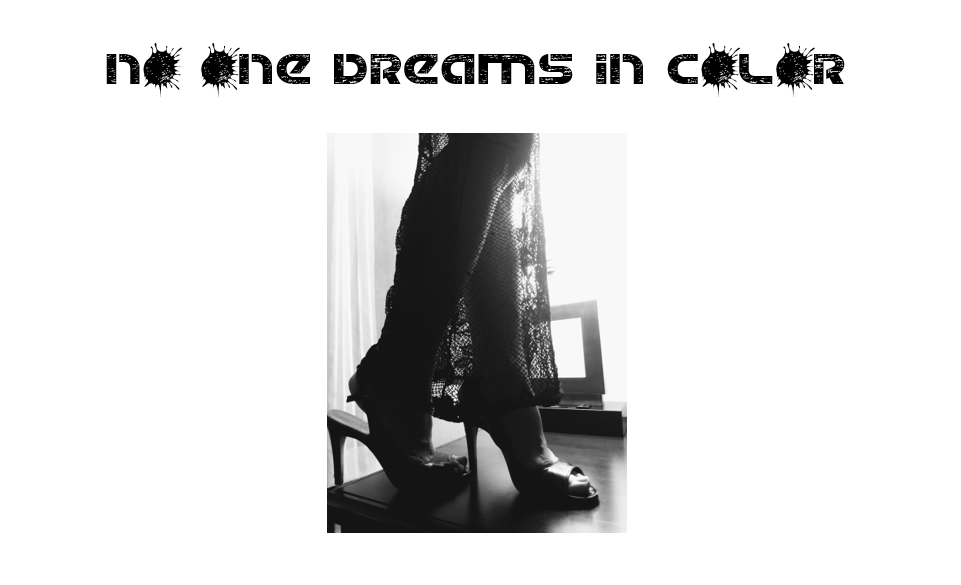
Image by Heather Ross
Coiled
within the echo
and ceremony of longing,
I tremble between memory’s
flitting tease
of my belly
and hers,
how they almost touched,
erring a slow burn course
by which the word
made flesh
could stalk itself,
from a favored distance.

Image by Heather Ross
Excerpts from Kirkus’s just released review of The Jackdaw and the Doll.
“Kafka becomes a winged storyteller in this picture book’s loose, biographical fable. K leaves his family just as his illness gets worse. In a summary of his life, readers learn that for years his “night-flights,” hidden from his strict father, have enabled him to spread visible, feathery wings as a storyteller even as he works as a clerk by day. K is stalked by The Shroud, rendered as a formless, dripping dark hand, which has pursued him since childhood and manifests, K thinks, as the sickness taking over his lungs. In a vivid image, K hides from the hand beneath a bright yellow umbrella. But relief from this dread is possible through two figures—Dora, who, holding hands with K as a bird, flies to a new city, and Frieda, a small girl whose lost doll becomes the focus of K’s mythical, last, long-term literary effort. Best for young readers with a taste for the gothic, Yokoyama’s graphite illustrations with flashes of yellow show a White cast. They fashion an understated, symbolic elegy for a famous literary voice … Poetic descriptions of Kafka’s storytelling deftly capture the relationship between existential terror and creative production … Accomplished, graceful mythmaking for children who intuit artistic inspiration’s dark side.” — KIRKUS REVIEWS

For those who wish to tune in and take a trip through the ol’ neighborhood, I will be reading from my novel, No Man’s Brooklyn, as part of the Southern Colorado University reading series.